History’s It Girls: Elizabeth I and the Invention of Tudor Beauty
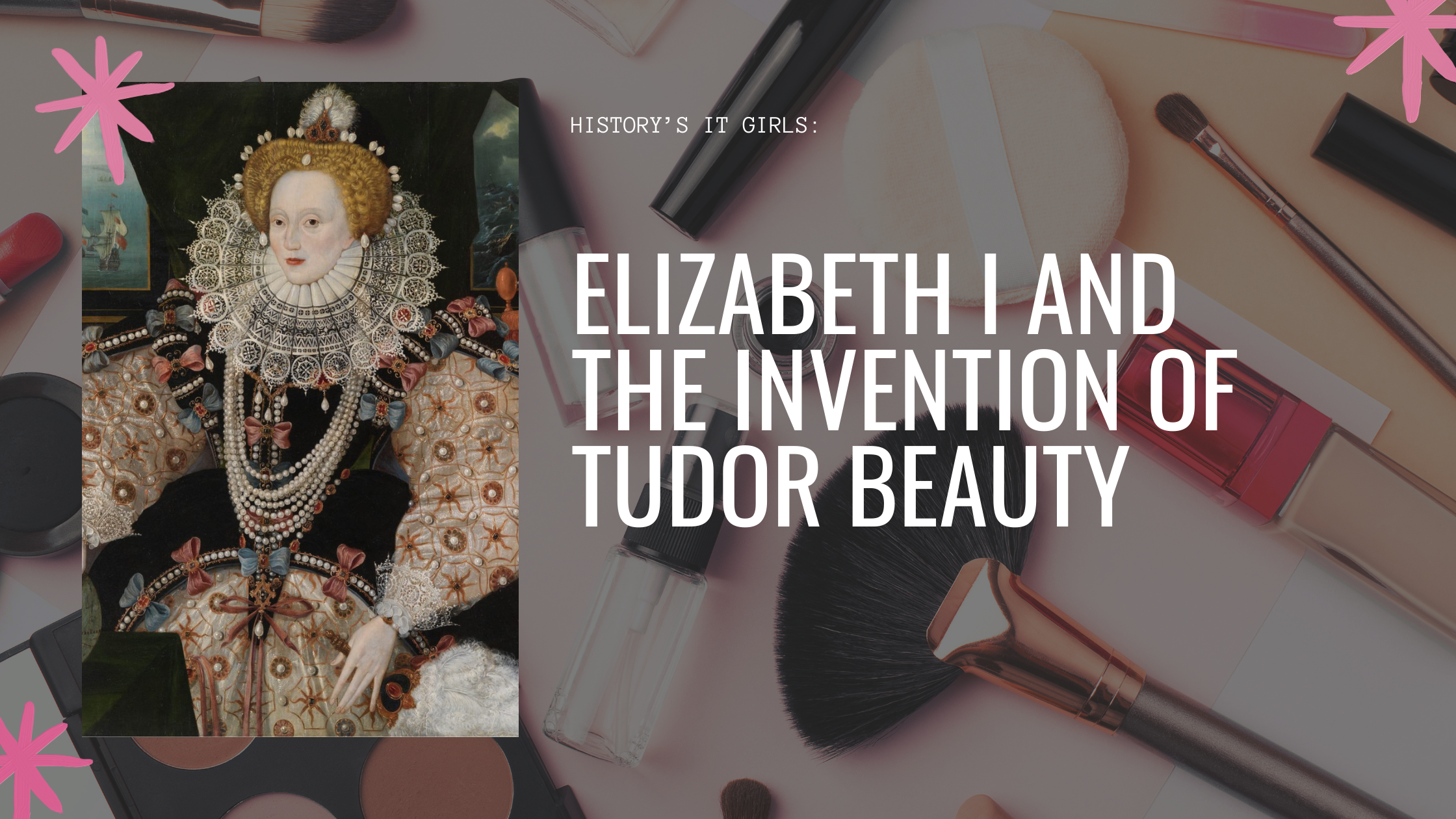
This week I’m doing my bridal hair trial, sitting in a chair with pins and product and possibility -and it got me thinking.
What is beauty, really? Who sets it? And how far will women go to embody it?
As someone who has spent years in archives studying Tudor women -their pregnancies, their power, their public scrutiny -I can’t help but see the sixteenth century as one of the most fascinating laboratories of beauty politics. And no woman shaped that laboratory more than Elizabeth I.
She wasn’t just a queen.
She was a trend.
She was the blueprint.
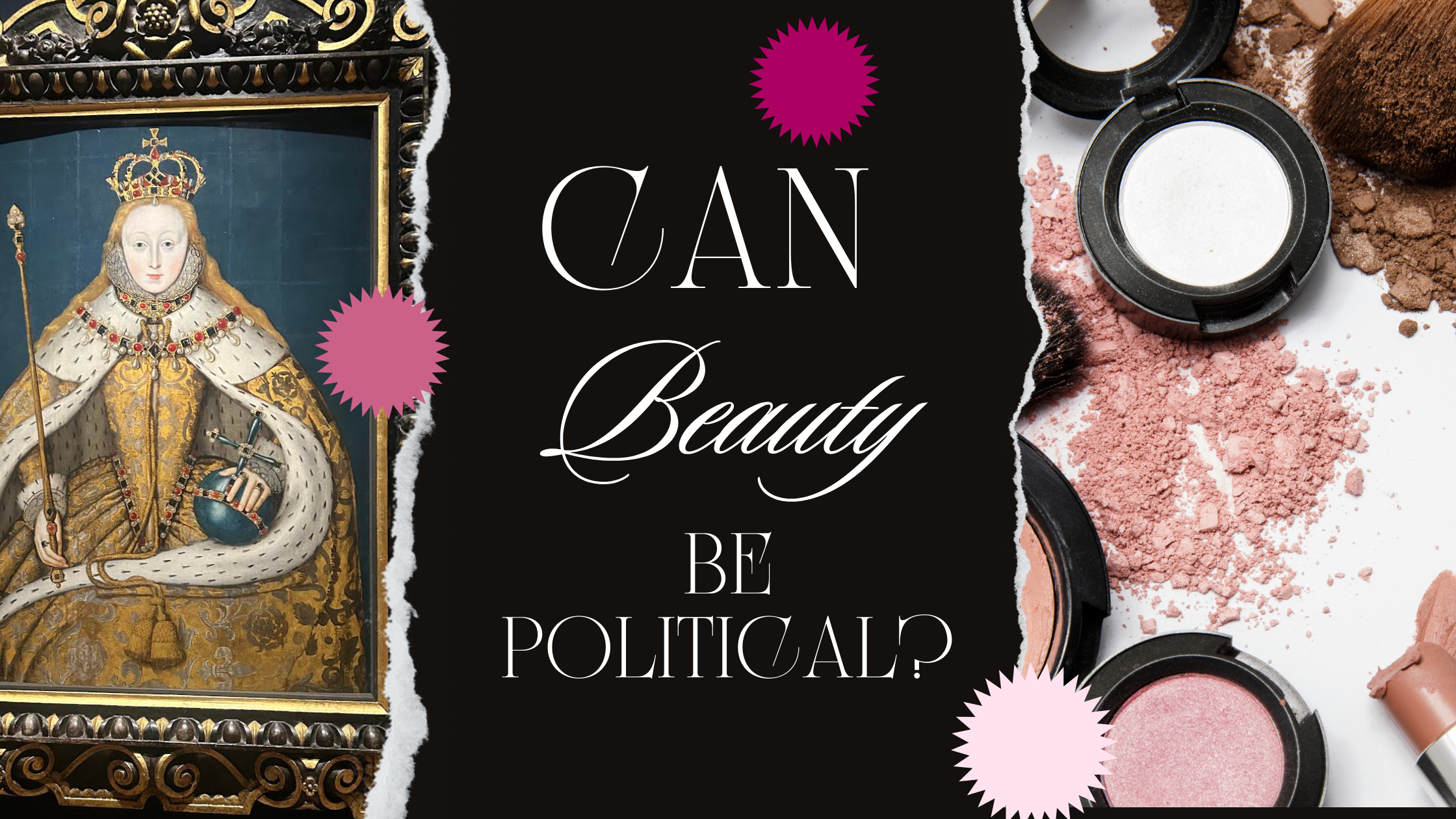
The Renaissance Ideal: Pale, Precious, and Powerful
In the Renaissance imagination, beauty meant:
Fair or red-gold hair
A pallid, luminous complexion
Bright, slightly wide-set eyes
Red lips
A high forehead
Narrow, delicately arched brows
The ideal was not just aesthetic — it was social theology.
An alabaster complexion signaled wealth. If your skin was white, it meant you did not labor in the fields. You were protected from the sun. You were elite.
The Tudor court quite literally performed this standard.
White as Power: The Alabaster Obsession
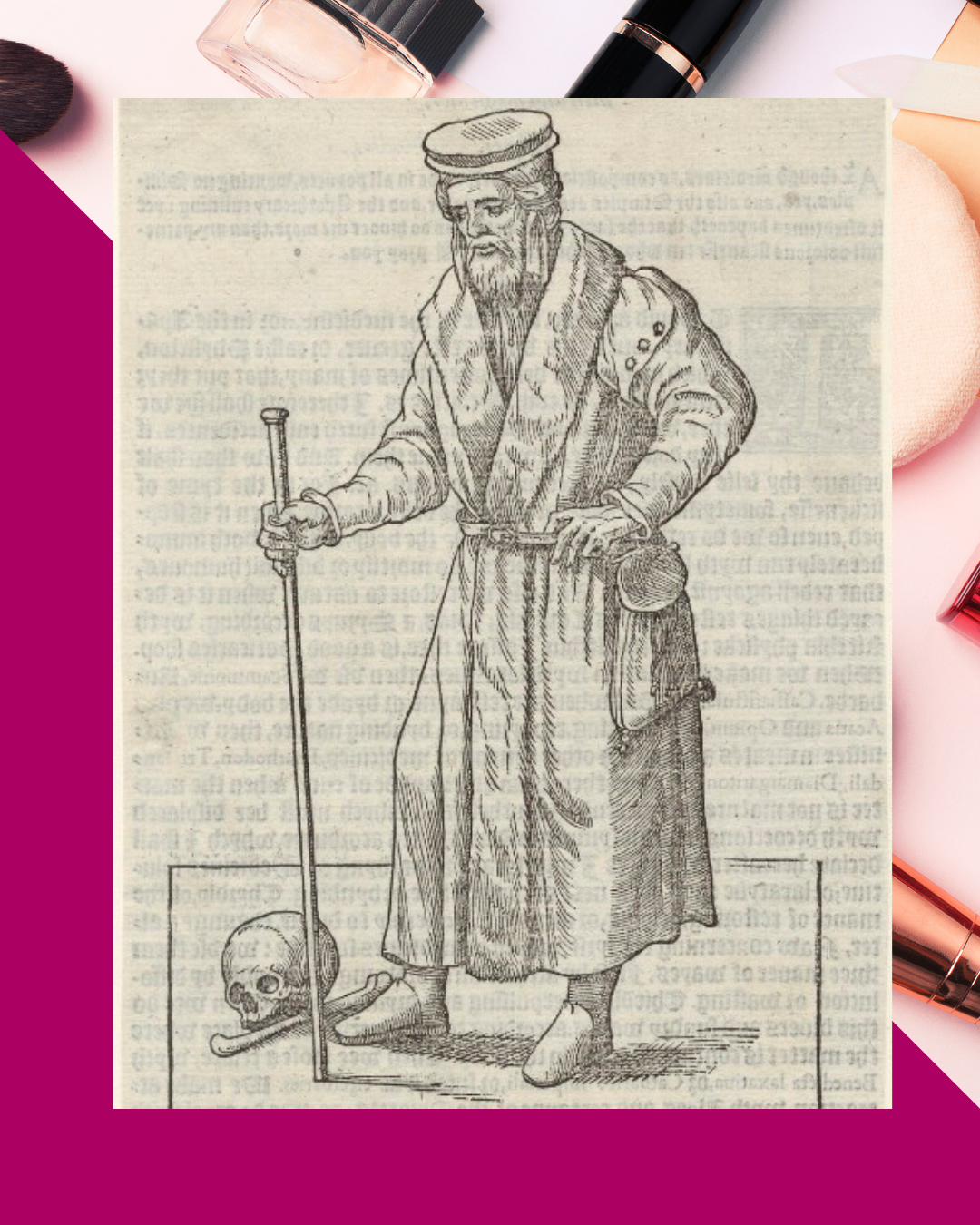
William Bullein From NPG
The most fashionable cosmetic was ceruse, a white foundation made from white lead and vinegar. It produced a striking porcelain finish -but at a terrible cost.
Primary sources tell us just how dangerous this was. The physician and scholar William Bullein warned in his 1562 treatise The Government of Health that cosmetic mixtures containing mercury and lead “do fret and consume the skin.” Another contemporary observer described women’s faces as turning “grey and shrivelled” beneath the very powders meant to perfect them.
Freckle treatments and blemish removers included sulphur, turpentine, and mercury. To counteract the cracking and dryness, women glazed their skin with raw egg white to create a smooth, marble-like finish -a literal shell over deterioration.
And yet they continued.
Because Elizabeth wore it.
Elizabeth as Living Icon
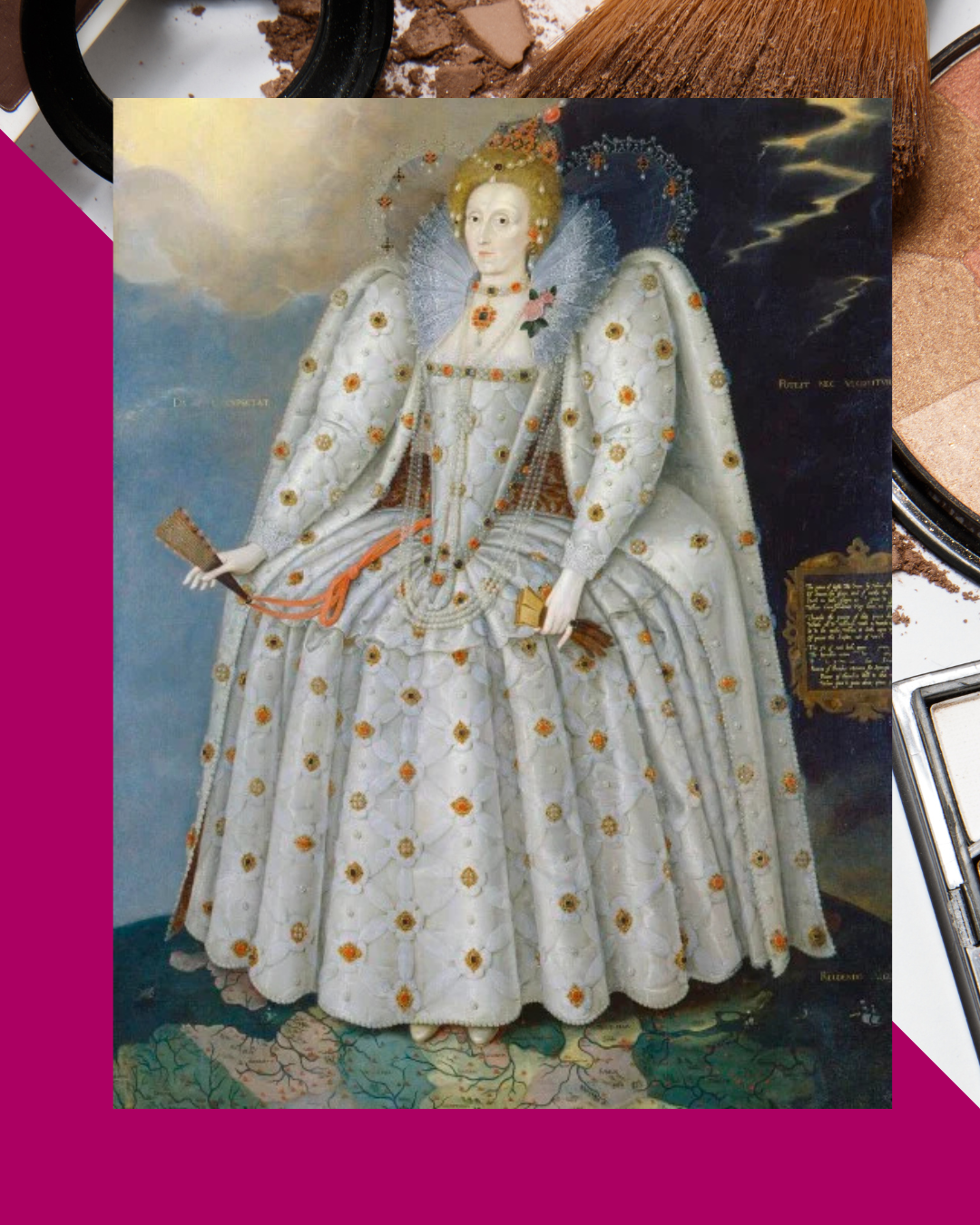
The Ditchley Portrait from NPG
Elizabeth was tall and striking, with naturally pale skin and light red-gold hair. As she aged -particularly after her smallpox illness in 1562 -she exaggerated these features through cosmetics and wigs.
The Venetian ambassador Giovanni Michiel described her as having “a fair complexion, though swarthy,” while later observers noted her heavy use of white makeup. By the 1580s and 1590s, the “Mask of Youth” had become part of her political theatre.
Her face was not just cosmetic. It was symbolic.
In portraiture such as the Ditchley Portrait, her skin is impossibly luminous, untouched by time. She stands on a map of England. Her body becomes the body politic - flawless, eternal, divinely sanctioned.
The message was clear:
The Queen does not age.
The Queen does not decay.
The Queen is England.
Getting the Elizabethan Look
Imitation was immediate and intense.
Women painted faint blue veins onto their temples to emphasize the “transparency” of their skin. Lips were tinted with vermilion (mercuric sulphide). Brows were plucked into high arches. Hairlines were raised through plucking to create the fashionable high forehead -an echo of earlier Renaissance ideals.
Eyes were brightened with drops of belladonna juice and lined with kohl (powdered antimony). Beauty was chemistry. Risk was normalized.
Elizabeth’s red hair created an entire industry of dye recipes. Red wigs became wildly popular - and Elizabeth herself owned dozens. As one courtier noted, “Her Majesty hath above fourscore perukes.”
Even her dental decay - the result of a legendary sweet tooth -became trend-setting. Sugar was a luxury item imported at great cost. Blackened teeth signaled wealth. Some women reportedly darkened their teeth intentionally to mimic the Queen.
Imagine that level of cultural influence.
Fashion Beyond the Face

Robert Dudley from NPG
Elizabeth’s aesthetic influence did not stop at women’s cosmetics.
In the early years of her reign, men’s fashion still reflected the broad, square silhouette of her father’s court under Henry VIII — layered garments, rich fabrics, wide shoulders.
But as Elizabeth’s wardrobe grew more elaborate — with exaggerated sleeves, structured bodices, and dramatic farthingales — so too did the clothing of her courtiers.
Men adopted corsetry to achieve a cinched waist. They wore stuffed peascod doublets that created a pointed, protruding belly — like a pea in a pod. The court literally reshaped the male body in response to the Queen’s aesthetic dominance.
Her femininity defined masculinity.
Beauty, Performance, and Power
As a historian of Tudor women - particularly the social implications of miscarriage, fertility, and female scrutiny - I see Elizabeth’s beauty regime as deeply political.

She ruled as an unmarried woman in a patriarchal monarchy. Her body was under constant surveillance: Would she marry? Would she produce an heir? Was she aging? Was she weakening?
Cosmetics became armor.
By controlling her image, she controlled the narrative.
In her 1588 Tilbury speech, she famously declared:
“I have the body of a weak and feeble woman; but I have the heart and stomach of a king.”
Her appearance performed one truth.
Her words declared another.
Both were calculated.
Bridal Hair and the Politics of Beauty
So, what does this have to do with a bridal hair trial?
Everything.
As I sit preparing for my own wedding - a sacred, joyful, covenantal moment - I’m aware that I, too, am participating in centuries of beauty ritual. But unlike Elizabeth, my beauty does not secure a throne. It does not stabilize a kingdom. It does not silence Parliament.
Tudor women risked mercury poisoning for acceptance.
Elizabeth risked her image for sovereignty.
The difference matters.
And yet - we are still asking the same questions:
Who defines beauty?
Who benefits from it?
How much of it is performance?
Elizabeth I was History’s It Girl not because she was the most naturally beautiful woman of her age -but because she understood image as influence.
She turned cosmetics into statecraft.
And five centuries later, we are still talking about her skin.
Further Reading
For those who want both scholarship and story:
Academic & Historical
Narrative & Fun
If you’re into Victorian beauty https://youtu.be/K3Jef7i7v1U?si=h13NHB8iL7gk80cD
If Tudor women taught us anything, it’s this:
Beauty has always been political.
But power comes from knowing when you are performing -and when you are free.