Silk, Skin, and Sacrament: Bridal Preparation in Tudor England
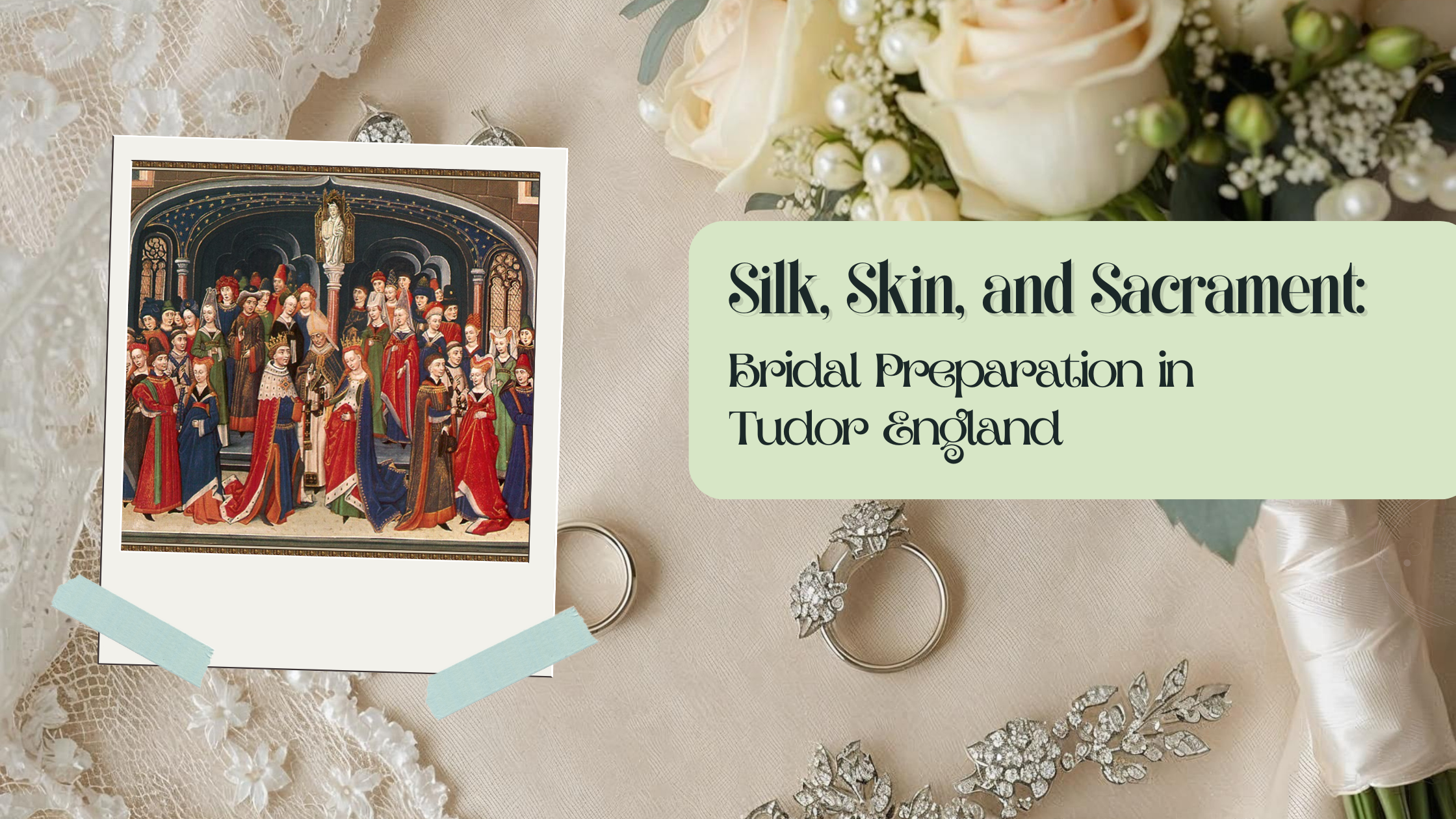
It’s my wedding week and somewhere between final fittings and flower decisions, I found myself thinking not just about vows, but about women who stood where I am standing now, five hundred years ago.
As a historian of Tudor England, I can’t help it. The personal always brushes up against the archival. And this week, as I prepare to say “I do,” I’ve been reflecting on how brides in the reigns of Henry VIII and Elizabeth I prepared for marriage, not just emotionally, but legally, theologically, and publicly.
Marriage in Tudor England was not simply a romantic milestone; it was a sacramental, legal, and social transformation. A bride’s preparation reflected that layered meaning. Beauty practices, clothing, ritual gestures, and public presentation were not matters of individual expression but outward signs of theological, familial, and dynastic expectation. Bridal presentation functioned as visible proof of virtue, status, and fertility.
This week, as I step into my own new chapter, I’m struck by how much weight a wedding day has always carried. For Tudor women, preparation culminated not in a dress alone, but in spoken consent — words that, under canon law, made a binding marriage. Everything — from complexion to coiffure to cloth-of-gold — prepared a woman for that moment of declaration.
And while my world looks very different from theirs, the gravity of covenant, community, and transformation still lingers in the air.
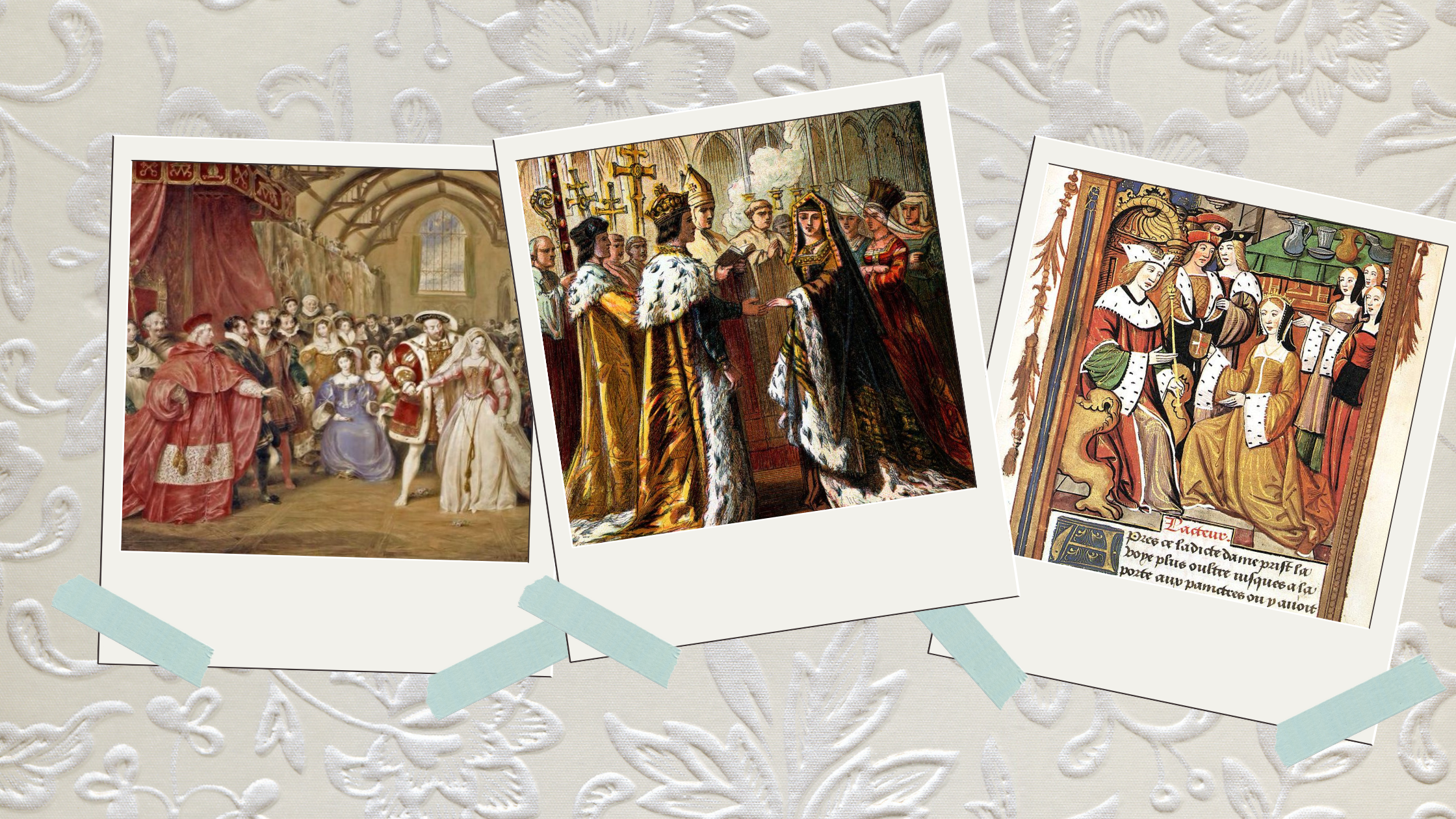
I. Consent Before Cosmetics: What Made a Marriage
Before discussing beauty and dress, we must understand what constituted marriage itself.
According to late medieval and early modern canon law, mutual consent -expressed in the present tense (per verba de praesenti) - created a binding marriage. As outlined in the medieval canon law collections later absorbed into English ecclesiastical practice, the exchange of vows such as “I take thee…” was legally sufficient if freely given.
This principle appears repeatedly in English ecclesiastical court records, including those preserved in the Act Books of the Consistory Court of London (16th century), where disputes often hinged on whether valid consent had already occurred.
Thus, the wedding ceremony formalized and blessed what spoken words created. A bride’s preparation culminated in speech - but everything about her physical presentation prepared her for that public declaration.
II. The Skin: Fairness and Moral Visibility
Pale skin was associated with gentility and virtue. The link between complexion and morality appears in conduct literature and devotional texts of the period.
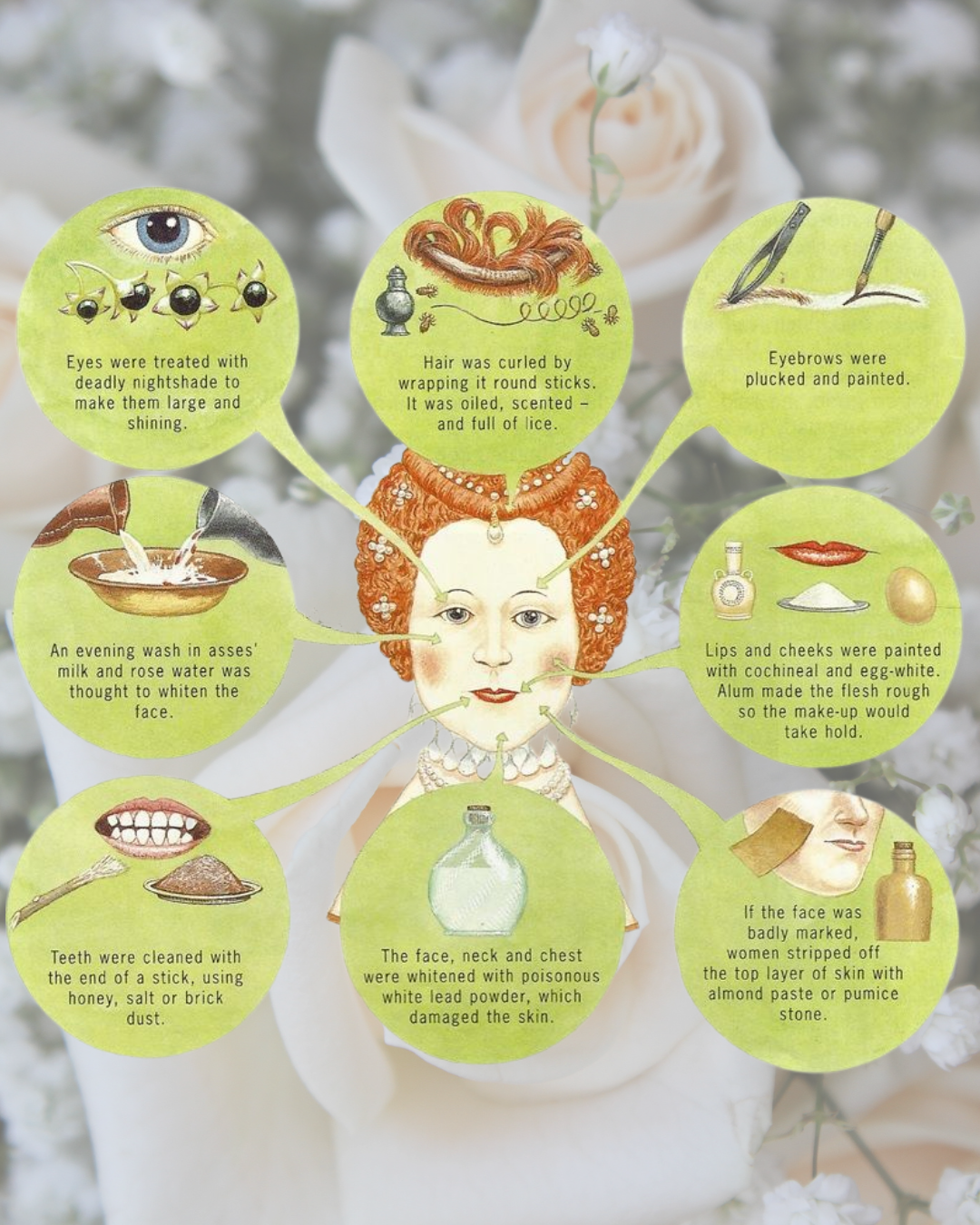
In The Book of the Courtier (English trans. 1561) by Baldassare Castiglione, widely read in Tudor England, female beauty is described as modest, restrained, and naturally graceful -not artificially adorned. Excess cosmetics could signal deceit.
Household recipe books from the 16th century (such as those preserved in the Wellcome Collection manuscripts) include preparations for washing the face with rosewater, almond oil, and egg whites -substances meant to smooth and lighten the complexion without obvious artifice.
The bride’s face was meant to reflect inner order. Beauty was moralized.
III. Hair, Virginity, and Transition
Hair carried strong symbolic associations. In pre-Reformation England, virgin brides sometimes wore their hair loose at the wedding ceremony - a visual sign of maidenhood. After marriage, married women were expected to cover their hair in public as a sign of modesty and social order.
This practice echoes Pauline scriptural interpretations (1 Corinthians 11), which shaped early modern understandings of female head-covering. Protestant reformers in England did not abolish these modesty codes; rather, they reinforced them in sermons and conduct manuals.
Visual evidence from contemporary portraits — including early Tudor panel paintings — shows unmarried women bareheaded or loosely veiled, while married women typically appear in structured hoods such as the gable hood or French hood.
Clothing marked transformation.
IV. The Wedding Dress: Color, Wealth, and Fertility
White wedding dresses were not customary in Tudor England. Brides wore their best gown, often in rich, saturated colors.
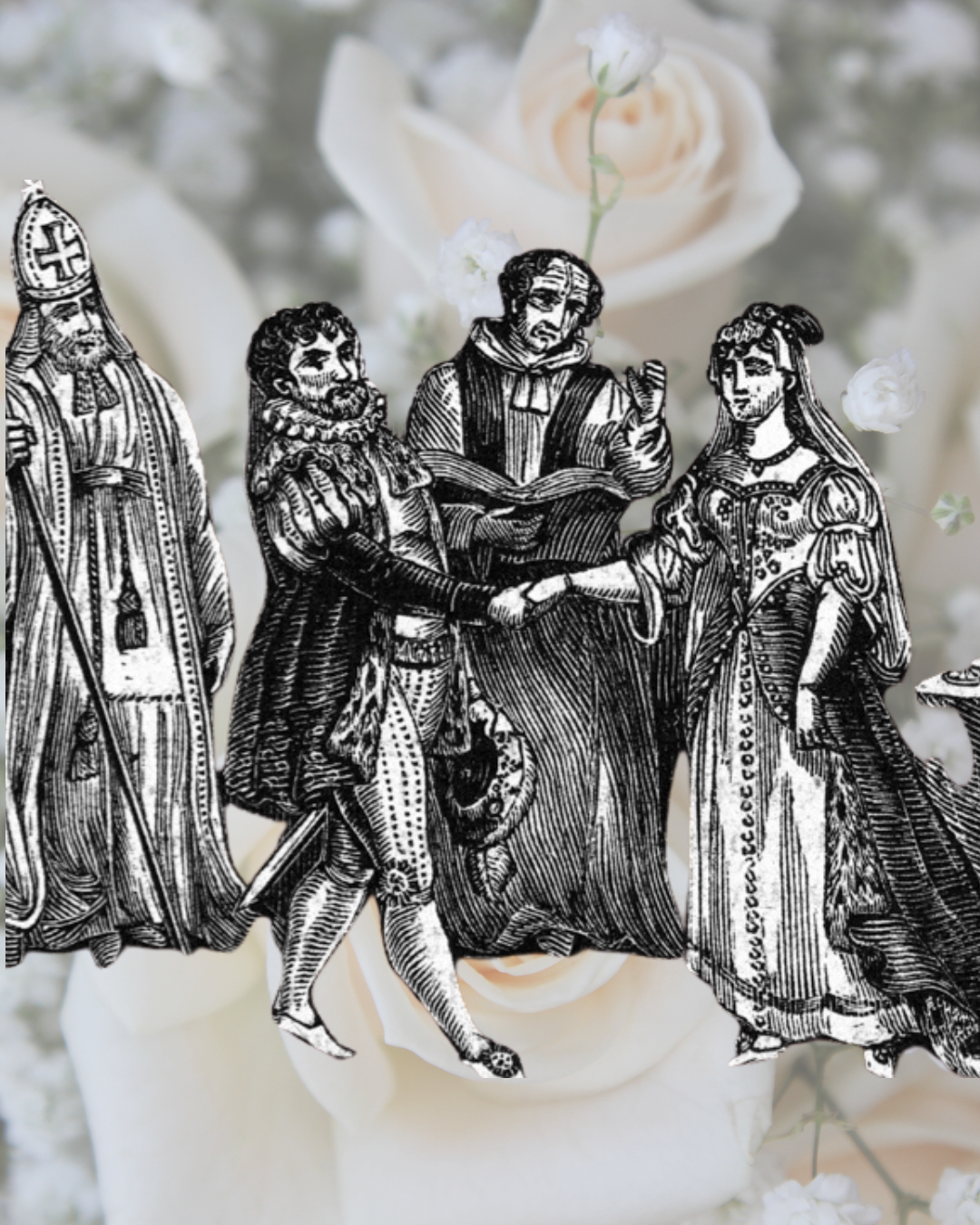
Sumptuary legislation, including the Acts of Apparel passed under Henry VIII (notably the 1510 and 1533 statutes), regulated who could wear certain fabrics, furs, and ornamentation. Clothing functioned as a legal indicator of rank.
Royal wedding accounts provide particularly rich documentation. The wardrobe accounts for the 1509 marriage of Catherine of Aragon record garments of cloth-of-gold and white satin, materials signifying both dynastic wealth and Marian piety. Cloth-of-gold itself was restricted to the highest ranks.
Similarly, descriptions of the 1533 coronation ceremonies of Anne Boleyn -recorded in contemporary chronicles such as Edward Hall’s Union of the Two Noble and Illustre Families of Lancaster and York (1548) — emphasize crimson velvet and ermine, colors associated with sovereignty and legitimacy.
Red suggested vitality and power.
Blue evoked Marian purity.
Green could symbolize fertility.
Fabric was not decorative; it was declarative.
V. The Body and Reproductive Expectation
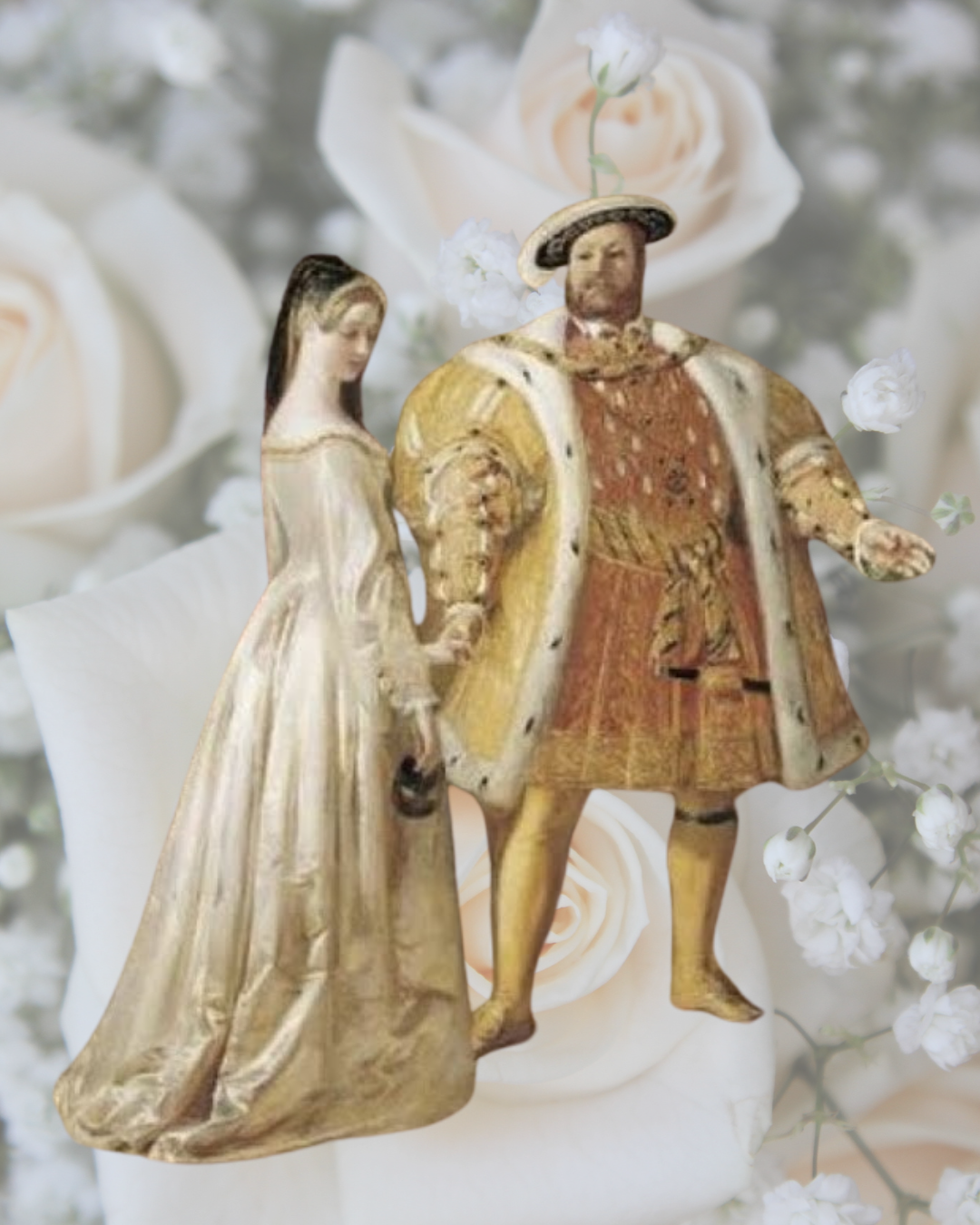
The structured kirtle and conical bodice emphasized the torso and waist, visually centering the reproductive body. This was not accidental in a culture where marriage was closely tied to procreation.
The 1559 Book of Common Prayer marriage service explicitly states that matrimony was ordained “for the procreation of children.” Even after the English Reformation, fertility remained central to marital theology.
Jewelry reinforced this focus. Girdles resting low at the waist and pendants near the abdomen appear in inventories and portraiture. Rings exchanged during the ceremony served as legal and symbolic tokens, referenced explicitly in the Sarum rite used in England prior to the Reformation.
The bride’s body was read as dynastic potential.
VI. Communal Preparation
Bridal preparation was not solitary. Household records and literary references suggest that female kin and servants assisted in dressing and preparing the bride.
The transition from maiden to wife was social and visible. In many communities, the bedding ceremony - in which witnesses escorted the couple to their marriage bed -reinforced the public nature of what modern culture considers private.
Marriage altered a woman’s legal identity under coverture. Her preparation signaled that transformation.
Further Reading: