Unlocking the Mystery of Stonehenge: Exploring Theories and Significance
Every year, as the summer solstice approaches, people around the world gather to celebrate the longest day of the year. The solstice holds immense significance across cultures, marking the sun's highest point in the sky and symbolizing renewal, fertility, and the triumph of light over darkness.
Though this has always been a monumental event throughout history, there’s a recent revival of interest in this celestial event as of late. Whether that be due to the recent eclipse, or to of course the infamous Sarah J. Mass series: A Court of Thrones and Roses; where the summer solstice always played as the backdrop to pivotal scenes throughout her series {side note if you haven’t read the series please do; I’ll be doing some historic article on the history behind the faires and that world later on} needless to say people have always paid acute attention to this particular day.
Historically, cultures have celebrated this day in a series of various ways. Many ancient structures and monuments have also been dedicated to the event to show devotion and honor. However, among the ancient monuments that align with this celestial event, none captivates the imagination quite like Stonehenge.
This, along with having been to Stonehenge on a few occasions, is why I wanted to take the time to expand briefly on the history of this well-known, yet greatly debated
The Significance of the Summer Solstice
The summer solstice, typically falling on June 21st in the Northern Hemisphere, has been celebrated for millennia. It marks the onset of summer and was crucial in agricultural societies for determining planting and harvesting times.
Cultures worldwide—from the Egyptians and Aztecs to the Druids of Europe—built structures aligned with the solstice to honor the sun's power and its influence on earthly cycles.
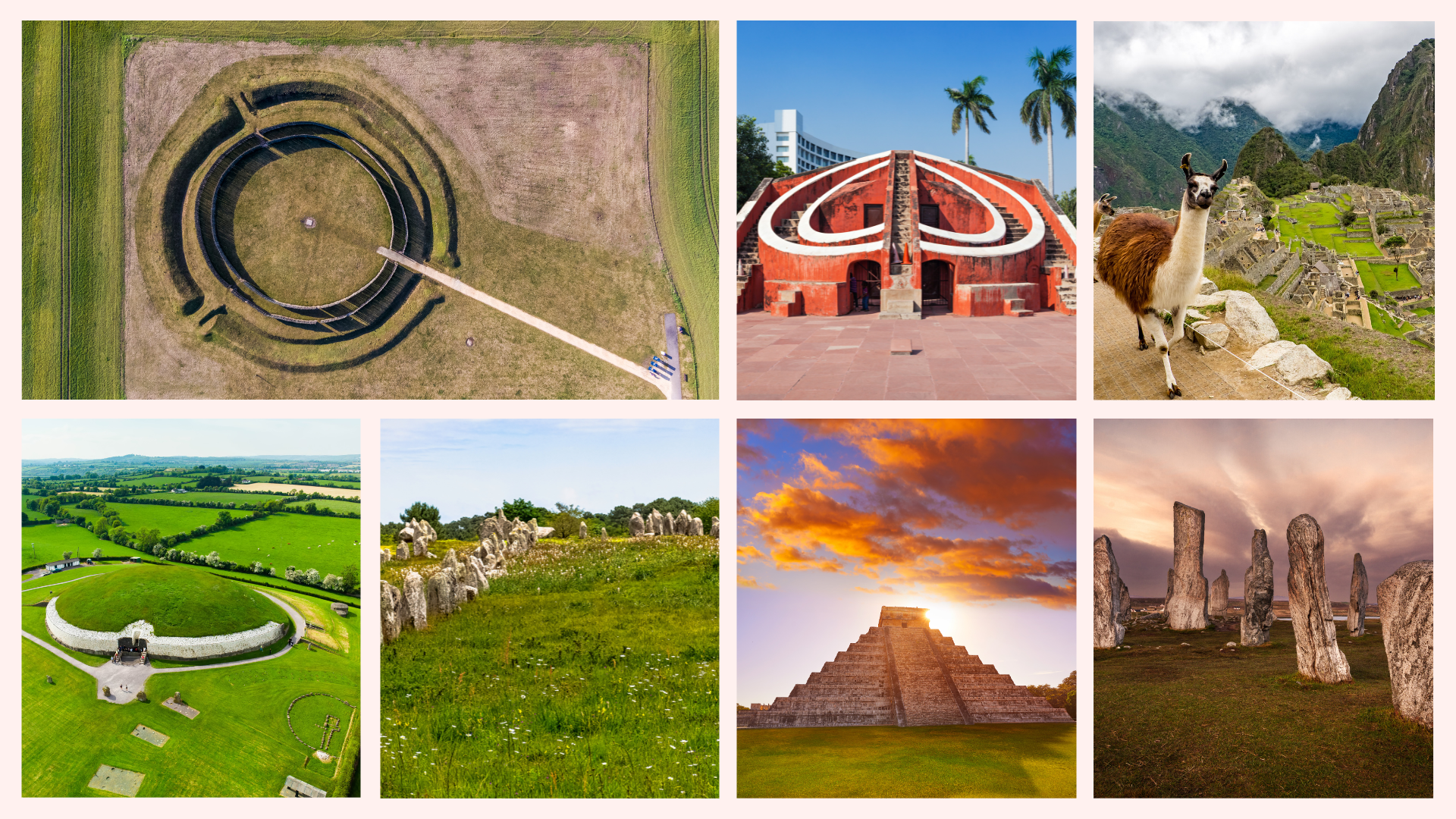
Some of these include:
Newgrange (Ireland)
Culture: Neolithic
Significance: This passage tomb is oriented to capture the rising sun during the winter solstice, but the entrance also aligns with the summer solstice sunset.
Machu Picchu (Peru)
Culture: Inca
Significance: The Intihuatana stone is precisely aligned with the sun during the summer solstice, marking important times for agricultural activities.
Chichen Itza (Mexico)
Culture: Maya
Significance: The El Castillo pyramid (Temple of Kukulcán) is designed so that during the summer solstice, the setting sun creates a shadow that looks like a serpent descending the pyramid.
Great Zimbabwe (Zimbabwe)
Culture: Shona
Significance: The Great Enclosure and other structures are aligned with astronomical events, including the summer solstice.
Goseck Circle (Germany)
Culture: Neolithic
Significance: This circular earthwork has gates aligned with the sunrise and sunset of the winter and summer solstices.
Callanish Stones (Scotland)
Culture: Neolithic
Significance: These standing stones are believed to be aligned with the summer solstice sunrise and moon phases.
Jantar Mantar (India)
Culture: Mughal
Significance: This collection of astronomical instruments in Jaipur includes structures designed to measure the position of the sun, particularly during solstices.
Nabta Playa (Egypt)
Culture: Pre-Dynastic
Significance: These stone circles in the Nubian Desert are some of the oldest known astronomical alignments, marking the summer solstice sunrise.
Carnac Stones (France)
Culture: Neolithic
Significance: This extensive array of megalithic sites is believed to have been used for ceremonial or astronomical purposes, with some alignments possibly related to solstice events.
These structures demonstrate the universal human fascination with the solstices and their importance in ancient societies for marking time and seasons.
The Enigma of Stonehenge
Amidst the rolling plains of Wiltshire, England, stands Stonehenge—a prehistoric monument composed of massive standing stones arranged in a circular formation.

Stonehenge serves as a major tourist attraction, drawing a significant number of visitors annually. Approximately 1.6 million people visit Stonehenge each year. On the summer solstice alone, the site attracts a large number of visitors, with estimates ranging from 10,000 to 30,000 people gathering to witness the solstice sunrise. The exact number can vary each year based on weather conditions, travel trends, and other factors.
Dating back over 4,000 years, Stonehenge continues to baffle archaeologists, historians, and astronomers alike with its purpose and construction methods. Its stones, some weighing up to 25 tons, were transported from quarries miles away, leaving scholars to ponder how ancient civilizations achieved such feats without modern technology.
People have long sought to unravel the mystery of Stonehenge's creation, employing various theories to explain its origins and construction methods.
One prevalent hypothesis suggests that the monumental stones were transported from quarries hundreds of miles away, possibly using wooden sledges, rollers, and manpower. This theory underscores the remarkable logistical planning and labor required by ancient civilizations, showcasing their engineering prowess and determination.
Another viewpoint posits that the arrangement of stones aligns with astronomical phenomena, suggesting Stonehenge served as an observatory to track celestial events such as solstices and equinoxes, highlighting its potential ritualistic and ceremonial significance. People go as far to suggest that aliens created it, though little proof is in support of that theory.
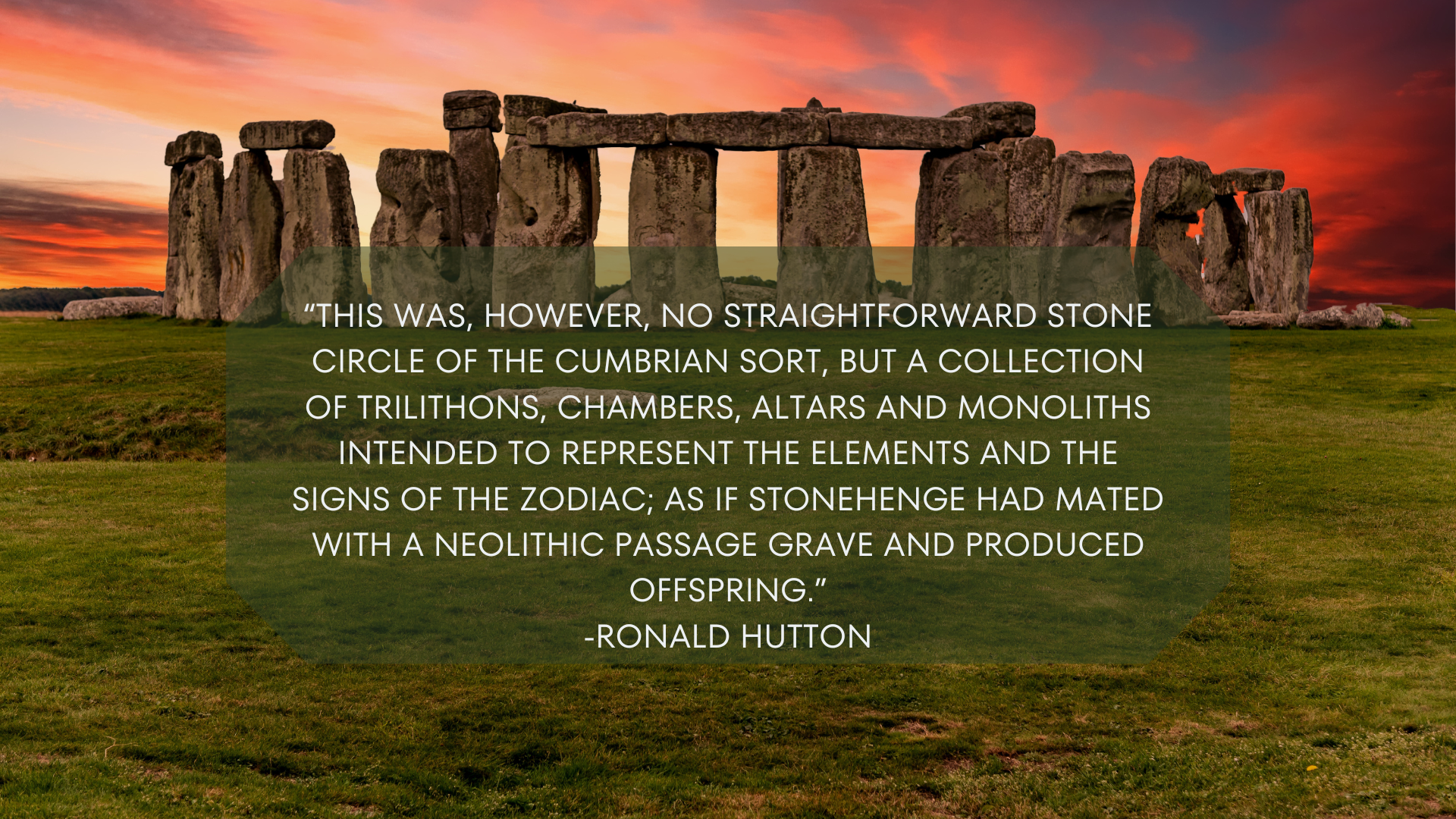
In fact, many historians, such as Ronald Hutton who is a specialist in Druids, and ancient cultures of Britain, point out that many ancient Briton civilizations had stone formations like these. Many served as meeting points for various clans to come together, others served as burial grounds, and still others were holy sites honoring the gods.
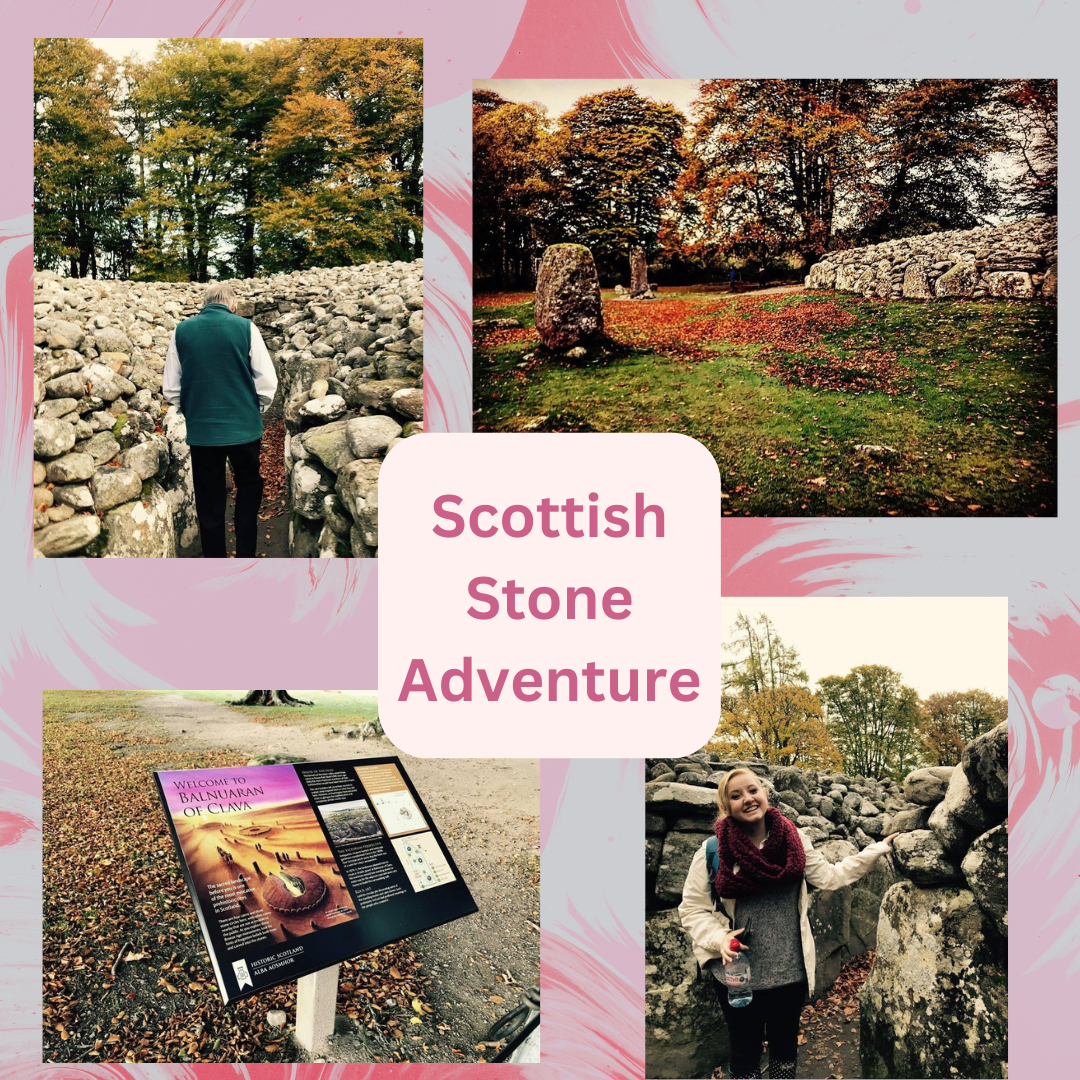
I had the fortunate experience of visiting one of these sites in Scotland, which if any Outlander fans remember, there are similar stone formations that hold special powers. However, in the words of my Scottish taxi driver who called himself a historian, he said it was an ancient burial ground. He also said it was in the same set up as Stonehenge (which it did show similar characteristics) and that the clans used it to honor the dead. Yet, according to our Outlander fans these stones serve as time travel to ancient Scotland. In all seriousness though, if you are a Neolithic fan and lover of Stonehenge, I encourage you to go to Scotland and see some of these formations because they are not housed off into tourist attractions. I myself got to stand on the stones and touch the stones like Claire did in Outlander. It was an experience I’ll never forget.
As archaeologists continue to uncover new evidence and employ advanced technologies, the debate surrounding Stonehenge's creation remains a testament to human curiosity and the enduring allure of this ancient enigma.
Thankfully at the visitor center one can dig in deeper with all these theories and decide for themselves which one they think possesses more truth.
Theories Surrounding Why Stonehenge Was Created
Though many theories as to how it was built circulate, there are also many reasons behind why it was built.
Numerous theories attempt to unravel the mystery of Stonehenge, each offering a glimpse into its possible functions and significance. Though some were briefly explained above I’ve created a list below for reference:
Astronomical Observatory: One prevalent theory suggests Stonehenge served as an astronomical observatory aligned with celestial events, including the summer solstice. The arrangement of stones may have helped ancient people track the movements of the sun, moon, and stars, aiding in agricultural planning and religious rituals.
Ceremonial Center: Another theory proposes Stonehenge as a ceremonial center or religious site where rituals, possibly related to fertility or ancestor worship, took place during significant astronomical events. The alignment of the monument with solar and lunar cycles reinforces this hypothesis.
Healing Sanctuary: Some speculate Stonehenge was a place of healing due to the discovery of human remains buried nearby, showing signs of physical deformities or illnesses. The stones' purported healing properties could have drawn pilgrims seeking cures or spiritual renewal.
Ancient Calendar: Stonehenge might have functioned as a sophisticated calendar, marking important dates in the agricultural calendar and ensuring timely planting and harvesting seasons. The alignment of stones with solstices and equinoxes supports this practical function.
Symbol of Power and Prestige: As a monumental construction requiring substantial resources and labor, Stonehenge could have been a symbol of power and prestige for the ruling elite, showcasing their authority and ability to mobilize large-scale projects.
Continued Exploration and Preservation

Despite centuries of study and excavation, Stonehenge continues to guard its secrets. Modern techniques such as ground-penetrating radar and digital imaging offer new avenues for research, revealing previously unknown aspects of the monument's layout and surrounding landscape.
Efforts to preserve Stonehenge's integrity and interpret its significance for future generations remain ongoing. The site, designated a UNESCO World Heritage Site, attracts visitors from across the globe who come to marvel at its majesty and ponder the mysteries of our ancient past.
As the summer solstice arrives each year, casting its golden light upon Stonehenge, the monument stands as a testament to human ingenuity, spirituality, and our enduring quest to understand the cosmos. Whether it served as an astronomical observatory, a sacred temple, or a communal gathering place, Stonehenge continues to inspire wonder and fascination, inviting us to explore the depths of our shared history and the mysteries of the universe.
If you found this interesting and want to know more; please comment below or send me a message. Or do check out the below sources of information:
https://www.english-heritage.org.uk/visit/places/stonehenge/ Official Website, I encourage you to check out the Learn page.
The Legendary History and Folklore of Stonehenge article by L. V. Grinsell (if you can not access it please dm me and I’ll send it to an email).
The Pagan Religions of the Ancient British Isles: Their Nature and Legacy By Ronald Hutton