Courtly Love, Crowned: How Anne Boleyn Played the Medieval Game and Won (For a While)
💘When we think of Valentine’s Day, we imagine roses, poetry, and grand romantic gestures. But long before heart-shaped chocolates, there was a much more strategic—and scandalous—form of romance: courtly love.
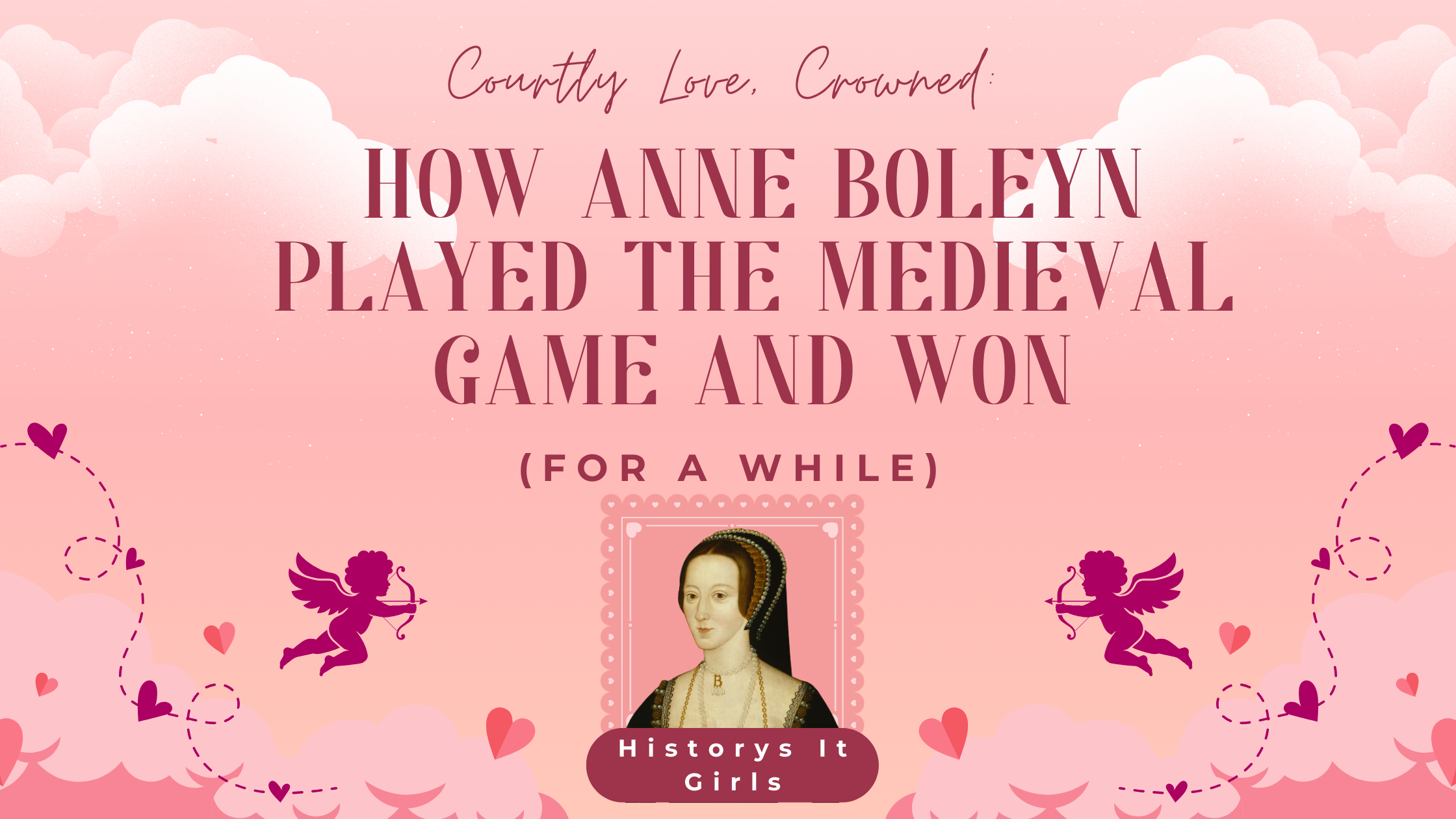
And no one played it better than Anne Boleyn.
Forget the clichés of “seductress” and “homewrecker.”
This Valentine’s Day, let’s talk about how Anne Boleyn mastered the medieval art of love as political power—and used it to become queen of England in 1533.
🌹 The Roots of Courtly Love: Where Did This “Game” Begin?
Courtly love didn’t start in Tudor England. It blossomed in the 12th century courts of France, especially under the cultural influence of Eleanor of Aquitaine.
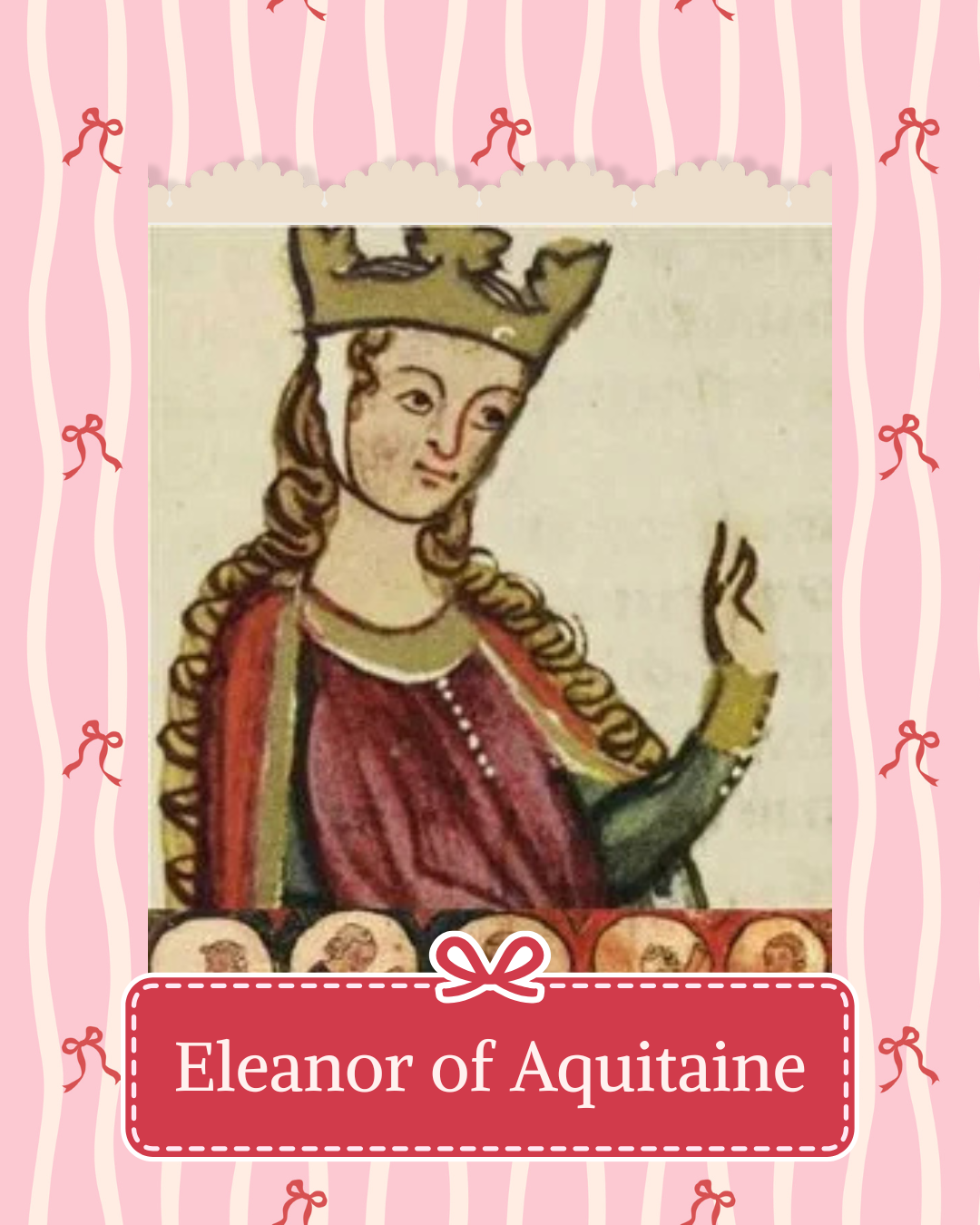
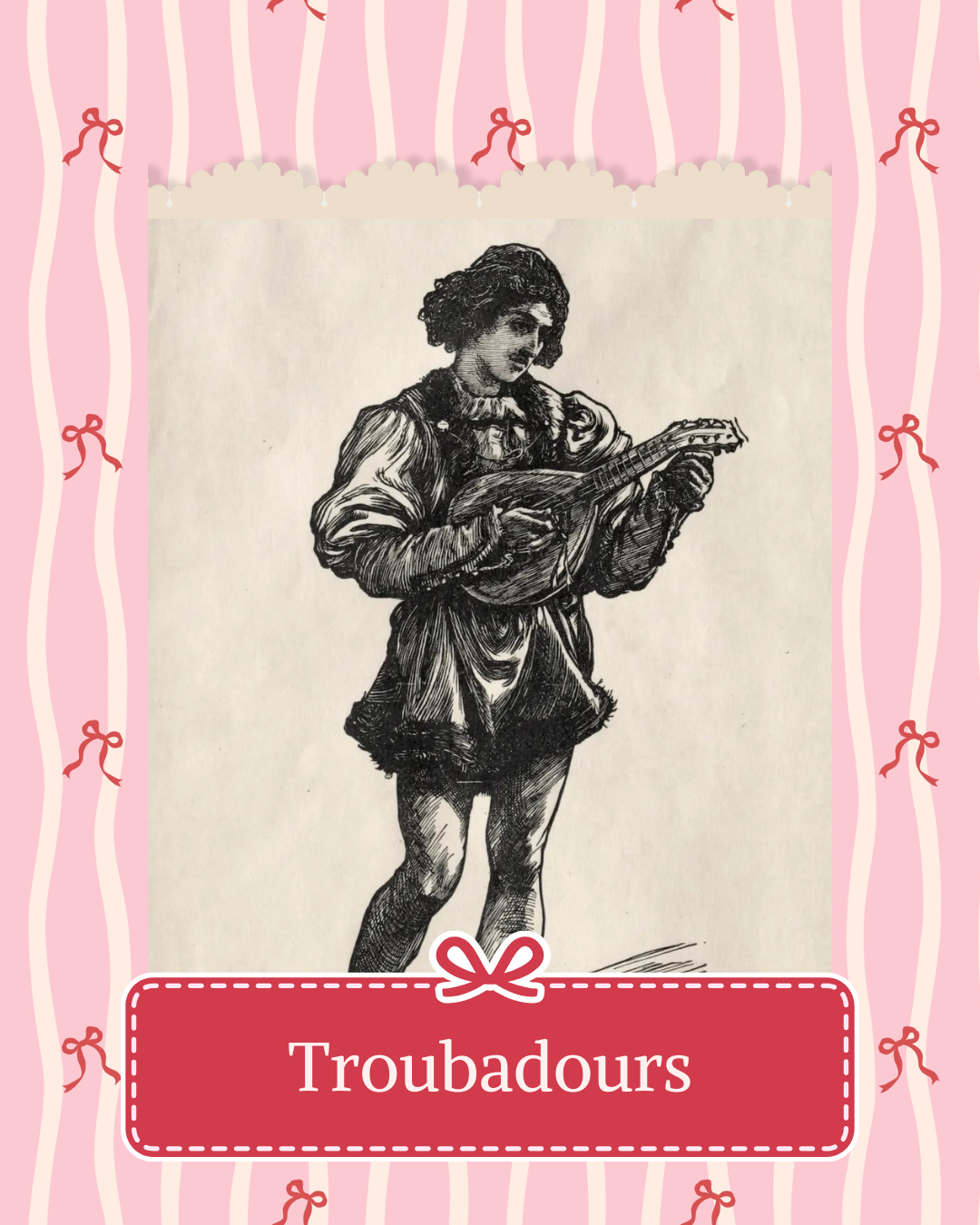
In her courts, poets known as troubadours celebrated a new romantic ideal:
The knight serves a lady.
The lady is elevated, distant, often unattainable.
Love is refined, intellectual, and usually forbidden.
Desire must be restrained.
Devotion proves worthiness.
This wasn’t about marriage. It was about longing.
Writers like Chrétien de Troyes wove these ideals into Arthurian legends, where knights endured trials to prove their loyalty. Later, the tradition traveled to England, appearing in works such as Le Morte d'Arthur by Thomas Malory.
Courtly love became less about actual romance and more about performance—ritualized flirtation, power dynamics, and social advancement.
Sound familiar?
👑 Enter Anne Boleyn: The Tudor Game-Changer
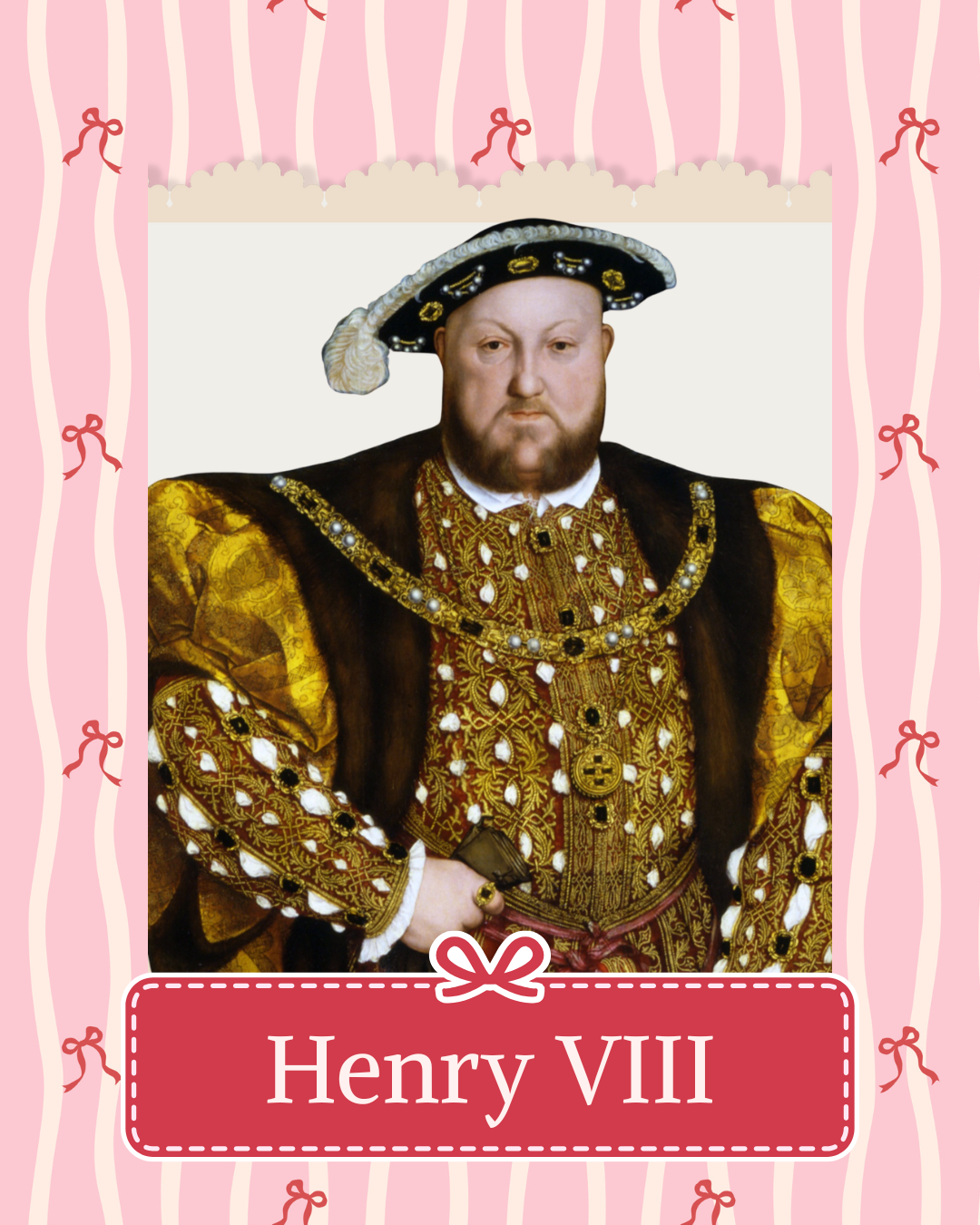
By the time Anne arrived at the English court, courtly love was alive and well. Tudor courtiers flirted through poetry, masques, dance, and coded gestures. Romance was spectacle.
Then came Henry VIII.
Henry was used to mistresses. He had adored his first wife, Catherine of Aragon, but he also expected romantic submission. Most women at court played by the traditional rules: admiration, charm, availability. {Just read Katherine Howards story}
Anne did not.
Instead, she rewrote the script.
💌 The Anne Boleyn Strategy: Refusal as Power
Traditional courtly love required the lady to be distant—but ultimately submissive within a patriarchal structure.
Anne elevated the distance.
When Henry pursued her, she refused to become his mistress. That refusal was revolutionary.
She transformed herself into the unattainable lady of troubadour poetry—but with a twist:
She demanded marriage.
She demanded legitimacy.
She demanded a crown.
She turned longing into leverage.
Henry wrote passionate letters to her—letters filled with yearning straight out of medieval love poetry.
But instead of rewarding devotion with surrender, Anne intensified the challenge.
In courtly love tradition, the knight proves himself worthy.
In theory Henry was king and was already out of reach for her.
Henry had to prove himself worthy.
And to do so, he broke from Rome.
💔 When Romance Rewrites Religion
Let’s be clear: this was not just a love story.
Henry’s desire to marry Anne led to the English Reformation, the break from papal authority, and seismic political and religious shifts.
A romantic pursuit reshaped an entire kingdom.
Anne’s critics later labeled her witch, heretic, adulteress. But look closer, and you see a woman deeply educated in continental court culture, fluent in the rituals of performance and persuasion.
She didn’t simply captivate Henry.
She controlled the tempo of the courtly dance.
🕊 Courtly Love: Medieval Rules vs. Anne’s Rewrite
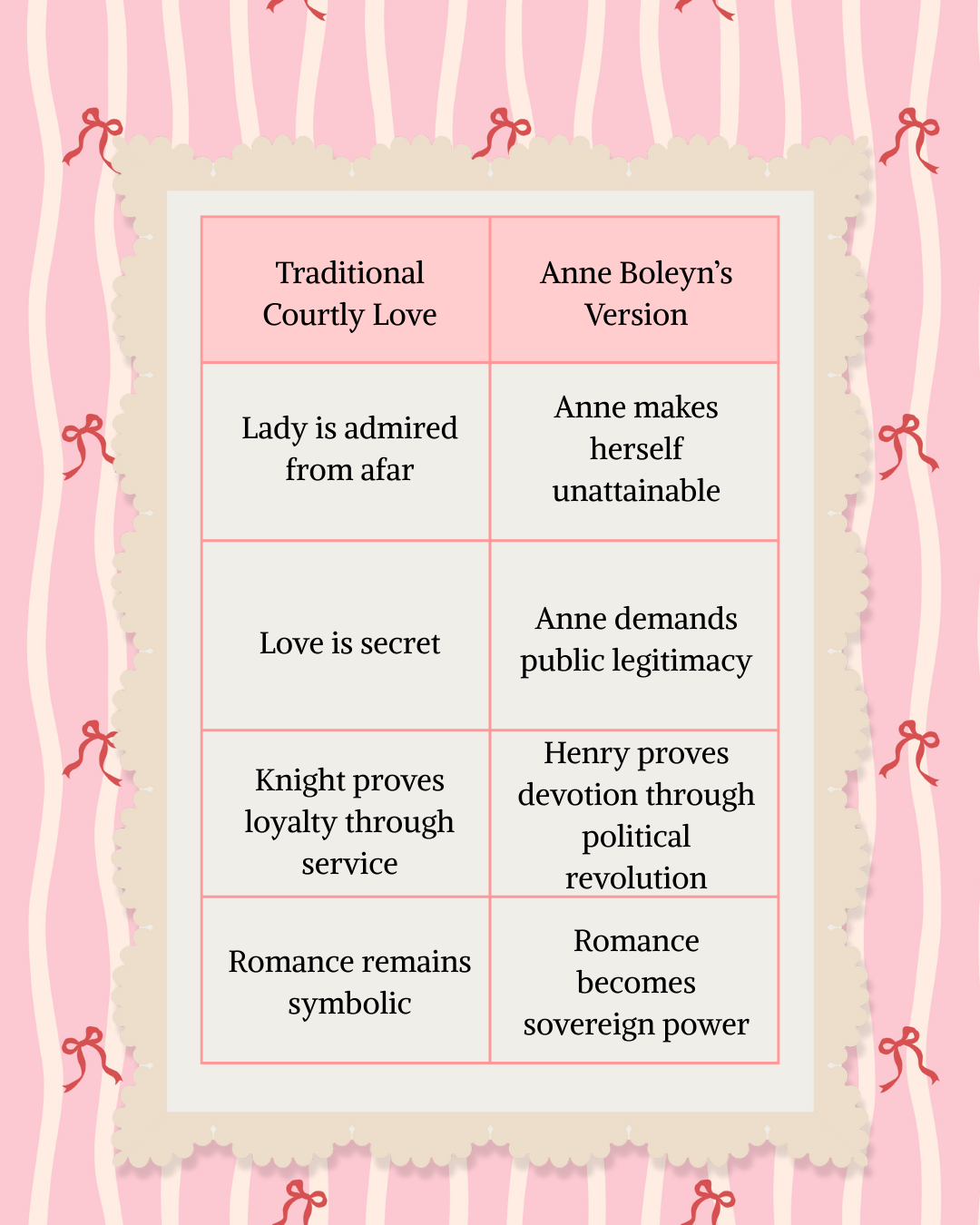
Anne didn’t reject courtly love.
She weaponized it.
💘 A Valentine’s Reflection
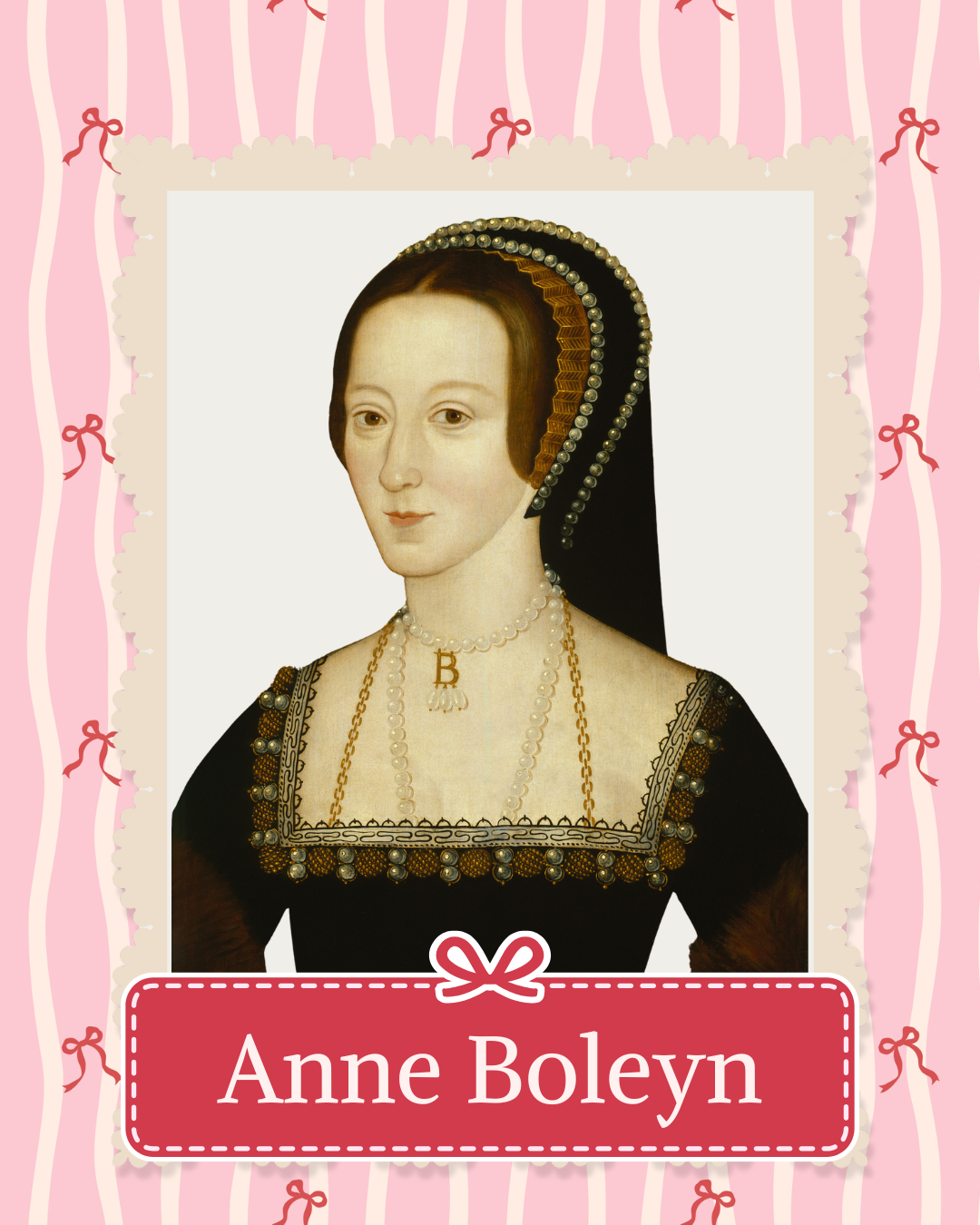
On Valentine’s Day, we celebrate devotion. But Anne Boleyn reminds us that love—especially in the medieval and Tudor world—was never just about feelings.
It was about:
Power
Performance
Patience
Strategy
Anne understood something few historians have emphasized: before she was queen, reformer, or accused traitor, she was a master player in a centuries-old romantic tradition.
Her rise was not accidental.
It was courtly.
And for three dazzling years (1533–1536), the lady won.
📚 Works Cited & Further Reading
Here are the key works informing this discussion:
Bernard, G. W. Anne Boleyn: Fatal Attractions. Yale University Press.
Gordon Marsden, “Henry VII: Miracle King,” History Today 59:3 (March 2009).
Ives, Eric. The Life and Death of Anne Boleyn: ‘The Most Happy’. Wiley.
Schultz, James A. Courtly Love, the Love of Courtliness, and the History of Sexuality. University of Chicago Press.
Paget, “Youth of Anne Boleyn,” in Correspondance de Maximilien Ier et Marguerite.
Gaunt, Simon. Troubadours and Irony. Cambridge University Press.
Noble, Peter. Love and Marriage in Chrétien de Troyes. University of Wales Press.
Benson, Larry. Malory’s Morte Darthur. Harvard University Press.
Warnicke, Retha. “Queenship: Politics and Gender in Tudor England.” History Compass (2006).
Warnicke, R. Wicked Women of Tudor England: Queens, Aristocrats, Commoners. Palgrave Macmillan.