From Courtly Love to Crowned Queen
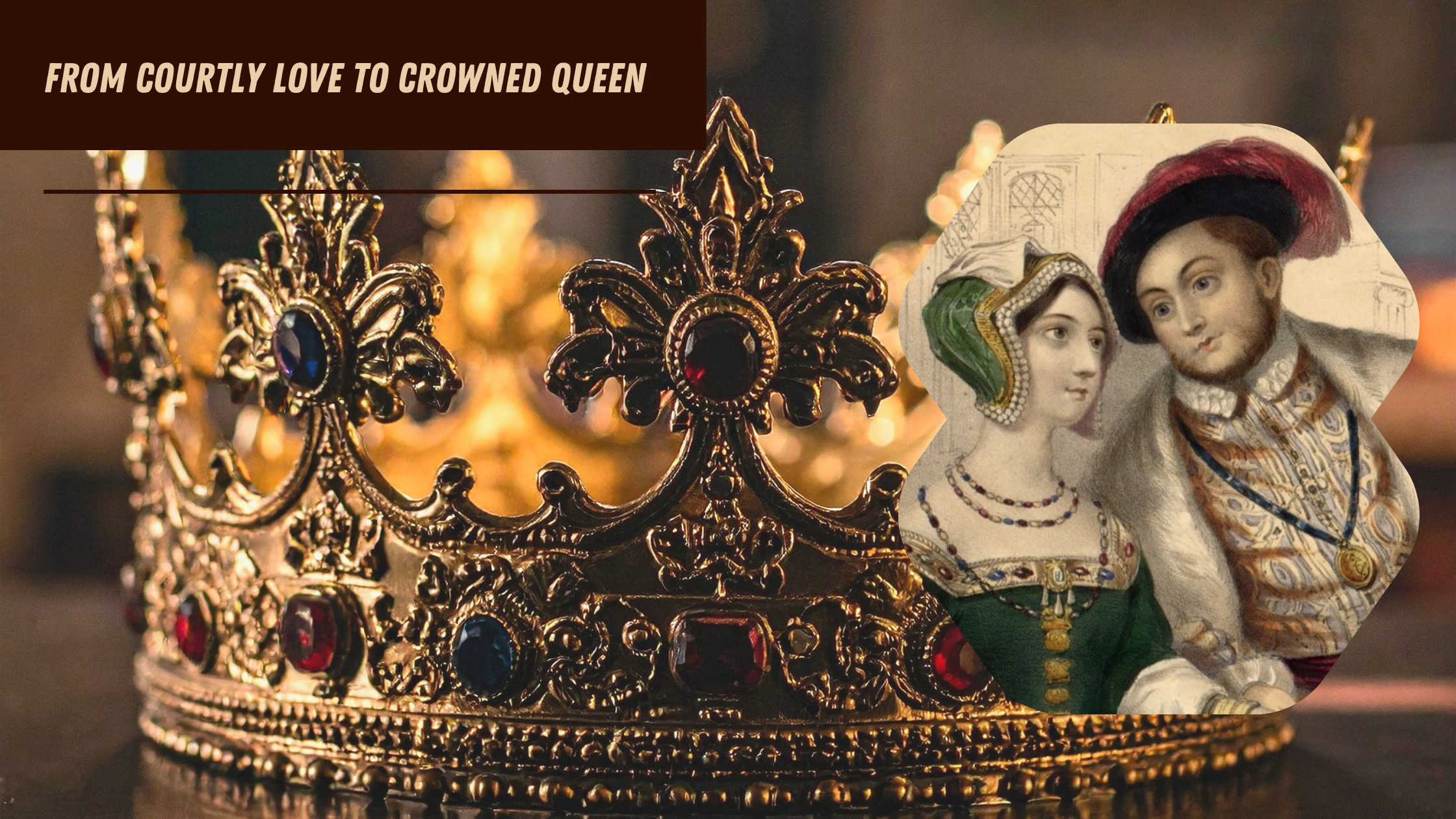
How Anne Boleyn Turned a Romance Into a Revolution
Most courtly love stories end with poetry.
Anne Boleyn's ended with a coronation, a religious revolution, and the transformation of an entire kingdom.
Throughout this series, we've explored how Anne and Henry VIII's relationship mirrored many of the conventions of medieval courtly love. There was longing, pursuit, symbolic devotion, gift-giving, and years of emotional tension. Henry cast himself as the devoted lover. Anne occupied the role of the unattainable lady.

But somewhere along the way, the rules changed.
What began as a familiar aristocratic game became one of the most consequential relationships in English history.
Because Anne Boleyn did something unusual.
She refused to let courtly love remain symbolic.
The Rules of Courtly Love
Traditional courtly love thrived on distance.
The beloved lady was admired, pursued, and celebrated.
The lover wrote verses, performed noble deeds, and demonstrated devotion.
The relationship itself was often more important than its fulfillment.
In many stories, desire remained unresolved.
That was part of the point.
The tension sustained the romance.
The unattainable woman inspired the man to become better, braver, and more honorable.
But Anne Boleyn's story did not end with admiration.
It ended with demands.
The King's Obsession
By the mid-1520s, Henry VIII's fascination with Anne had become impossible to ignore.
His surviving letters reveal an intensity that went beyond ordinary courtship. He referred to Anne as his "mistress and friend" and repeatedly expressed his desire to make her his wife.
At first, Henry likely imagined that Anne would become another courtly conquest.
Instead, Anne held her ground.
Whether motivated by conviction, ambition, prudence, or a combination of all three, she resisted becoming merely the king's mistress.
The dynamic changed.
For perhaps the first time in his adult life, Henry encountered a woman who refused the role he offered.
If he wanted Anne, he would have to offer something greater.
A crown.
The Divorce Crisis
The problem was that Henry was already married.
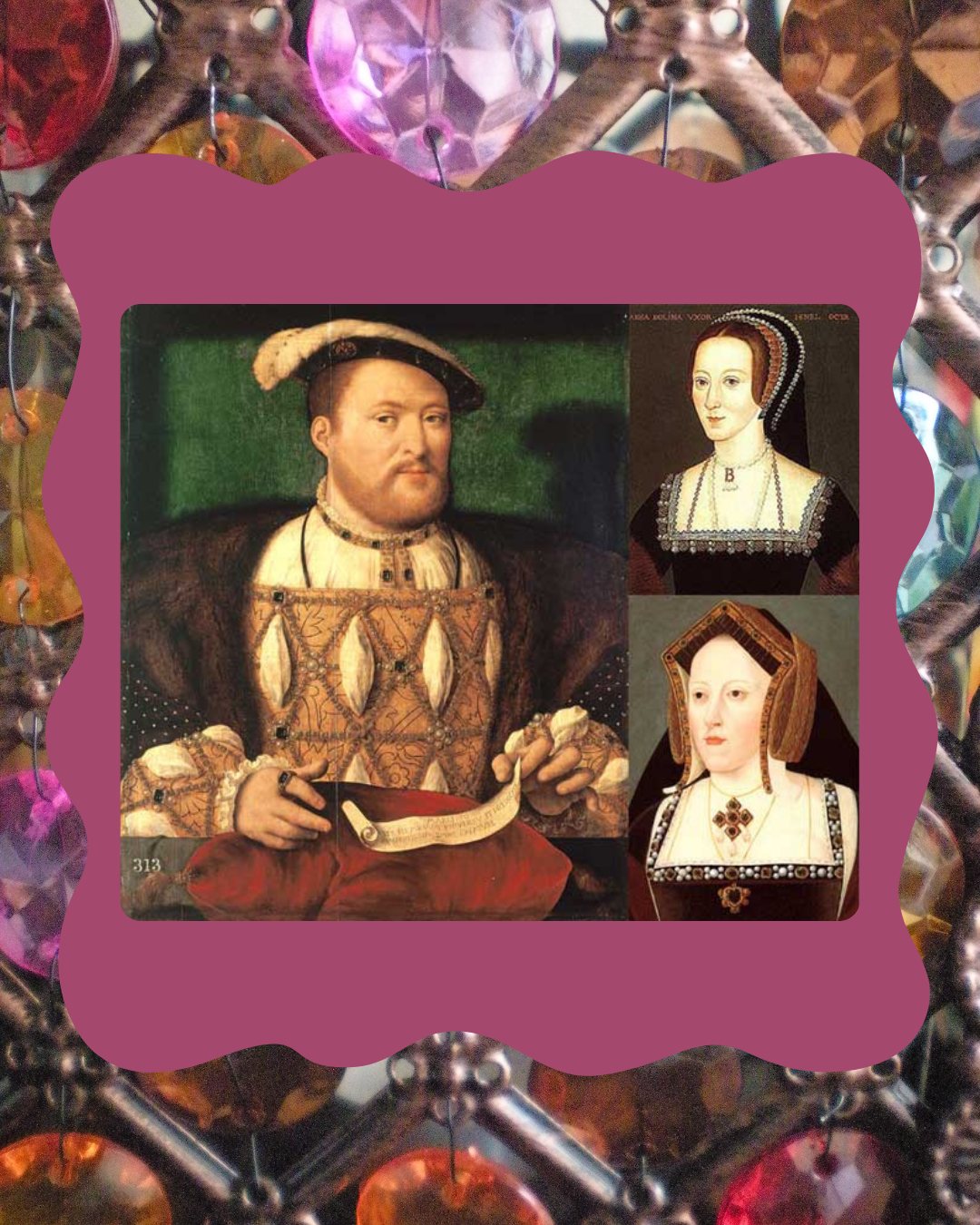
His marriage to Catherine of Aragon had lasted for nearly twenty years. Yet Henry had become convinced that the union was invalid and that his lack of a surviving son reflected divine displeasure.
Whether Anne caused the king's desire for annulment remains debated among historians.
What is clear is that her presence accelerated the crisis.
Henry wanted more than affection. He wanted marriage.
When the pope refused to grant the annulment Henry sought, the issue expanded beyond personal desire.
It became a constitutional problem. Then a religious one. Then a national one.
A private romance was becoming public policy.
From Flirtation to Revolution
The story is often simplified as a king leaving one wife for another. In reality, the consequences were far larger.
Over the course of the 1530s, Henry rejected papal authority, asserted royal supremacy over the English Church, and initiated reforms that permanently altered England's religious landscape.
The result was the birth of the Church of England.
Many forces contributed to the English Reformation: politics, theology, economics, and royal authority.
Yet Anne stood near the center of the storm. She supported reform-minded thinkers. She encouraged the circulation of religious texts. She helped create an environment in which new religious ideas could reach the king.
What began as a courtship had become a catalyst for national change.
A Queen for One Thousand Days
Anne's queenship lasted roughly one thousand days, from her coronation in June 1533 until her execution in May 1536.
By historical standards, it was remarkably brief. Yet few queens left a greater mark.
During those three years, Anne gave birth to the future Elizabeth I, participated in the transformation of England's religious institutions, and occupied a central role in the political life of the kingdom.
Her influence inspired fierce loyalty among supporters and intense hostility among critics. Even after her fall, the changes set in motion during her rise could not easily be undone. The kingdom that existed before Anne was not the same kingdom that existed after her.
Rewriting the Rules
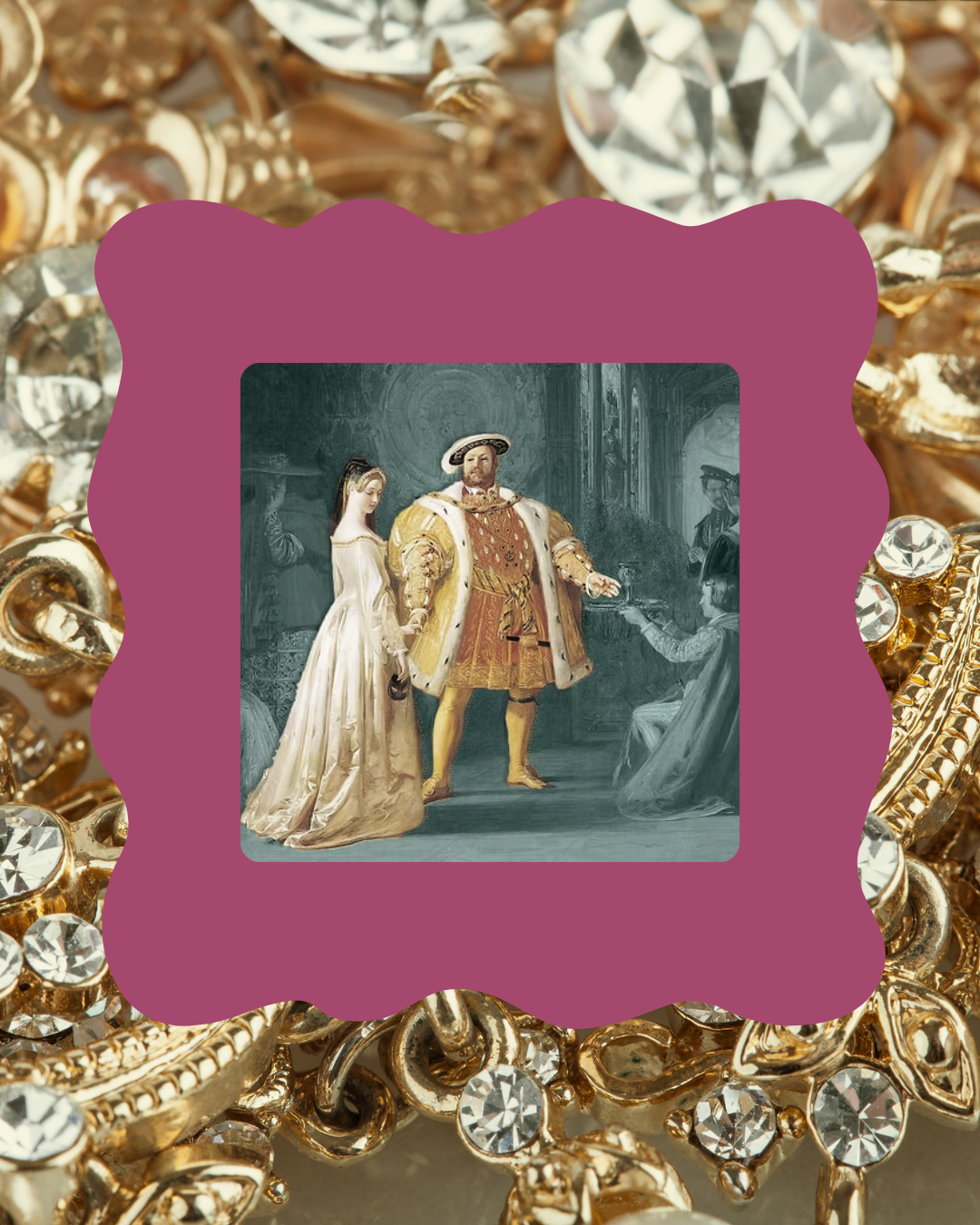
This is what makes Anne Boleyn so fascinating through the lens of courtly love.
She did not simply participate in the tradition. She transformed it.
Courtly love traditionally celebrated symbolic devotion. Anne turned devotion into a legal marriage.
Courtly love centered on flirtation and longing. Anne's relationship helped spark a religious revolution.
Courtly love was often a performance staged within the boundaries of aristocratic society. Anne converted performance into power. The beloved lady became a queen. And the consequences extended far beyond the lovers themselves.
The Romance That Rewrote a Kingdom
It is tempting to view Anne and Henry's story as a tragic romance.
In many ways, it was. But it was also a political story, a religious story, and a constitutional story. The relationship reshaped institutions. It altered the balance of power between crown and church. It changed the future of the English monarchy. And it paved the way for the reign of Elizabeth I, one of England's most influential rulers.
The language of courtly love promised that devotion could change a man. Anne Boleyn's story suggests something even more dramatic. Sometimes devotion can change a kingdom.
Sources
Eric Ives, The Life and Death of Anne Boleyn (2004)
David Starkey, Six Wives: The Queens of Henry VIII (2003)
G. W. Bernard, Anne Boleyn: Fatal Attractions (2010)
Diarmaid MacCulloch, The Reformation: A History (2003)
Suzannah Lipscomb, 1536: The Year That Changed Henry VIII (2009)