Romanticizing Summer: A History Girl's Guide to Living Like You're in a Period Drama
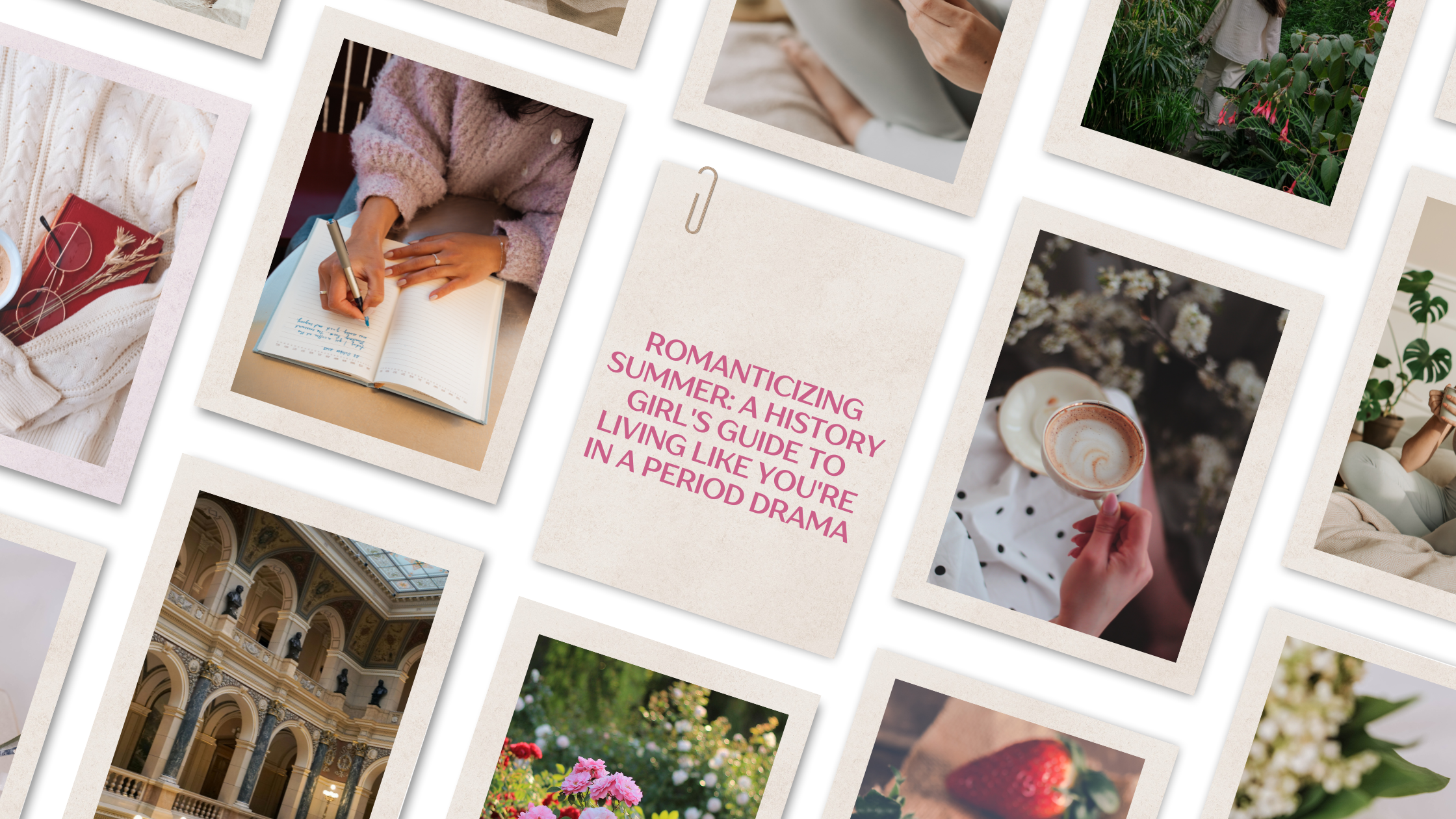
Every summer, social media seems to rediscover the phrase "romanticize your life."
Suddenly, morning coffee becomes a ritual, walks become "main character moments," and reading in the garden feels like stepping into another century.
But have you ever wondered where the idea of romanticizing life actually comes from?
As a historian, I can't help but smile every time I hear the phrase. While today's version often means slowing down and finding beauty in everyday moments, its roots stretch back more than two centuries to one of history's most fascinating cultural movements: Romanticism.
Understanding the past makes the trend even more meaningful-and perhaps, a little more beautiful.
What Does It Mean to "Romanticize" Your Life?
Today, romanticizing your life has very little to do with romance.
Instead, it means choosing to see the extraordinary within the ordinary.
It's lighting a candle while you write instead of staring at a blank screen.
It's hanging your laundry outside simply because you love the smell of fresh linen.
It's buying flowers for yourself.
It's choosing the scenic route home.
It's putting your phone away to watch the sunset.
In many ways, it's an intentional act of noticing.
But Romanticism Meant Something Different
The word comes from the Romantic movement, an intellectual, artistic, and literary movement that emerged in Europe during the late eighteenth century and flourished throughout the nineteenth century.
Romanticism wasn't about falling in love. It was a response to a world that was changing rapidly.
The Industrial Revolution was transforming cities. Factories multiplied. Scientific thinking and reason had become the dominant way of understanding the world following the Enlightenment.
The Romantics believed something important was being lost.
Rather than placing reason above everything else, they celebrated imagination.
Instead of efficiency, they sought beauty.
Instead of endless progress, they looked toward nature.
Artists painted dramatic landscapes.
Poets wandered through forests.
Writers explored emotion, wonder, memory, and the sublime—the overwhelming feeling that comes from standing before something far greater than yourself.
For them, beauty wasn't frivolous.
It was essential.
Summer Was Their Favorite Season
It's no coincidence that many Romantic writers found inspiration outdoors.
Summer represented abundance.
Long walks through meadows. Picnics beside rivers. Wildflowers blooming without permission. Reading beneath old trees. Listening to birds before sunrise.
Nature wasn't simply scenery. It was a teacher.
Many believed that spending time outdoors restored something that modern life threatened to erase.
Sound familiar?
Perhaps we've been searching for the same thing all along.
The History Girl's Summer
As historians, we often spend so much time studying the past that we forget people actually lived it.
They weren't always attending royal courts or fighting battles.
Most days looked surprisingly ordinary.
Women embroidered while talking with friends. Families gathered berries. Letters were written by open windows. Children chased butterflies. Garden paths were worn by countless evening walks. Books were read slowly because there were no notifications waiting.
These quiet moments rarely make it into history books, yet they made up most of life.
Perhaps that's why I find them so fascinating.
Romanticizing Summer—Historically
If I could borrow a little wisdom from history, here's how I'd spend a summer day.
Wake with the sunrise and open every window.
Drink tea from a real cup instead of a travel mug.
Visit a museum simply because curiosity deserves exercise too.
Read beneath a tree—not because you have to finish a chapter, but because stories feel different outdoors.
Visit an old cemetery and learn the names behind forgotten stones.
Pack strawberries, fresh bread, and cheese for a picnic.
Write a handwritten letter.
Press flowers between the pages of a notebook.
Leave your phone behind for an afternoon.
Walk through a botanical garden.
Watch clouds instead of television.
Visit a historic home and imagine the conversations once held inside its walls.
Watch the stars before bed.
Not because someone online suggested it.
Because history reminds us these simple pleasures have always mattered.
Where Modern Romanticizing Gets It Wrong
Sometimes social media turns romanticizing life into another performance.
The perfect linen dress.
The perfectly arranged picnic.
The expensive European vacation.
The flawless aesthetic.
Ironically, that's the opposite of what many Romantic thinkers believed.
Romanticism wasn't about perfection.
It was about authenticity.
About feeling deeply.
About finding meaning.
About paying attention.
You don't need a castle in Scotland or a cottage in the English countryside.
You can romanticize an evening on your own porch.
A walk through your neighborhood.
A trip to the local library.
History teaches us that beauty has never belonged exclusively to the wealthy.
It belongs to those willing to notice it.
What History Can Teach Us About Summer
One of the greatest gifts history offers is perspective.
Every generation has lived through uncertainty.
Every generation has experienced change.
Yet across centuries, people still paused to admire gardens.
They still wrote poetry.
They still gathered around dinner tables.
They still found joy in music, storytelling, and long summer evenings.
Those moments are worth preserving—not only in archives, but in our own lives.
A Final Thought
Perhaps romanticizing summer isn't about pretending life is a period drama.
Perhaps it's about remembering what generations before us understood so well: that ordinary days become extraordinary when we are fully present within them.
The Romantic movement challenged people to slow down long before "slow living" became a hashtag.
As a history girl, I find comfort in that.
History reminds us that beauty is rarely found in doing more.
It's found in noticing more.
So this summer…
Visit the museum.
Read the novel.
Bake the bread.
Walk among wildflowers.
Learn the story behind an old building.
Write in the margins.
Watch the sunset.
And remember that long before "romanticizing your life" became a trend, history was quietly teaching us how.