Anne Boleyn's French Education: How the Court of Queen Claude Shaped England's Most Influential Queen
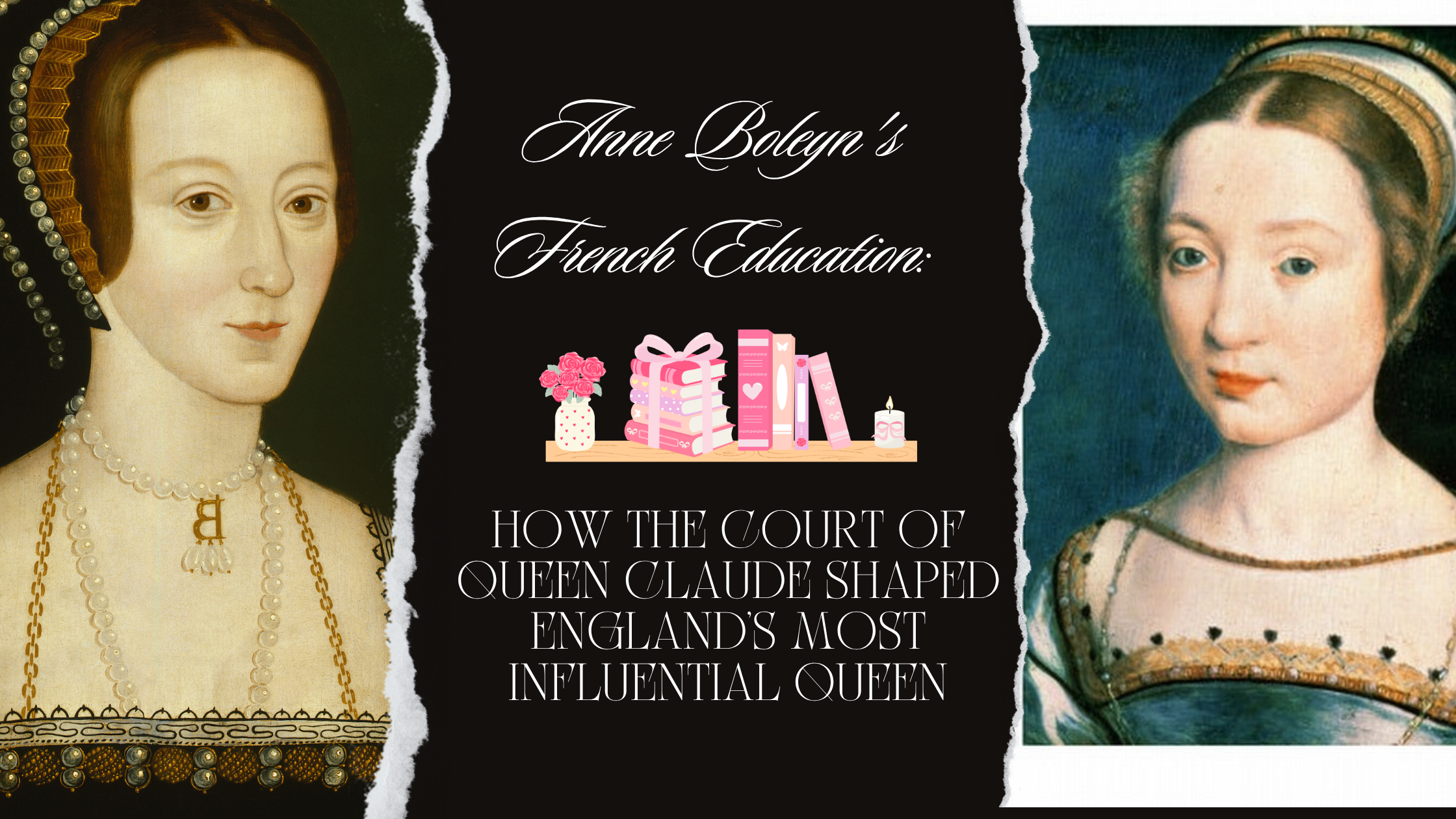
When Anne Boleyn returned to England in 1522, she was no longer simply the daughter of an ambitious diplomat. She arrived as a polished Renaissance courtier whose education, manners, and worldview had been formed at one of Europe's most sophisticated royal courts. While history often remembers Anne through the lens of her marriage to Henry VIII and her tragic execution, it was her years in France that transformed her into the remarkable woman who would captivate a king and influence the English Reformation.
To understand Anne Boleyn, we must first understand the court-and the queen-that shaped her.
Anne's Journey to France
Born around 1501 to Thomas Boleyn and Elizabeth Howard, Anne belonged to a rising family eager to secure its place among England's political elite. Recognizing the importance of a continental education, Thomas Boleyn arranged for Anne to be sent abroad.
Her first stop was the court of Margaret of Austria in Mechelen in 1513. Although Anne spent only a short time there, Margaret's court was renowned as one of Europe's greatest centers of female education and Renaissance learning. Anne was introduced to court etiquette, languages, and humanist ideals before moving to France the following year.
In October 1514, Anne accompanied Princess Mary Tudor to France for Mary's marriage to King Louis XII. When Louis died just three months later and Mary returned to England, Anne remained in France, entering the household of the new queen, Claude of France.
She would stay there for nearly seven years.
Who Was Queen Claude?
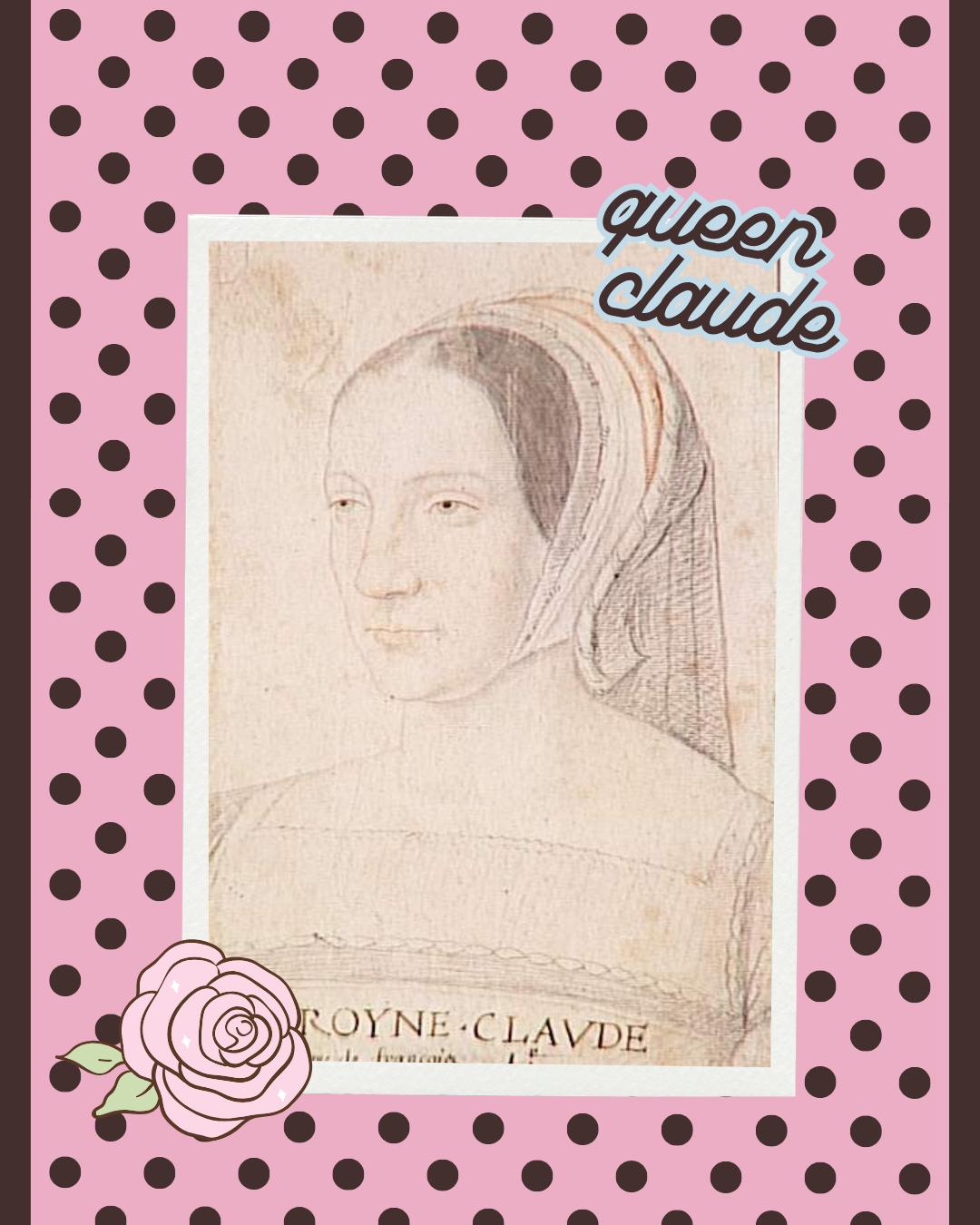
Claude of France (1499–1524) was the eldest daughter of Louis XII and Anne of Brittany.
She was born on the 13th of October in 1499. Unfortunately for her father, back then, he had no male heirs to inherit his vast fortune. As per the time, Salic law prevented Claude from acceding to the throne of France on the death of her father in January 1515. To ‘correct’ this, she was married to her husband and cousin, Francis, Duke of Angoulême, in which she inherited the throne and acted as Queen Consort instead.
This made Claude queen from January 1515 until her death in July 1524. In relation to Anne, historians believe she would have been a lady in waiting from 1515 until late 1521. Making her there from the very start and watching how Claude ‘became’ queen and how she defined her new role.
Anne would have seen how unlike Claude’s her husband ‘charismatic and charming’ husband Francis, whose reign is remembered for military campaigns, artistic patronage, and political ambition, Claude was known for her humility and personal piety.
Contemporary observers consistently described her as:
Gentle
Charitable
Deeply religious
Modest
Devoted to her family
She spent much of her brief reign balancing the enormous responsibilities of queenship while enduring repeated pregnancies. Between 1515 and 1524, Claude gave birth to seven children before dying at only twenty-four years of age.
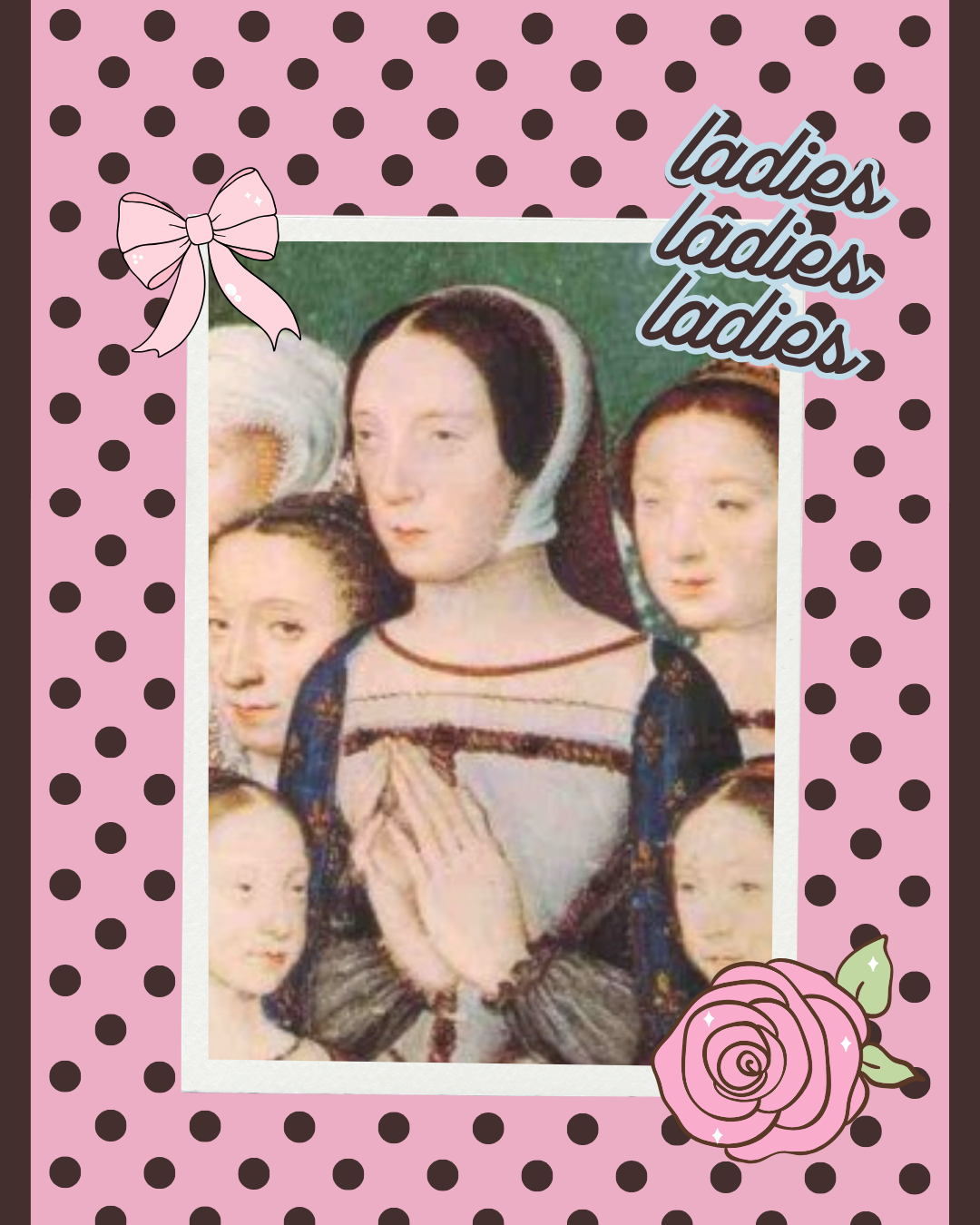
Although she exercised little direct political authority, her household became an important center of education for noblewomen-including Anne Boleyn.
A Renaissance Education
The French court offered Anne opportunities unavailable to most English women.
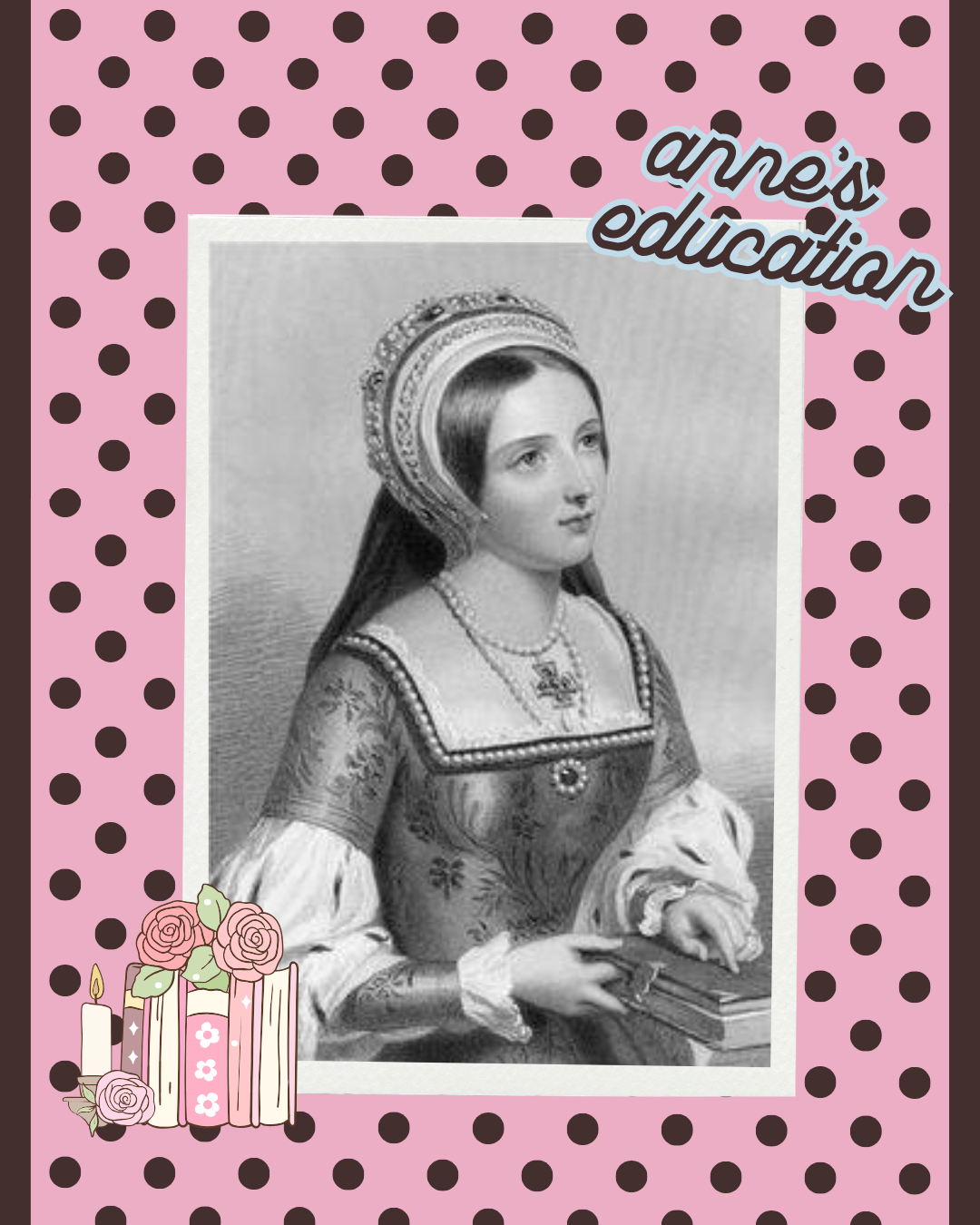
During her years in Claude's household she became fluent in French, a skill that distinguished her throughout her life. More importantly, she absorbed the culture of the Renaissance.
Anne likely studied:
French language and literature
Court etiquette
Music and dance
Poetry
Needlework
Conversation and rhetoric
Classical learning
Diplomatic ceremony
French courts valued wit and conversation alongside beauty and refinement. Noblewomen were expected to participate intelligently in court life, and Anne developed a reputation for her lively intellect and confidence.
The Venetian diplomat Francesco Sanuto later remarked that Anne was "not one of the handsomest women in the world," yet praised her charm, style, and ability to captivate those around her-qualities that reflected her French education more than conventional beauty.
Humanism and Learning
Anne's years in France coincided with the flourishing of Renaissance humanism.
The court of Francis I attracted scholars, artists, poets, and intellectuals from across Europe. Classical education, language study, and literature were celebrated.
Queen Claude herself remained a devout Catholic throughout her life, and historians caution against portraying her court as overtly Protestant. However, Anne was exposed to an atmosphere that encouraged learning and scholarly inquiry.
These experiences likely helped shape her later interest in religious reform.
As queen, Anne collected works by scholars such as Erasmus and supported reform-minded clergy. She famously presented Henry VIII with an English translation of William Tyndale's The Obedience of a Christian Man, a book that argued kings derived their authority directly from God rather than the pope. While Anne's evangelical convictions matured after her return to England, the intellectual curiosity fostered during her French education undoubtedly prepared her to engage with these ideas.
Learning Queenship
Perhaps the greatest lesson Anne learned was observing queenship itself.
From Queen Claude she witnessed the many responsibilities expected of a Renaissance queen:
Managing an extensive royal household
Patronizing artists and scholars
Supporting charitable works
Representing dignity during public ceremonies
Producing heirs for the dynasty
Balancing religion with court life
Although Anne would ultimately redefine queenship in England through her political influence and support of reform, her understanding of the role was shaped by watching Claude fulfill these duties with grace and quiet authority.
Returning to England
When Anne returned to the English court around 1522, she stood apart from nearly every other noblewoman.
She dressed in the latest French fashions.
She favored the elegant French hood rather than the traditional English gable hood.
She danced with exceptional skill.
She spoke fluent French.
Most importantly, she possessed a confidence and sophistication rarely seen at Henry VIII's court.
Historians often argue that Henry VIII was drawn not simply to Anne's appearance but to her intelligence, wit, and cosmopolitan outlook. She represented the ideals of the Renaissance in a way few English courtiers could.
Queen Claude's Lasting Legacy
Queen Claude died in 1524, only two years after Anne returned to England.
She is often overshadowed by the more flamboyant figures of the French Renaissance, yet her influence extended beyond France in unexpected ways.
Within her household, Anne Boleyn received an education that transformed her into one of the most remarkable women of the sixteenth century. Through Anne-and later through Anne's daughter, Elizabeth I-the cultural values of the French Renaissance left a lasting mark on English history.
Claude may not have sought political greatness, but her court helped educate the woman who would forever change the Tudor dynasty.
Why Anne's French Upbringing Still Matters
Anne Boleyn's story did not begin with Henry VIII.
It began in libraries, royal chambers, chapel services, gardens, and salons of the French court, where she learned to think critically, converse elegantly, appreciate scholarship, and carry herself with confidence.
Her years in France remind us that education is often history's quietest revolution.
Long before Anne became queen, she had already become something England had rarely seen before: a truly Renaissance woman.
Further Reading On Anne
Antonia Fraser, The Six Wives of Henry VIII (Vintage Books, 1993).
Eric Ives, The Life and Death of Anne Boleyn (Blackwell Publishing, 2004).
Gareth Russell, Young and Damned and Fair: The Life of Catherine Howard (Simon & Schuster, 2017) — excellent background on the French and English courts.
John Guy, Queen of Scots: The True Life of Mary Stuart (for context on Renaissance queenship).
Susan Doran, The Tudor Chronicles (Quercus, 2008).
Retha M. Warnicke, The Rise and Fall of Anne Boleyn (Cambridge University Press, 1989).
Maria Hayward, Dress at the Court of King Henry VIII (Maney Publishing, 2007).
Natalie Grueninger, In the Footsteps of Anne Boleyn (Amberley Publishing, 2017).
Primary Sources Related To Anne
George Cavendish, The Life and Death of Cardinal Wolsey.
Letters and Papers, Foreign and Domestic, of the Reign of Henry VIII.
Erasmus, selected correspondence concerning the French Renaissance and humanist education.
Venetian diplomatic dispatches, including the observations of Francesco Sanuto regarding Anne Boleyn.
Further Reading On Claude
Kathleen Wilson-Chevalier
"Claude de France: In Her Mother's Likeness, a Queen with Symbolic Clout?" in The Cultural and Political Legacy of Anne de Bretagne: Negotiating Convention in Books and Documents (Boydell Press, 2016).
This is the modern scholarly chapter on Claude and arguably the best place to start. Wilson-Chevalier examines Claude's queenship, cultural influence, public image, and relationship to the legacy of her mother, Anne of Brittany.
Henri Pigaillem
Claude de France (Éditions Pygmalion, 2006)
This is the only modern full-length biography devoted entirely to Queen Claude. It is written in French and remains the standard biography, although later scholars note that Claude's life still deserves more extensive study.
Murielle Gaude-Ferragu
Queenship in Medieval France, 1300–1500
Although Claude appears near the end of the medieval period, this book provides excellent context for understanding the expectations, ceremonial role, and authority of French queens that shaped Claude's reign.
Further Primary Sources Related To Claude
Brantôme, Lives of Illustrious Ladies (written later in the sixteenth century, containing traditions about the French court).
Contemporary diplomatic correspondence collected in the Letters and Papers, Foreign and Domestic, Henry VIII.
French royal household accounts.
Contemporary chronicles of Jean d'Auton.
The writings and correspondence surrounding Anne of Brittany and Francis I.