The Most Historia Quote I Read This Week Had Nothing to Do With History
I came across a quote the other day that stopped me mid-scroll.
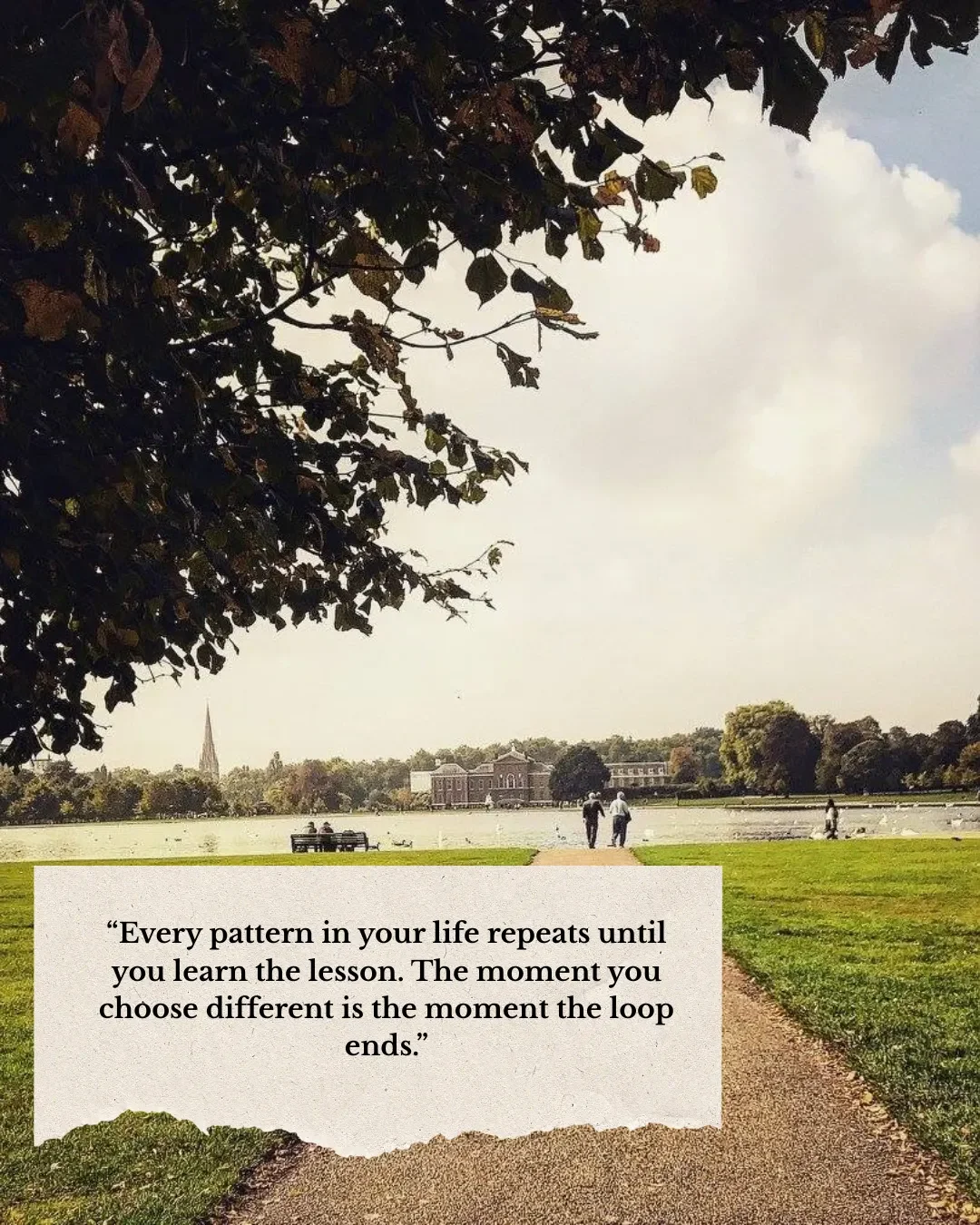
“Every pattern in your life repeats until you learn the lesson. The moment you choose different is the moment the loop ends.”
My first thought wasn’t about self-help.
It was history.
Because isn’t that exactly what history is?
Not just dates and battles and kings and queens, but patterns. Humanity living out the same story with different costumes, different technology, different borders, and different names.
As historians, we’re taught to be careful with the phrase history repeats itself.
Technically, it doesn’t. No event unfolds exactly the same way twice. The political landscape changes. The economies are different. The personalities are unique. The circumstances are never identical.
But human beings?
We are remarkably consistent.
And that’s the part that repeats.
History Is Really the Study of Human Nature
Every generation believes it is the exception.
Every civilization thinks it has finally “figured things out.”
Every empire quietly assumes that the mistakes of those before them belong to “less advanced” people.
Until suddenly... The arrogance returns.
Power begins to concentrate.
People become convinced they are untouchable.
Warnings are ignored because this time is different.
And before long, historians are writing another chapter that feels strangely familiar.
The names have changed.
The technology has changed.
The language has changed.
Human nature hasn’t.
“This Time Is Different”
Growing up in the shadow under the shadow of Manhattan and under an OG Finance Bro dad I was all too familiar with a phrase that’s almost become a joke {and a clear indicator that whoever says it to you is without a doubt NOT the person you should invest with because it’s most likely the most expensive phrase as well someone could say} in the finance world:
“This time is different.”
Investors hear it during bubbles. Housing markets. Tech booms. Cryptocurrency surges. Every generation convinces itself that the old rules no longer apply.
Sometimes the details really are different.
But greed isn’t.
Fear isn’t.
Overconfidence isn’t.
The belief that consequences somehow won’t catch up this time has destroyed fortunes for centuries.
The dangerous part isn’t changing circumstances.
It’s assuming human nature has changed with them.
It usually hasn’t.
And I don’t think this idea belongs only to economics.
I think it’s the story of humanity.
Our Personal History Works the Same Way
Here’s where the quote hit me.
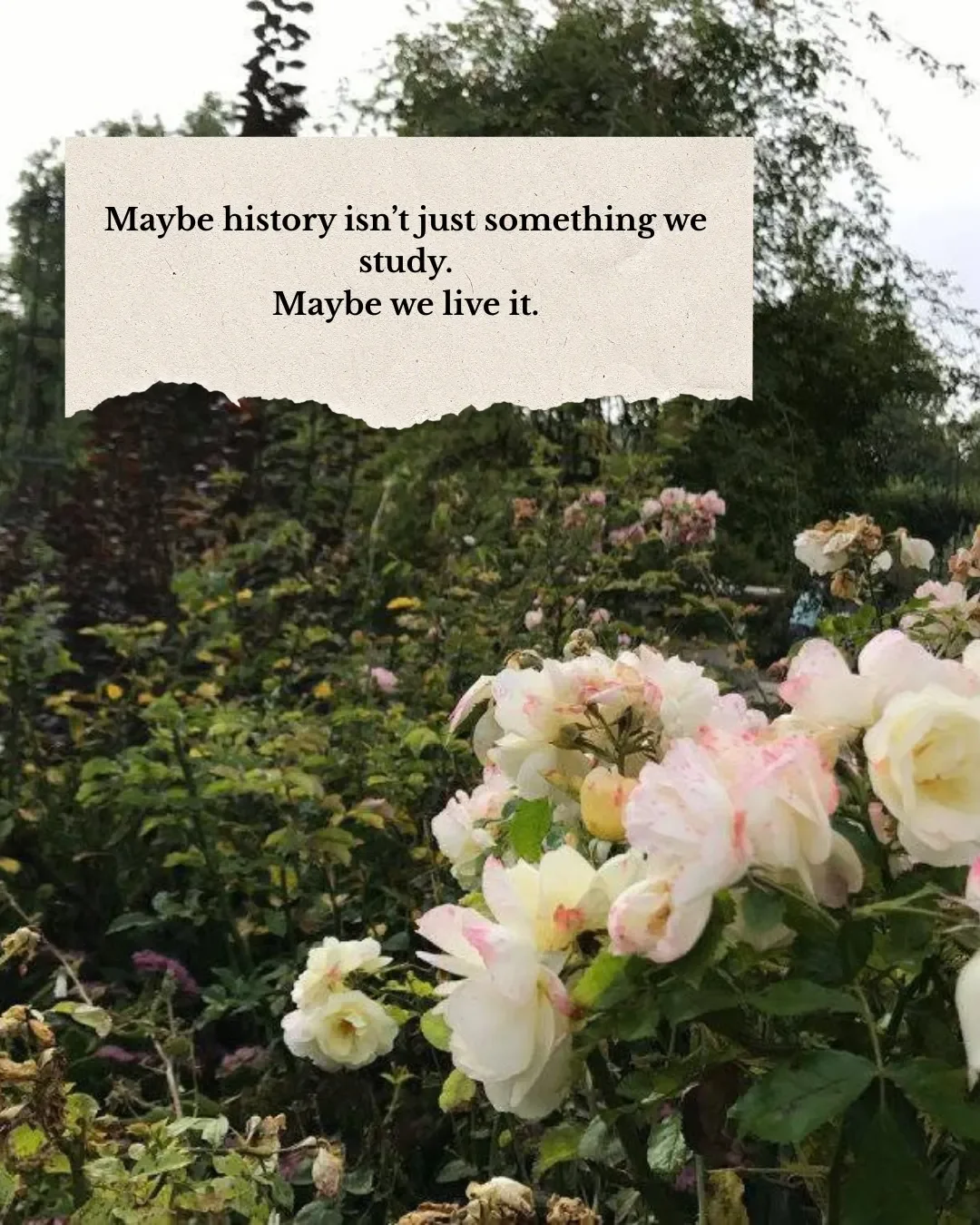
Maybe history isn’t just something we study.
Maybe we live it.
Every one of us has a personal history.
And if anyone has ever even gone to one therapy session I’m sure your well acquainted with the following ideas:
Maybe we repeat unhealthy relationships because we’ve never confronted the fear driving them.
Maybe we continue chasing validation because we never learned our worth wasn’t supposed to come from other people.
Maybe we avoid difficult conversations until resentment builds because that’s the pattern we’ve always known.
The scenery changes.
The people change.
The jobs change.
The cities change.
But until we learn the lesson, the pattern quietly finds us again.
Our personal history keeps writing itself.
We Love New Circumstances More Than New Character
One thing history has taught me is that people often believe changing circumstances automatically changes outcomes.
New ruler.
New government.
New relationship.
New job.
New city.
New decade.
New technology.
But if the same pride, greed, envy, fear, or arrogance remains underneath, eventually the story begins to sound familiar again.
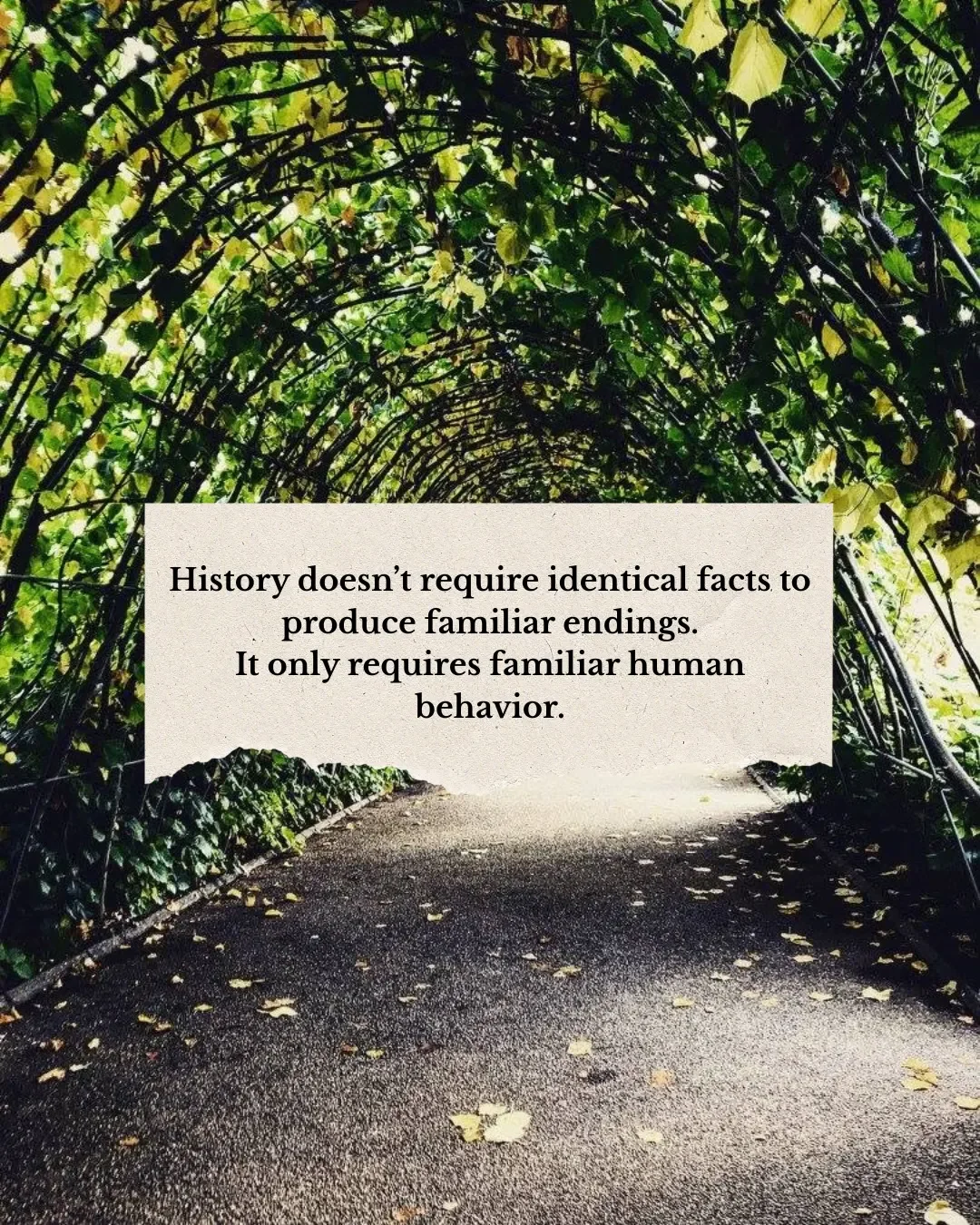
History doesn’t require identical facts to produce familiar endings.
It only requires familiar human behavior.
That’s Why We Study History
People often ask why history matters.
It’s because history gives us something incredibly rare.
A mirror.
Not a crystal ball.
A mirror.
It reflects the parts of ourselves we’d rather believe belonged only to people centuries ago.
We like to think we’d never make those decisions.
That we’d be wiser.
Kinder.
More rational.
Less prideful.
History quietly reminds us that the people we judge from the past were just as convinced they were making the right choices. That’s a humbling thought.
And let me be clear: this isn’t an attempt to excuse or justify the atrocities of the past. Some events in history are so horrific they shake you to your core. They deserve to be remembered with honesty, not softened by hindsight.
But I do think we’re often too quick to assume we would have been the exception-that we would have recognized the warning signs, spoken up, or acted differently simply because we know how the story ends. That confidence can be misleading.
Perhaps an even more uncomfortable thought is this: what if there are things happening in our own time that future generations will look back on with the same disbelief? What if they wonder how we missed what now seems so obvious?
Just as we judge those who came before us, one day history may judge us. The question isn’t whether we’re better than the people of the past-it’s whether we’re willing to recognize the patterns unfolding in our own moment before they become another chapter in the history books.
Ending the Loop
The quote said,
“The moment you choose different is the moment the loop ends.”
I wonder if that’s true not only for individuals but for civilizations.
Real progress isn’t simply inventing better technology.
It’s developing better character.
It’s recognizing arrogance before it grows into tyranny.
It’s noticing greed before it becomes exploitation.
It’s identifying prejudice before it becomes persecution.
It’s paying attention to the patterns beneath the headlines instead of convincing ourselves that the details alone make us immune.
History doesn’t ask us to memorize facts so we can win trivia night.
It asks us to recognize ourselves.
Because perhaps the greatest lesson history teaches isn’t that the past repeats itself.
It’s that human nature does.
And until we’re willing to learn from it-both collectively and personally-we’ll keep finding ourselves surprised by endings history has already written countless times before.