Circe and Calypso: What The Odyssey Reveals About Ancient Greek Attitudes Toward Powerful Women
Few women in Greek mythology have captured the imagination quite like Circe and Calypso.
They are often remembered as temptresses—beautiful, mysterious women who delay Odysseus on his journey home. Popular culture frequently casts them as villains, enchantresses, or dangerous seductresses standing between the hero and his destiny.
But is that really how Homer intended us to see them?
When historians and classicists read The Odyssey, they ask a different question:
What did Circe and Calypso represent to the ancient Greeks?
While neither woman was a historical figure, both reveal fascinating insights into Greek ideas about female power, independence, hospitality, sexuality, and the tension between civilization and the unknown.
Like many myths, their stories are less about literal events and more about the society that created them.
The Women Beyond the Monster Stories
Modern retellings often simplify both characters.
Circe becomes "the witch."
Calypso becomes "the possessive goddess."
Yet Homer gives both women surprising depth.
Neither is purely evil.
Neither exists simply as an obstacle.
Instead, they become mirrors reflecting the choices Odysseus must make—and the values the Greeks admired.
Who Was Circe?
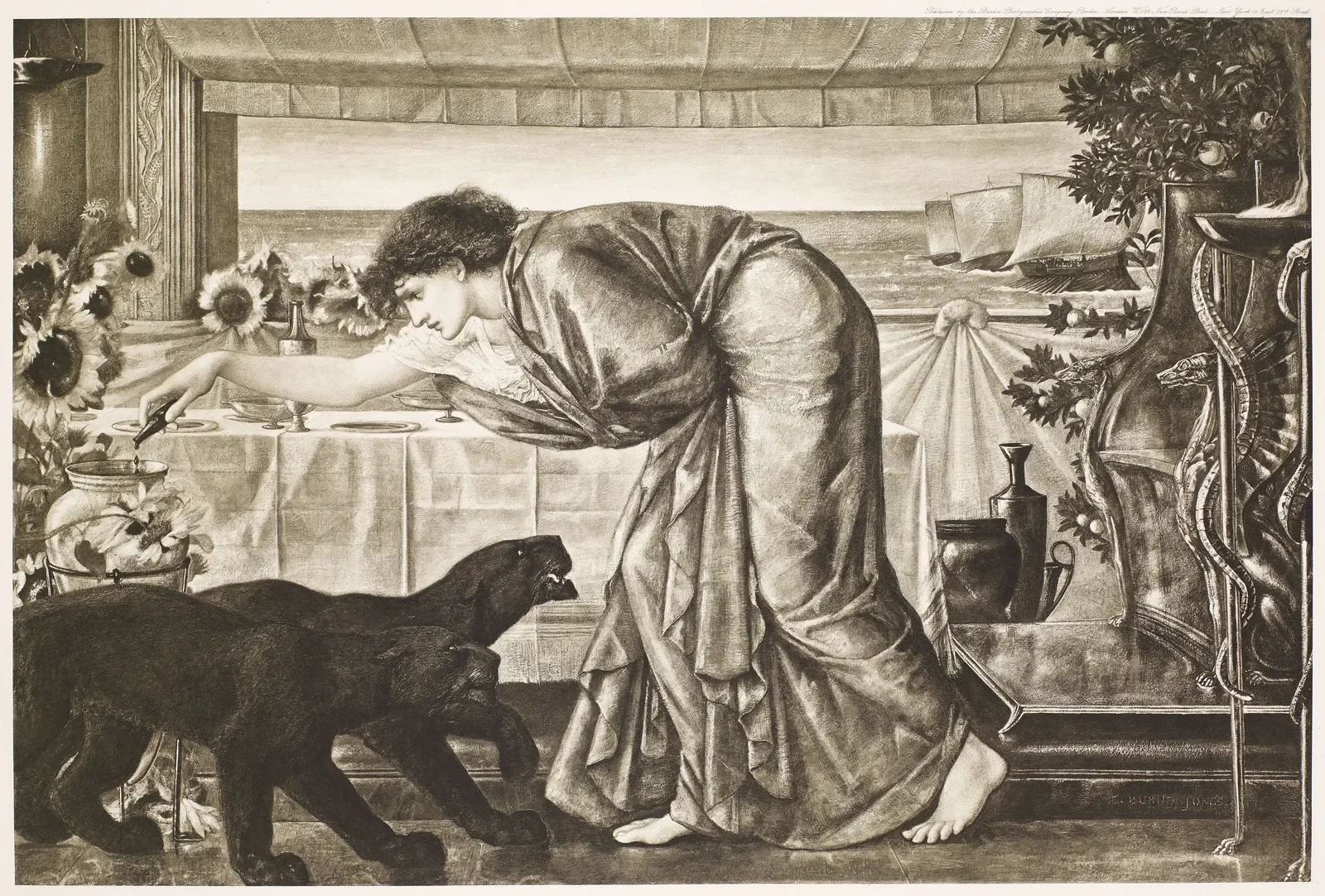
Edward Burne-Jones: The Wine of CirceThe Wine of Circe by Edward Burne-Jones; photographic print published by the Berlin Photographic Company in the 19th century.
Circe was not an Olympian goddess.
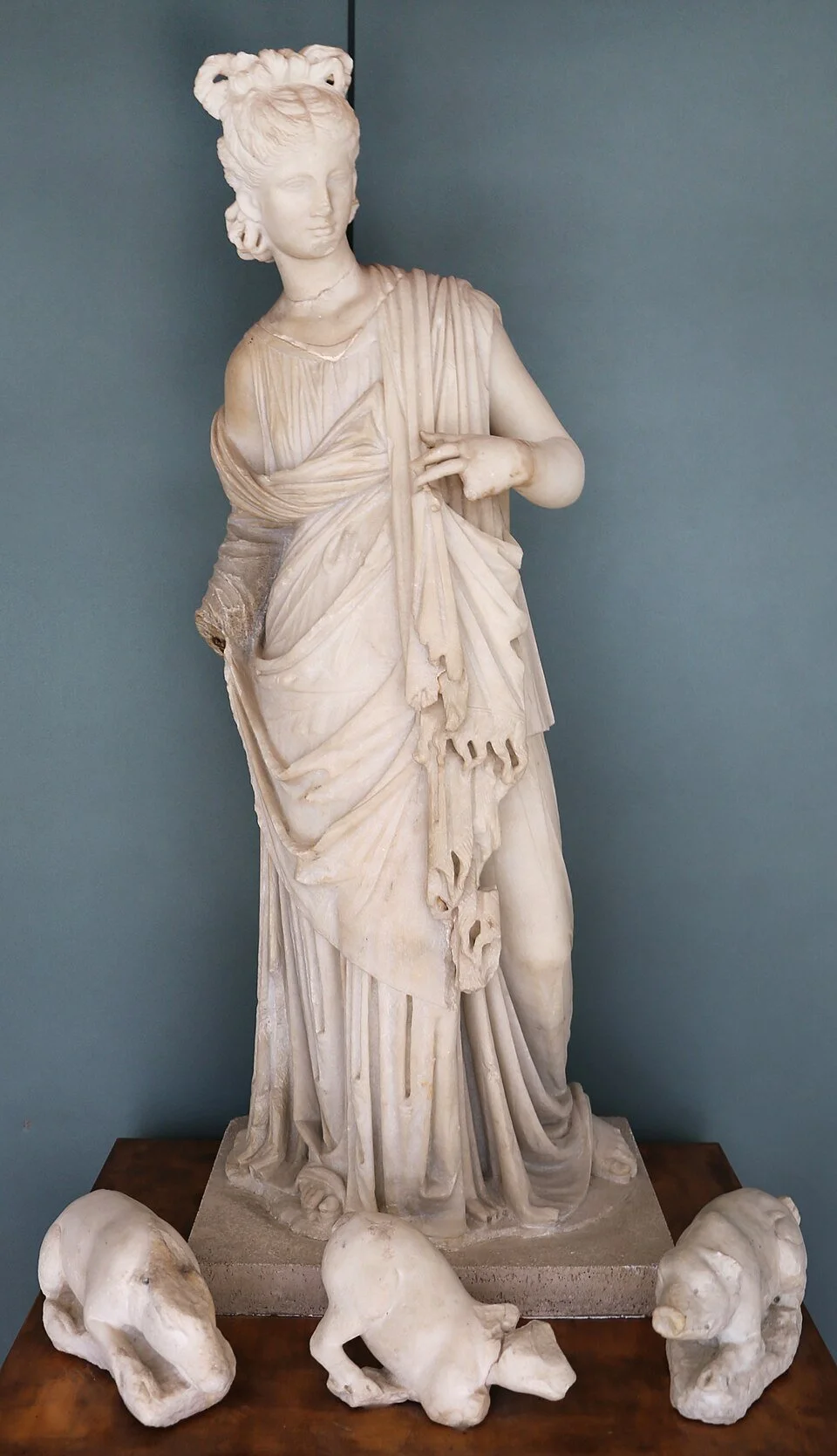
Statuette of Circe and pigs from the Sperlonga sculptures, 2nd-3rd century CE
She was usually described as the daughter of Helios, the sun god, and Perse, an Oceanid nymph. She lived alone on the island of Aeaea, surrounded by wild animals and skilled in herbal medicine, potions, and divine magic.
When Odysseus's crew arrived, she transformed many of his men into swine.
At first glance, she appears to embody one of mythology's oldest fears: a woman with knowledge powerful enough to overpower men. But the story quickly becomes more complicated.
With the help of the god Hermes, Odysseus resists her magic. Instead of continuing as enemies, Circe welcomes him into her home. She restores his companions to human form. She offers wise counsel. She tells him how to reach the Underworld. She warns him about the Sirens, Scylla, and Charybdis.
In many ways, Circe becomes one of Odysseus's greatest teachers.
Without her guidance, he likely never reaches Ithaca.
Who Was Calypso?
Calypso was a nymph, usually identified as the daughter of the Titan Atlas. She ruled the beautiful island of Ogygia.
After Odysseus washed ashore following a shipwreck, Calypso cared for him for seven years.
She offered him something no mortal could easily refuse.
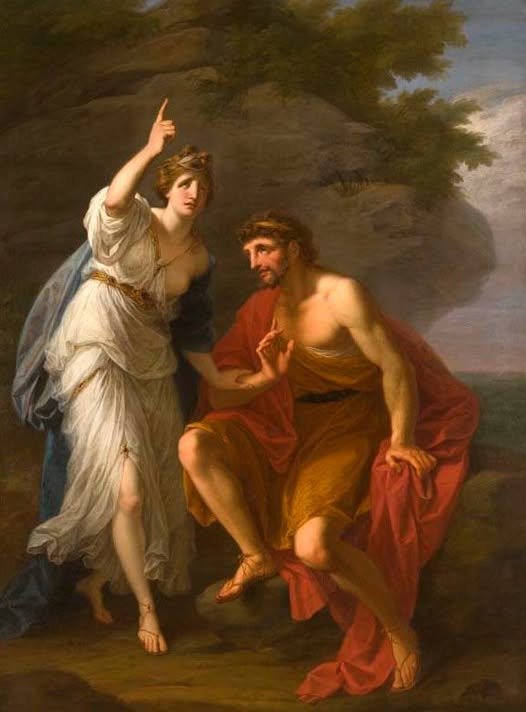
"Calypso Calling heaven and Earth to Witness her Sincere Affection to Ulysses" by Angelica Kauffman
Immortality.
If Odysseus agreed to remain with her forever, he would never grow old or die. Yet he declined.
Despite Calypso's beauty, comfort, and love, Odysseus longed for home, his wife Penelope, and his kingdom.
Eventually Zeus ordered Calypso to release him.
One of Homer's most moving scenes occurs as Calypso reluctantly obeys, recognizing that even a goddess cannot escape the authority of Zeus.
Women Living Outside Society
One striking similarity connects Circe and Calypso.
Both live alone.
Neither belongs to a traditional household.
Neither is defined by marriage.
Both control their own homes. — Both possess extraordinary power.
To the ancient Greeks, this independence would have appeared unusual.
Greek society generally expected respectable women to live within structured households under the authority of fathers or husbands.
Circe and Calypso exist beyond those boundaries. They inhabit distant islands far from cities, laws, and political institutions.
In many ways, they symbolize the unknown world beyond civilization itself.
Are They Villains?
Modern readers often ask whether Circe and Calypso should be considered villains.
Homer's answer seems to be no.
Both women show kindness.
Both provide hospitality.
Both help Odysseus survive.
Both express genuine emotion.
Even Circe, after initially harming his crew, becomes a generous host and trusted advisor.
Calypso, meanwhile, openly questions the double standards of the gods.
When Hermes arrives with Zeus's command, she protests that male gods routinely pursue mortal women without criticism, yet goddesses face condemnation for loving mortal men.
Her speech has fascinated scholars for centuries because it highlights questions of gender and power that still resonate today.
Female Knowledge and Power
Circe especially represents another recurring theme in Greek mythology: Women associated with specialized knowledge.
She understands herbs.
Medicine.
Transformation.
Prophecy.
Magic.
To modern audiences, these qualities may seem empowering. To ancient audiences, they were often both admirable and unsettling.
Knowledge itself was powerful.
The ability to change reality through hidden wisdom inspired both fascination and caution.
Circe embodies that ambiguity. She is neither entirely nurturing nor entirely dangerous. She exists somewhere in between.
The Contrast With Penelope
Homer deliberately contrasts Circe and Calypso with Penelope.
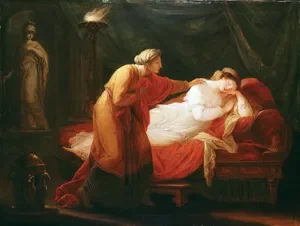
Angelica Kauffman: Penelope Awakened by Eurycleia Penelope Awakened by Eurycleia (Odysseus's nurse), oil on canvas by Angelica Kauffman, 18th–19th century.
All three women are intelligent. All exercise influence over Odysseus.
But they represent different worlds.
Penelope symbolizes home, family, order, and continuity.
Circe represents transformation, mystery, and hidden knowledge.
Calypso represents timelessness, isolation, and the temptation to abandon one's responsibilities.
Odysseus must choose between them.
His decision reveals one of the central messages of The Odyssey.
True fulfillment lies not in eternal pleasure or escape but in returning home and embracing one's duties.
What Do Historians Learn From These Stories?
Historians do not read Circe and Calypso as biographies of real women.
Instead, they examine what these myths reveal about ancient Greek culture.
The stories suggest that the Greeks admired intelligence but also viewed extraordinary power with caution.
They respected hospitality as one of civilization's highest virtues.
They believed home and family formed the foundation of a meaningful life.
And they often explored complex ideas about gender through larger-than-life female characters.
Importantly, these myths also remind us that Greek women in literature were rarely one-dimensional.
Even supernatural women possessed emotions, motives, strengths, and vulnerabilities.
Modern Reinterpretations
In recent decades, writers have returned to Circe and Calypso with fresh perspectives.
Novels such as Madeline Miller's Circe invite readers to consider these women not merely as obstacles in a hero's journey but as protagonists with stories of their own.
Historians appreciate these reinterpretations because they encourage readers to revisit the original texts and ask new questions.
How much of these myths reflects ancient expectations?
How much reflects later interpretations?
What voices have been overlooked?
These questions continue to shape the study of classical literature today.
More Than Enchantresses
It is easy to remember Circe as the woman who turned men into pigs.
Or Calypso as the goddess who kept Odysseus captive.
But doing so misses the richness of Homer's storytelling.
Circe is a healer, teacher, and guide.
Calypso is compassionate, lonely, and ultimately powerless before the will of Zeus.
Together, they reveal a world where female power was respected, feared, admired, and debated.
Their stories remind us that Greek mythology was never simply about heroes slaying monsters.
It was also about exploring the complexities of human nature through unforgettable women whose influence shaped one of history's greatest epics.
Perhaps that is why we are still talking about Circe and Calypso nearly three thousand years later.
Their magic was never just supernatural.
It was the enduring power to make every generation ask what strength, freedom, wisdom, and womanhood truly mean.