Introducing a New Tudor Tuesdays Series: The Men Accused
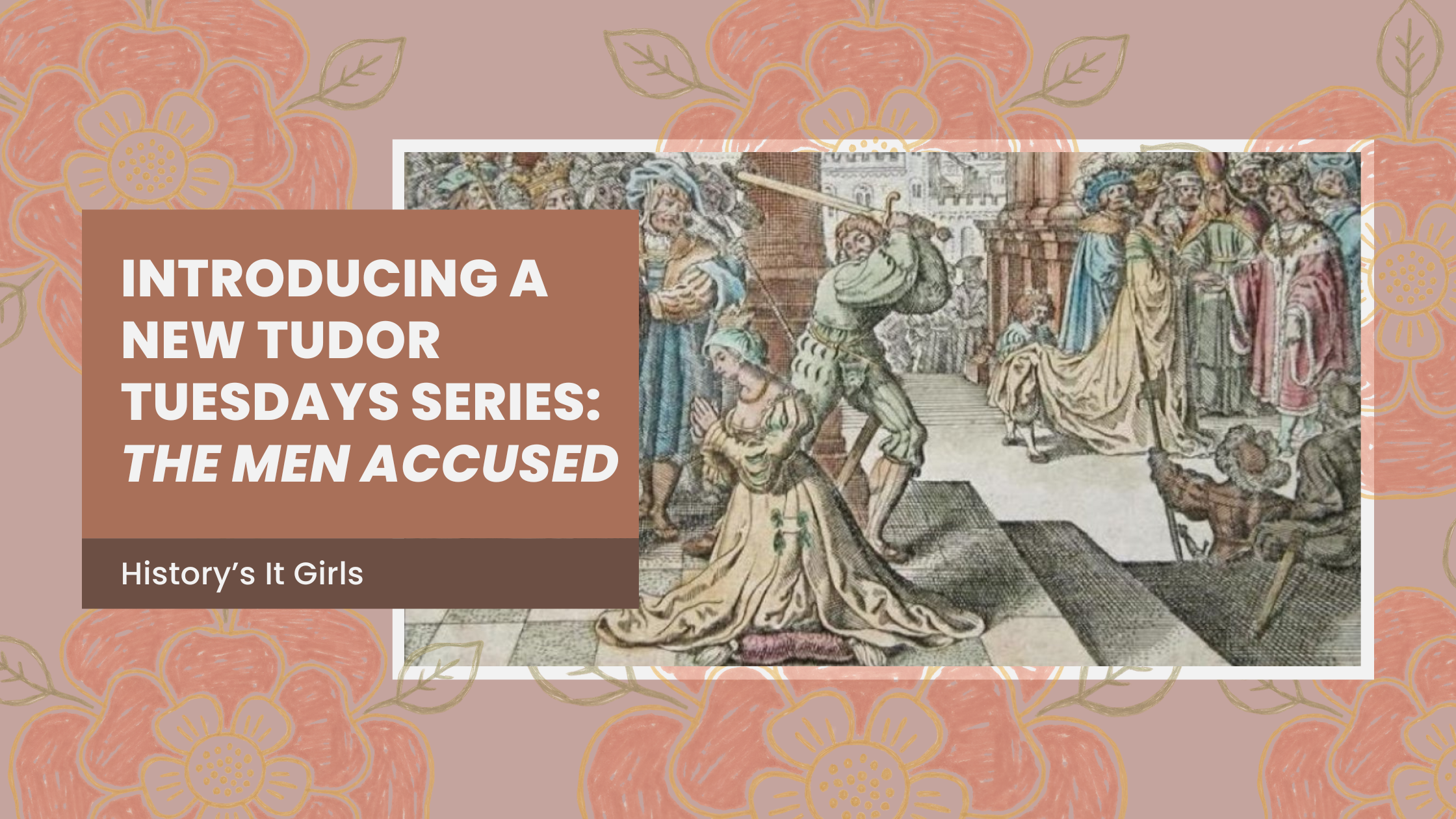
When we think about Anne Boleyn’s fall in May 1536, history tends to focus on one woman—the queen who lost her crown, her freedom, and ultimately her life.
But Anne did not face the scaffold alone.
Five men were accused alongside her, charged with adultery, treason, and plotting the king’s death. Their names appear in nearly every account of Anne’s downfall, yet most remain little more than footnotes in Tudor history. We often remember the accusations, but rarely stop to ask a more important question:
Who were these men before they became “the accused”?
This Tudor Tuesdays, we’re beginning a new History It Girls series called The Men Accused, where we’ll examine each of the men caught in one of England’s most infamous political disasters.
Were they guilty?
Were they victims?
Or were they simply standing in the wrong place at the wrong time as Henry VIII prepared to rewrite his future?
More Than Names in a Trial
History has a way of reducing people to the worst day of their lives.
Mark Smeaton is remembered as the musician who confessed.
Henry Norris is remembered as the king’s closest friend.
Francis Weston is remembered as the young courtier.
William Brereton is remembered as the powerful Welsh administrator.
George Boleyn is remembered as Anne’s brother.
Yet behind each name was a life, a career, a family, and a position within one of the most dangerous royal courts in Europe.
Some had spent years earning Henry VIII’s trust.
Others had risen rapidly through ambition and talent.
One was a commoner living among England’s greatest nobles.
All would eventually share the same fate.
Separating Fact from Fiction
Few events in Tudor history have attracted more myths than Anne Boleyn’s downfall.
The accusations of adultery have been repeated for centuries, but modern historians continue to debate the evidence. Contemporary records reveal contradictions, impossible timelines, and allegations that many scholars believe were politically motivated rather than grounded in fact.
Throughout this series, we’ll examine:
Who each man really was before the accusations.
His relationship with Anne Boleyn and Henry VIII.
The charges brought against him.
The evidence presented at trial.
What modern historians believe likely happened.
How his story has been remembered—or forgotten.
Rather than repeating Tudor gossip, we’ll investigate the surviving sources and explore what they reveal about justice, politics, loyalty, and power in Henry VIII’s England.
The Men We’ll Meet
Over the coming weeks, our Tudor Tuesdays series will explore:
Mark Smeaton – The talented court musician whose confession became one of the most controversial moments in the entire case.
Sir Henry Norris – Henry VIII’s trusted Groom of the Stool and one of the king’s closest companions, who refused to confess despite knowing the consequences.
Sir Francis Weston – The charismatic young courtier whose promising future ended almost overnight.
Sir William Brereton – A powerful administrator whose political influence may have made him as many enemies as admirers.
George Boleyn, Viscount Rochford – Anne Boleyn’s brother, whose accusation of incest remains one of the most shocking charges ever brought before an English court.
Each episode will explore the historical evidence surrounding these men while placing their stories within the larger political crisis unfolding in 1536.
Why Their Stories Matter
The downfall of Anne Boleyn was never simply about one marriage.
It was about succession.
Power.
Court factions.
Religion.
The fragile nature of royal favor.
And the terrifying reality that, in Tudor England, proximity to the king could be both the greatest privilege and the greatest danger.
Studying these men reminds us that history is rarely as simple as heroes and villains. It is often a story of ordinary people caught within extraordinary political events—where reputation could be destroyed overnight and justice was frequently shaped by the needs of the crown rather than the evidence presented.
Their names deserve to be remembered for more than the accusations that ended their lives.
Join Me Every Tudor Tuesday
Every Tudor Tuesday, we’ll reopen the records, revisit the evidence, and meet the men history has too often left in Anne Boleyn’s shadow.
Together, we’ll separate fact from fiction and uncover the lives behind one of the most famous trials in English history.
Because before they were the accused, they were courtiers, musicians, brothers, friends, and trusted servants of the king.
And each has a story worth telling.
Welcome to The Men Accused—a new History It Girls Tudor Tuesdays series where we explore the lives, trials, and legacies of the five men whose fates became forever entwined with Anne Boleyn’s.