Holy Week in Tudor England: Ritual, Reverence, and Good Friday Devotion
If Tudor Easter was the celebration…
Holy Week was the descent.
This was where faith became physical. Emotional. Almost unbearable in its intensity.
For the Tudors, this wasn’t symbolic.
It was something you did with your body.
🌿 Palm Sunday: The Beginning
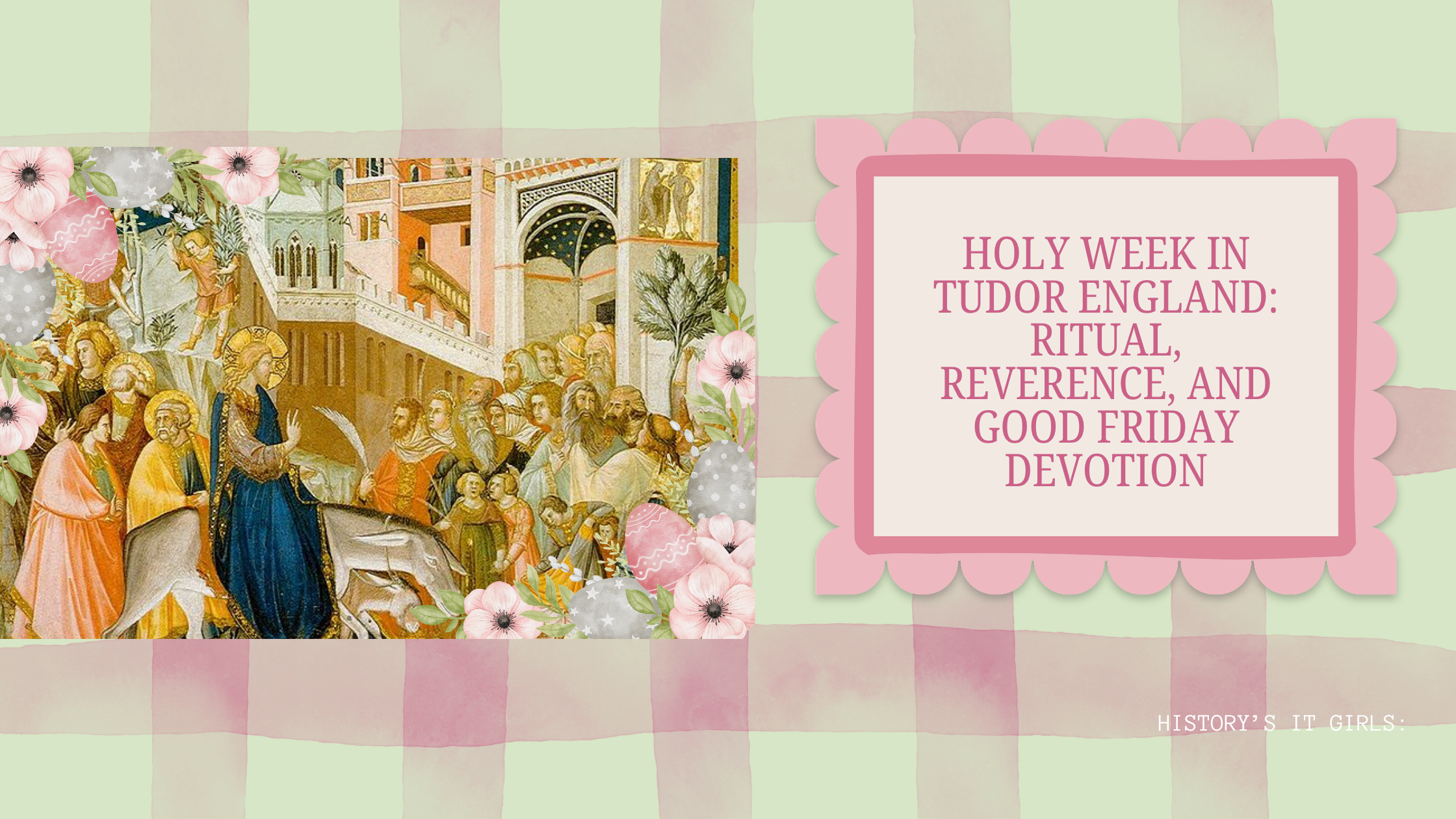
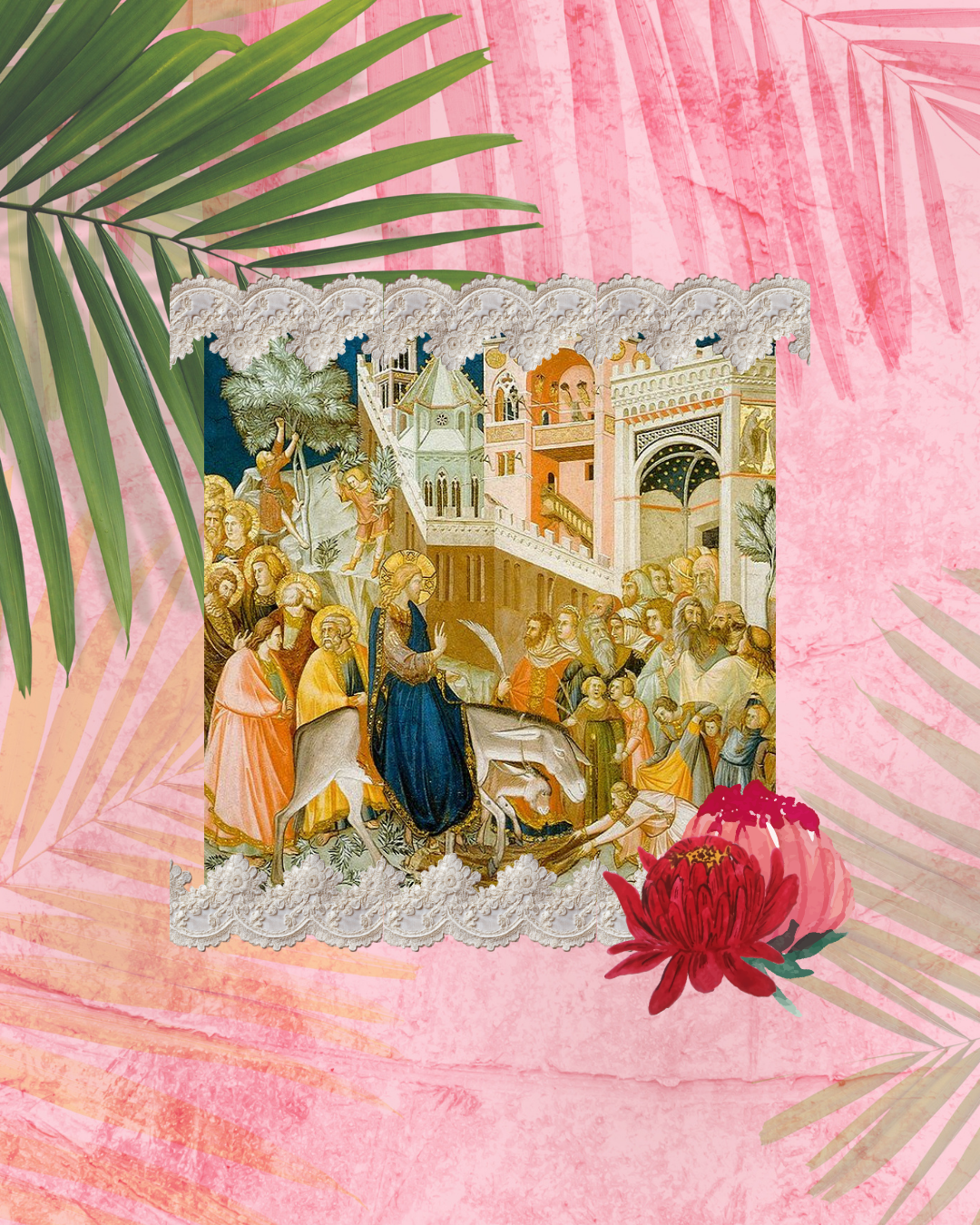
Holy Week opened with Palm Sunday.
But in England, palms were hard to come by—so people used:
Willow
Yew
Other greenery
These were blessed in church and carried in processions, marking Christ’s entry into Jerusalem.
It was hopeful-but the mood was already turning.
The Stripping of the Church (Before and After the Reformation)
As the week progressed, churches became increasingly stark:
Images were covered
Altars draped in black
Candles extinguished
This visual stripping mirrored Christ’s suffering.
By the time Good Friday arrived, the church felt almost… empty.
But here’s where things get really interesting-because in Tudor England, this “emptiness” didn’t mean the same thing across the century.
It changed dramatically depending on who was on the throne.
Under Henry VIII: Ritual, Not Removal
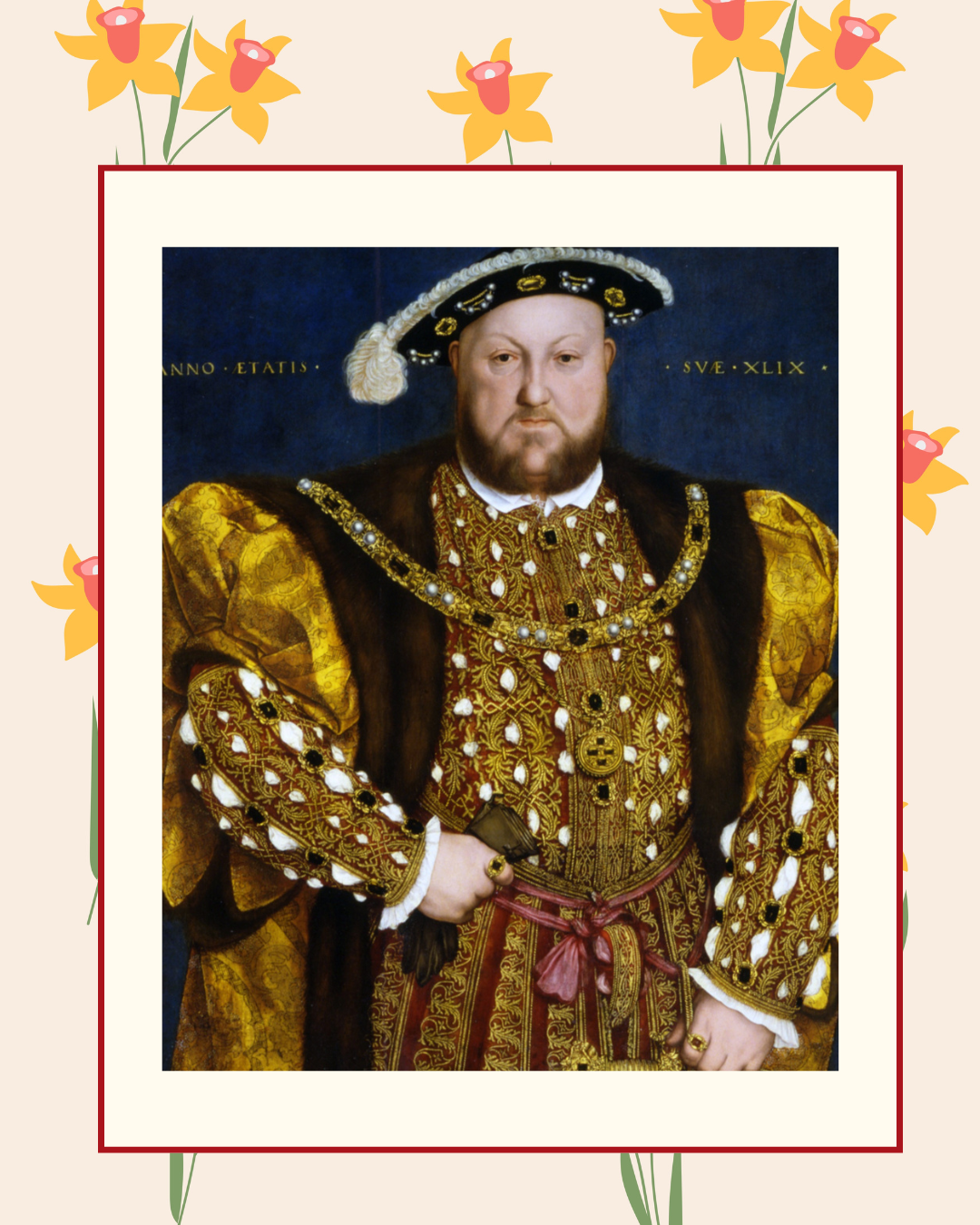
In the early part of Henry’s reign, England was still deeply rooted in traditional Catholic practice.
So this stripping?
It was temporary and theatrical.
Churches that were normally overflowing with:
Saints’ images
Candles
Color and gold
…were suddenly subdued for Holy Week.
This was part of a larger liturgical rhythm often associated with practices like Tenebrae—gradually extinguishing light to symbolize the approaching death of Christ.
But—and this is key—everything came back.
Easter morning reversed it all.
The emptiness was never permanent. It was a pause, not a purge.
Even after Henry’s break with Catholic Church, many of these visual and ritual traditions initially remained. His reformation was political before it was fully theological.
So you still get that dramatic contrast:
Darkness → Light
Absence → Restoration
Under Edward VI: The Real Stripping Begins
Under Henry’s son, everything shifts.
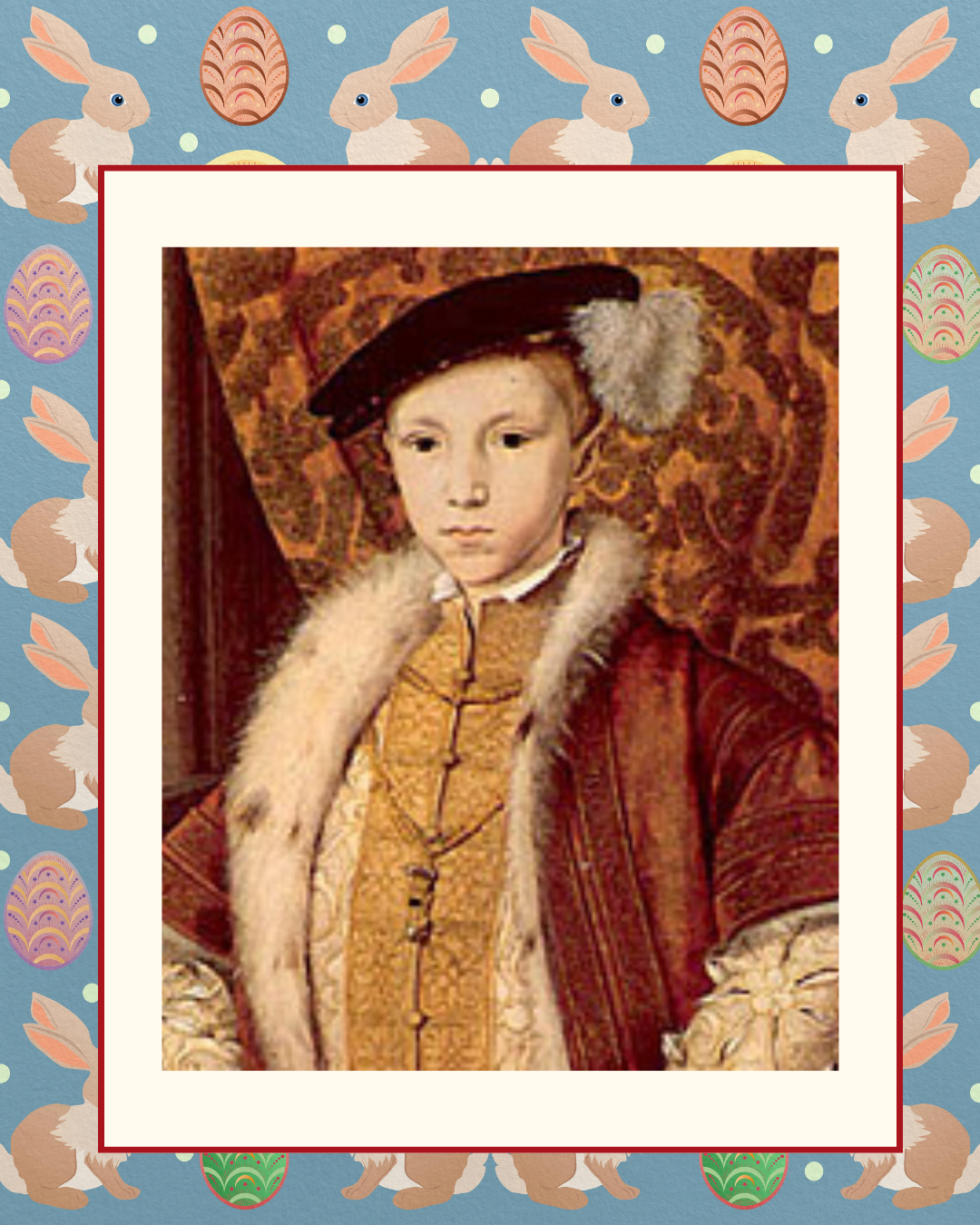
This is where we move from symbolic stripping… to something much more permanent.
Influenced by Protestant reformers, Edward VI’s reign saw what historians-especially Eamon Duffy-famously describe in The Stripping of the Altars:
Images removed entirely
Wall paintings whitewashed
Shrines destroyed
Altars replaced with simple communion tables
This wasn’t about marking a moment in Holy Week anymore.
This was about removing what reformers saw as excess, superstition, and idolatry.
So when churches felt empty on Good Friday now?
They often stayed that way.
The drama of absence lost its contrast-because the richness wasn’t returning.
Under Mary I of England: Restoration & Return
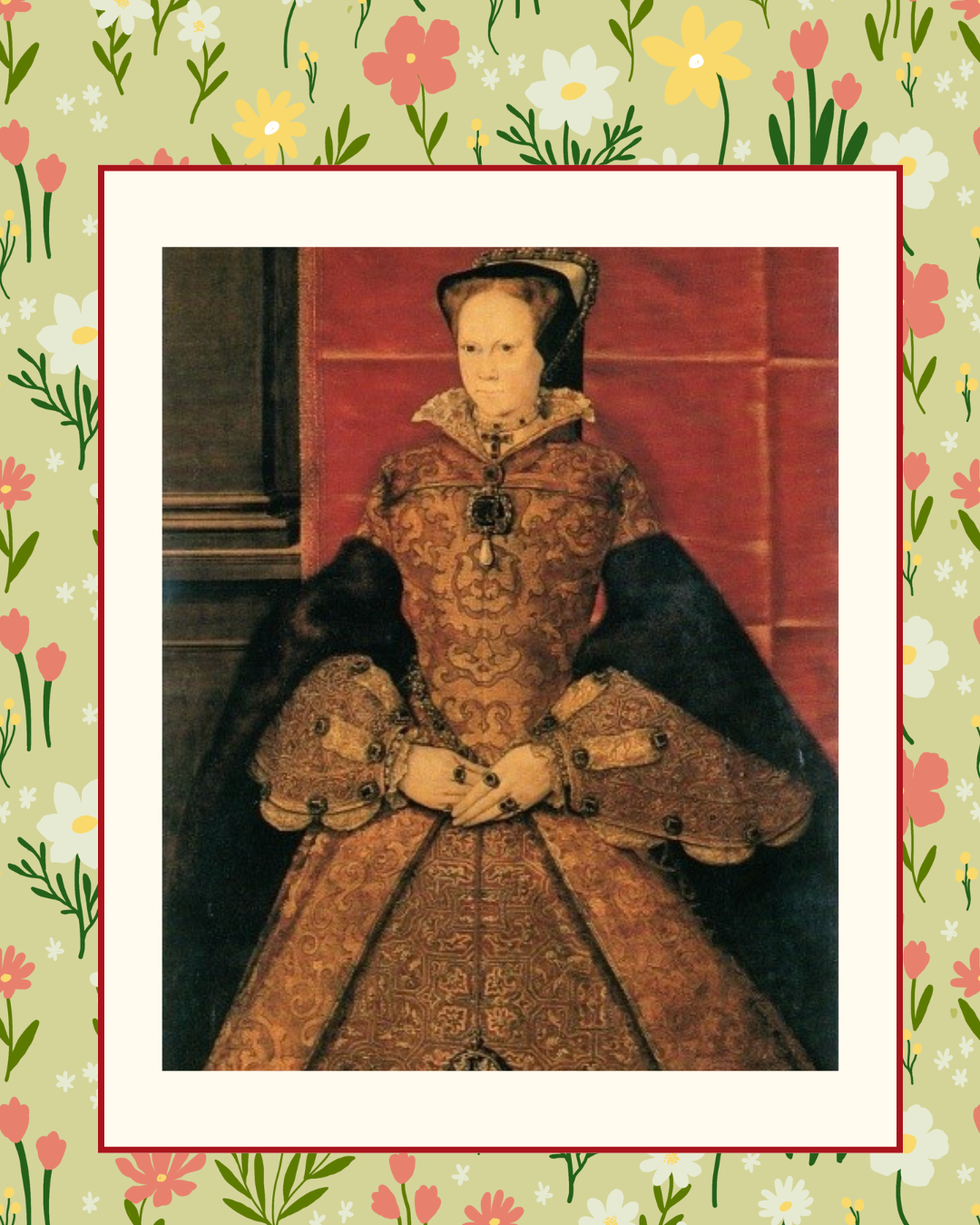
Mary I attempted to reverse this.
Under her Catholic restoration:
Altars were rebuilt
Images restored
Traditional rituals revived
Holy Week regained its emotional and visual intensity.
The stripping of the church once again became temporary, meaningful, and cyclical—not permanent loss.
Under Elizabeth I: The Middle Ground
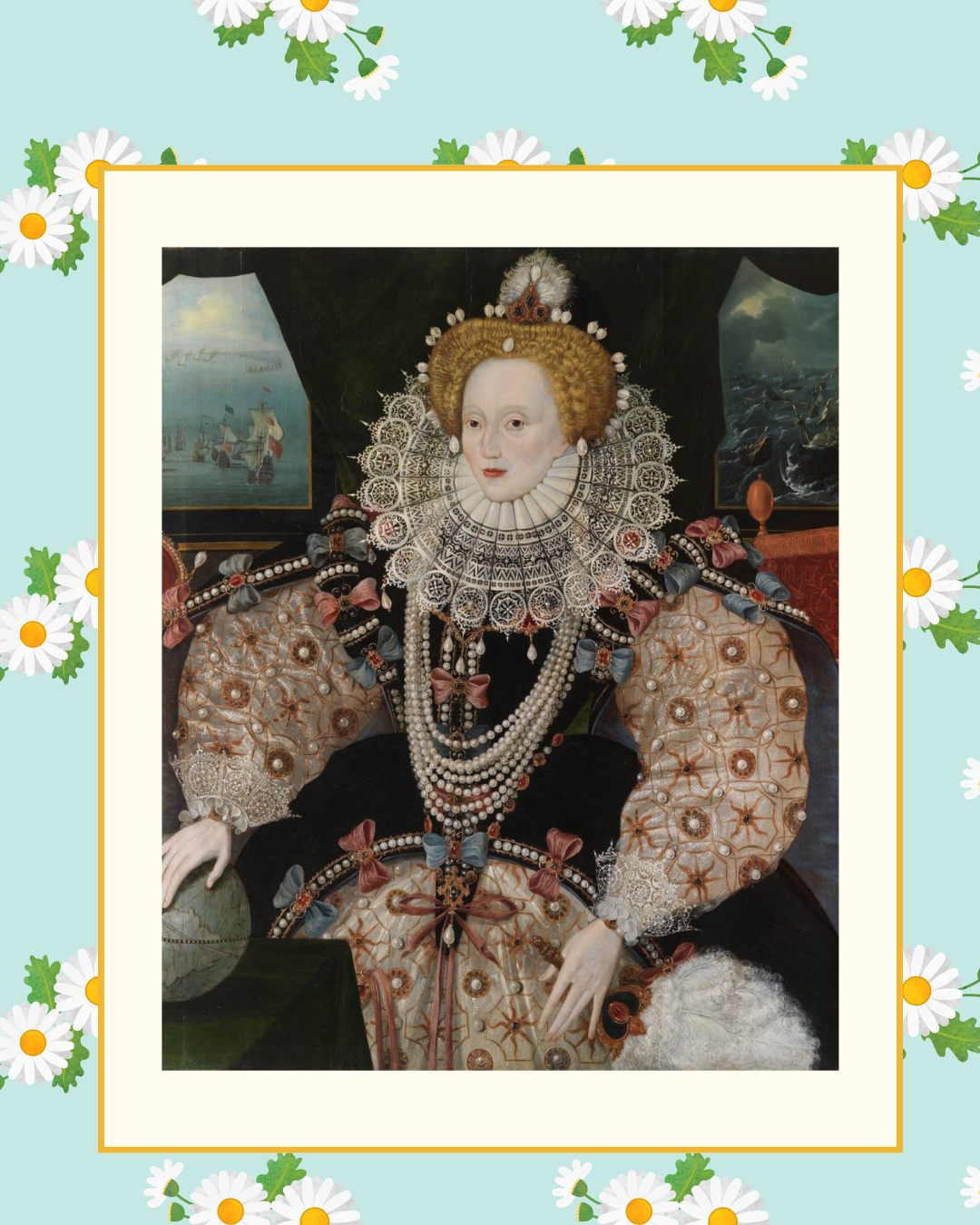
Elizabeth’s reign settled into something more ambiguous.
The Church of England retained some visual elements—but in a much more restrained way.
So Holy Week stripping still existed, but:
Churches were already simpler
The contrast was less dramatic
The emotional experience was quieter, more controlled
Less medieval spectacle. More Protestant moderation.
✨ Why This Matters
What began as a powerful visual metaphor—a church stripped bare to reflect Christ’s suffering—became, over the course of the Tudor century:
A ritual (Henry VIII)
A revolution (Edward VI)
A restoration (Mary I)
A compromise (Elizabeth I)
Same action.
Completely different meanings.
Takeaway
At the start of the Tudor era, the church was stripped so it could be beautifully restored.
By the middle, it was stripped so it would never look the same again.
And by the end?
It existed somewhere in between—caught between memory and reform.
Not just a religious shift. A cultural one. A visual one. A felt one.
✝️ Good Friday: Creeping to the Cross
This is where Tudor devotion becomes unforgettable.
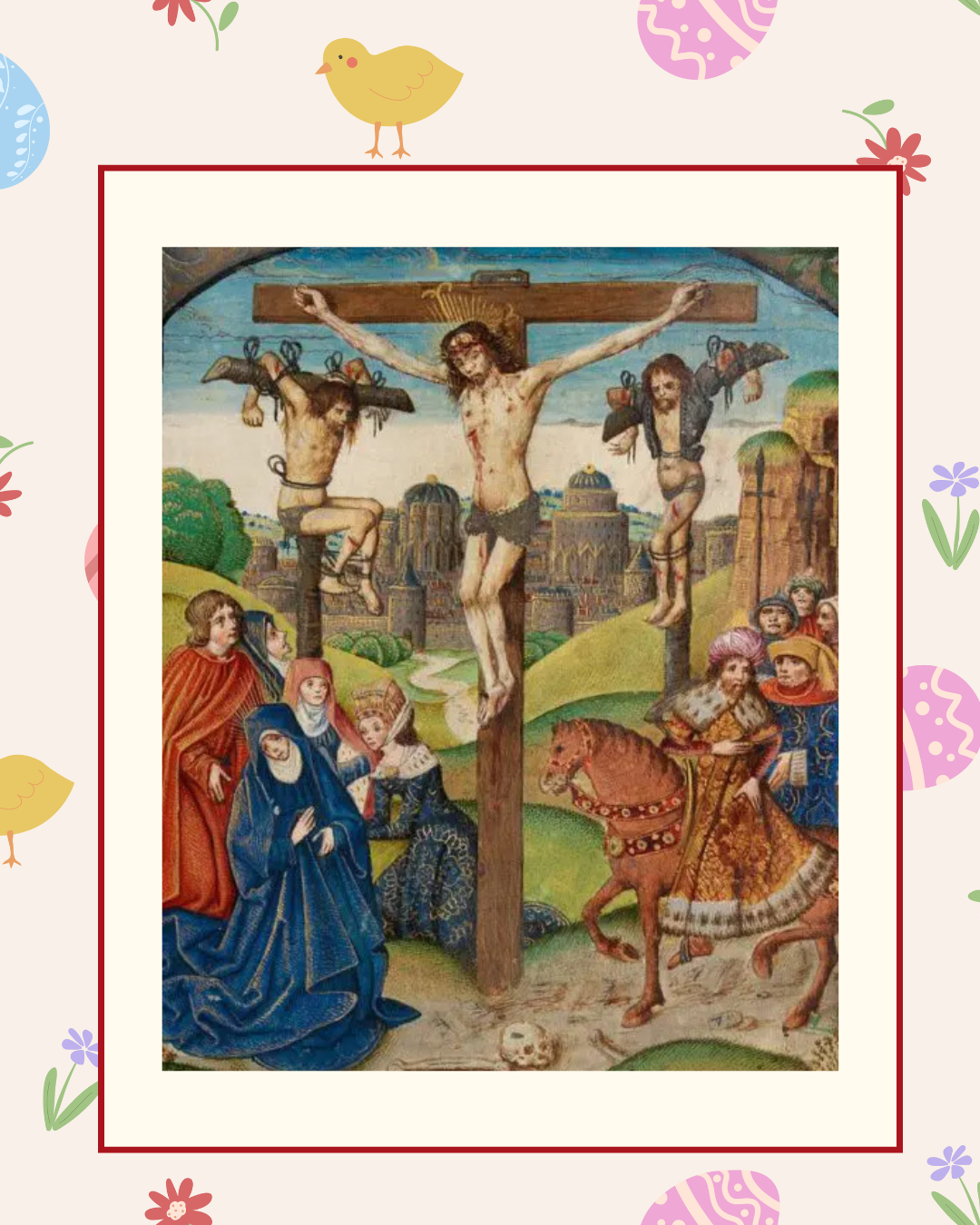
On Good Friday, people performed the ritual known as “creeping to the cross.”
They would:
Approach the crucifix
Crawl on hands and knees
Kiss it in reverence
Including the king.
Yes-Henry VIII himself took part.
For a moment, hierarchy dissolved.
Everyone—royal or common—approached the cross the same way:
Humbled. Lowered. Devout.
🍞 Hot Cross Buns & Fasting
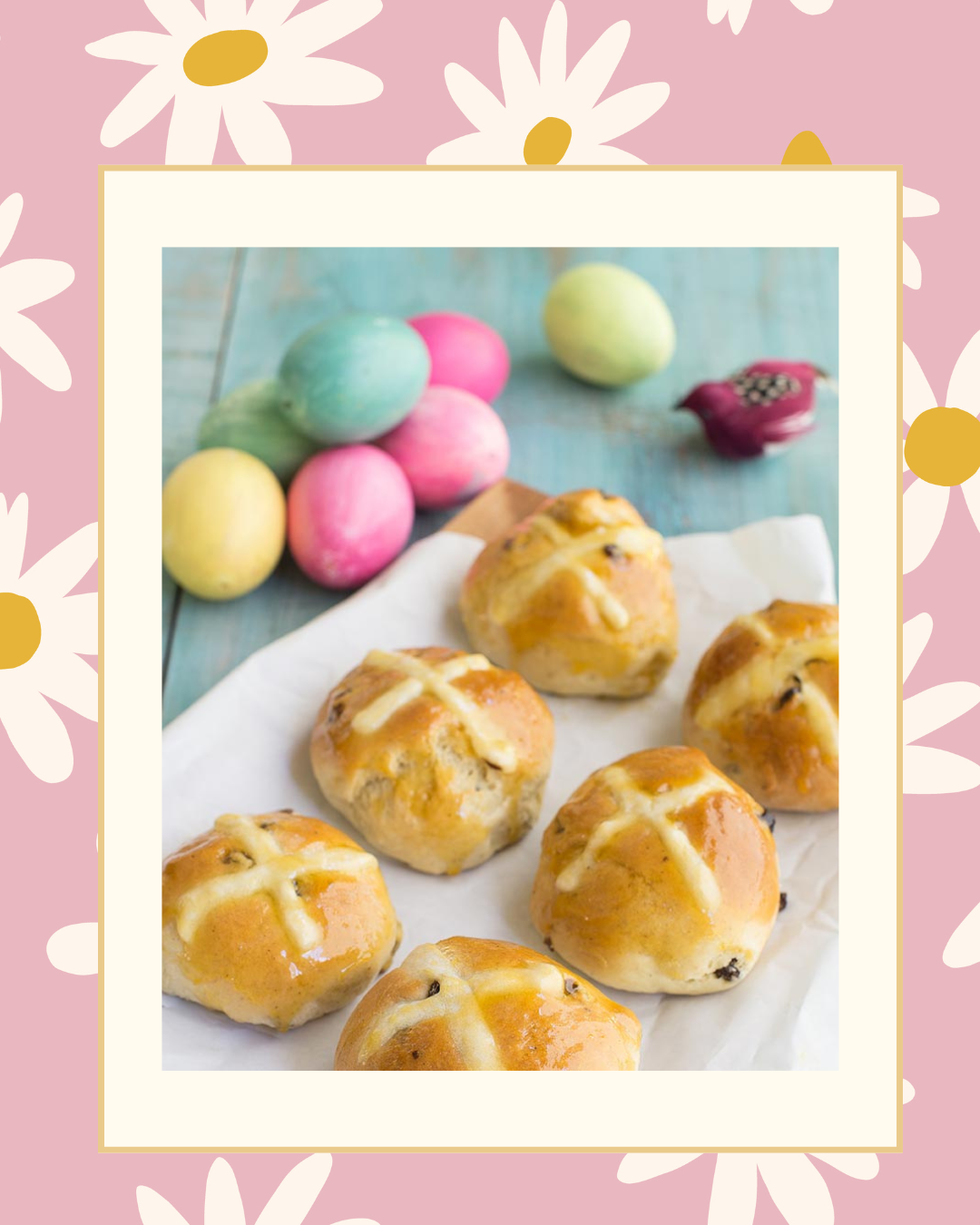
Food remained simple and symbolic.
Hot cross buns—marked with a cross—were traditionally eaten on Good Friday.
And fasting continued.
Because this day wasn’t about comfort.
It was about remembrance.
🕯️ The Waiting
Holy Week didn’t resolve quickly.
There was no instant joy.
Just silence.
Stillness.
Waiting.
And that’s what made Easter morning so powerful.
✨ It Girl Takeaway
Tudor Holy Week reminds us that meaning isn’t found in skipping ahead.
It’s found in entering the moment fully.
The Tudors didn’t just believe in the story of Easter.
They embodied it.
Every step. Every ritual. Every movement toward the cross.
📚 Sources & Further Reading
Primary Sources:
Sarum Missal
Royal Household Accounts of Henry VIII (Good Friday observances)
Secondary Sources:
Eamon Duffy, The Stripping of the Altars
Diarmaid MacCulloch, Thomas Cranmer: A Life
Accessible History:
Historic Royal Palaces – articles on Tudor worship
Renaissance English History Podcast (Holy Week & Easter episodes)