Why Anne Wasn’t Like the Other Girls (At Court)
🎀 Blog 4: Before She Was Queen: Anne’s European Glow-Up
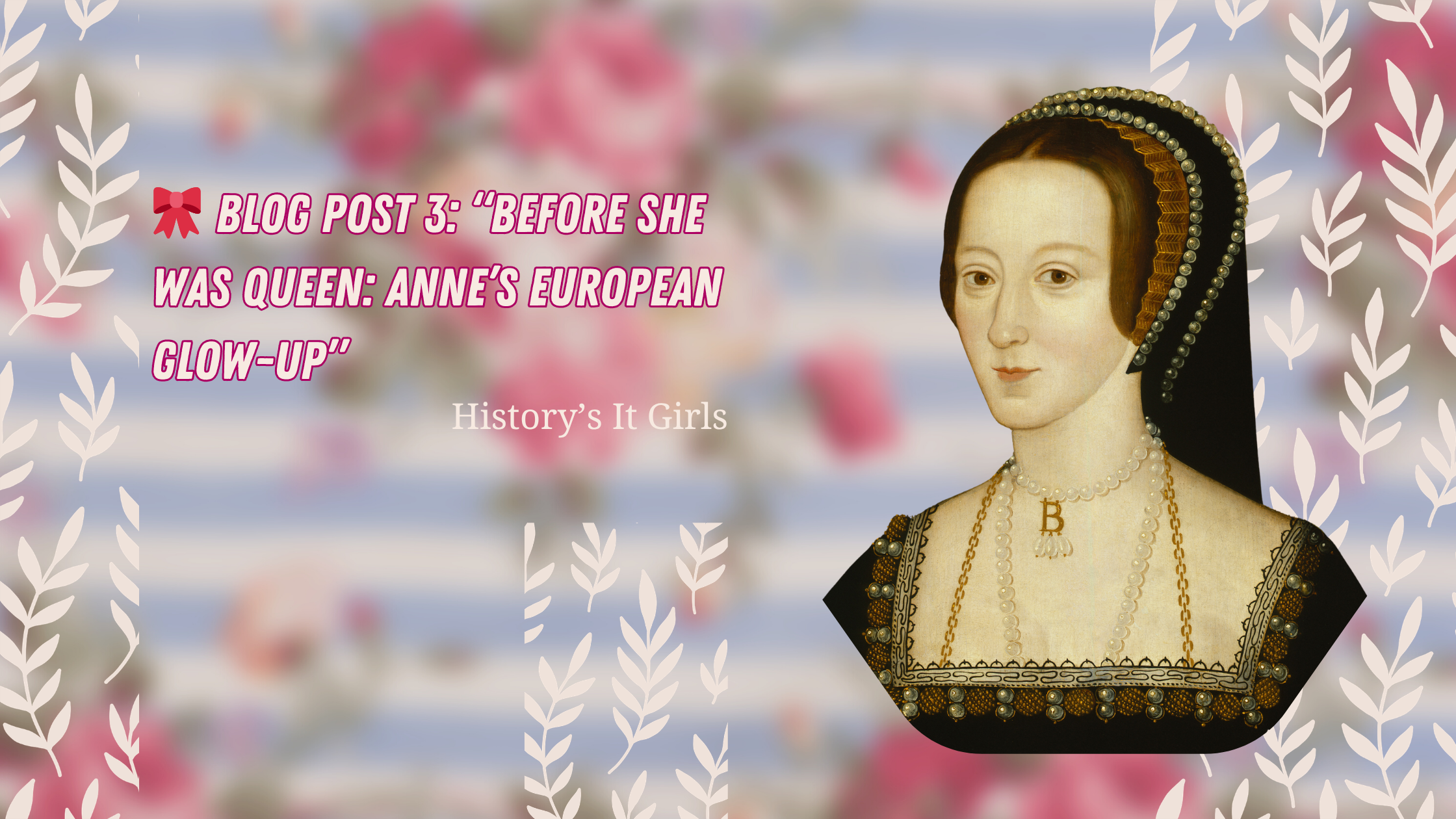
Before she captured a king, Anne Boleyn was capturing something far more powerful-education, influence, and continental polish. From the court of Margaret of Austria to the glittering world of Claude of France, Anne’s time abroad shaped her into a woman England had never quite seen before.
This wasn’t just a study abroad moment-it was a transformation.
✨ She didn’t just learn courtly love. She leveled it up.
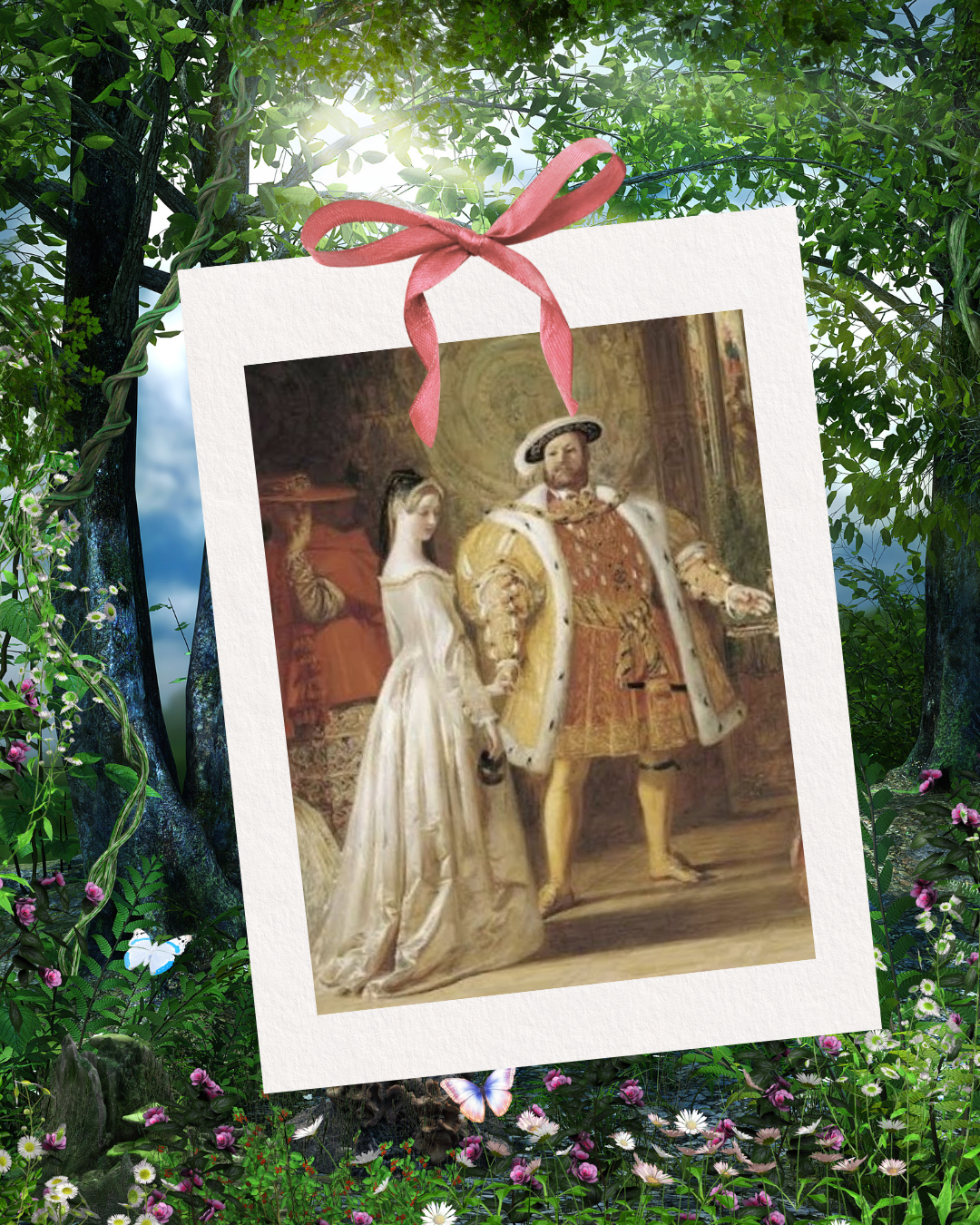
Anne Boleyn didn’t just walk into Henry VIII’s court-she arrived like a storm in silk and jewels. While other women were content to play the part of obedient ladies-in-waiting or discreet mistresses, Anne was something else entirely: magnetic, clever, and impossible to ignore.
🏰 The Mary Boleyn Comparison
Mary Boleyn, Anne’s older sister, had already captured Henry’s attention and represented the model of a typical courtly lover: compliant, charming, and ultimately temporary. Contemporary observers described her as “of a comely presence, gentle, and fair” (Eustace Chapuys, Imperial Ambassador’s Letters, 1529). While Mary’s charm suited the expectations of English courtly love—temporary flattery and discreet intimacy—Anne refused to settle for mere admiration. She demanded recognition not as a mistress, but as a partner of intellect and influence.
💌 Courtly Love vs. Mistress Culture
In early 16th-century England, courtly love often set women up for a life of admiration without authority. Courtiers praised beauty, poise, and tact, yet rarely permitted women lasting influence over politics or personal destiny. Mistresses were tolerated, but limited in their power. Anne’s education abroad in the Netherlands and France gave her a sharp advantage.
The Imperial Ambassador, Chapuys, wrote in 1527 about Anne’s presence at court:
“She is not like the other women here, possessing a quick wit and manner that commands attention, and it is whispered she may have greater ambitions than most” (Chapuys: The Emperor’s Ambassador).
Anne’s awareness of courtly dynamics, paired with her intelligence, allowed her to navigate these structures with strategic grace. She understood the rules—and then rewrote them to her advantage.
European Polish Made Her Magnetic
Anne’s time serving Margaret of Austria in the Netherlands and at the French court under Claude of France refined her into the consummate Renaissance woman. She mastered multiple languages, refined her manners, and developed a keen understanding of dance, rhetoric, and courtly flirtation (Eric Ives, The Life and Death of Anne Boleyn, 2004).
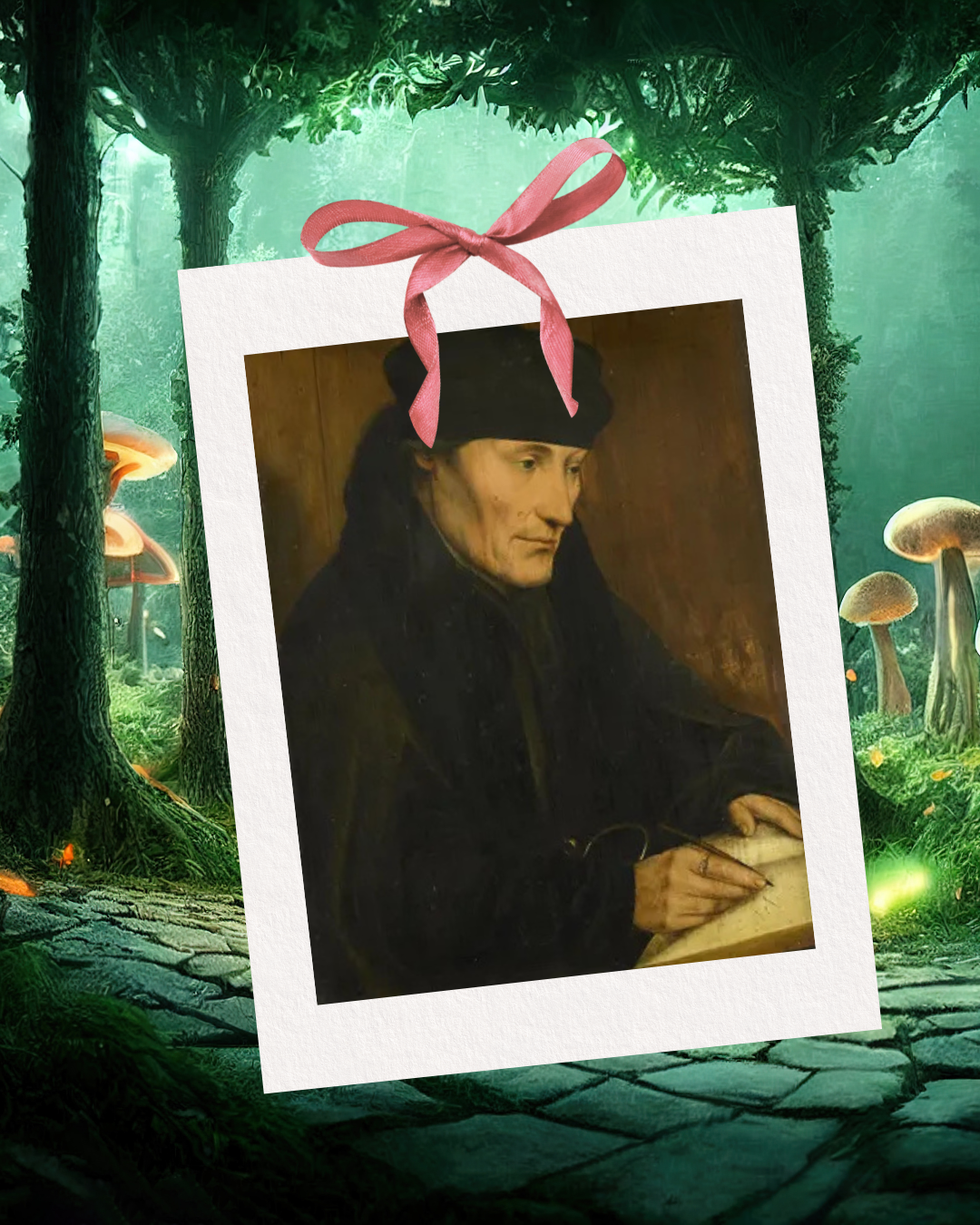
At Margaret’s court, Anne would have been exposed to the leading humanist thinkers of the day. It’s possible she encountered or was influenced by scholars such as Erasmus, who promoted education, classical learning, and the moral refinement of women—ideas that shaped her intellect and poise. At the French court, she would have mingled with the daughters of European nobility, diplomats, and literary figures, honing the social skills and conversational sophistication that would later set her apart in England.
Ambassadors and courtiers noticed her charisma. Chapuys remarked:
“She is of great beauty and has a subtlety of mind that makes her admired and feared” (Letters of Eustace Chapuys, 1529).
Thomas Wyatt, the poet and courtier, described Anne as:
“More beautiful and witty than any I have known, she wins hearts by the strength of her mind as well as her face” (Wyatt, Letters and Poems, 1530s).
Her sophistication was rare in England, where most young noblewomen were educated primarily in piety and household management. Anne’s European polish—exposure to humanist education, high diplomacy, and continental refinement—set her apart and made her irresistible to Henry, who reportedly found himself drawn not just to her appearance, but to her intelligence, wit, and commanding presence.

Before she dazzled Henry VIII, Anne Boleyn spent her formative years at the finest courts in Europe, and it shows. Here’s a snapshot of what (and who) shaped her irresistible intelligence and charm:
1. Margaret of Austria – Netherlands (c. 1513–1514)
Served as lady-in-waiting to the Regent of the Netherlands, learning courtly etiquette and diplomacy.
Exposed to international politics, hosting ambassadors and nobles from across Europe.
Likely encountered humanist ideas circulating from scholars like Erasmus, emphasizing education, morality, and classical learning.
2. French Court under Claude of France – Blois / Amboise
Learned refined manners, dance, and French courtly flirtation, all essential for a high-ranking lady of Renaissance Europe.
Surrounded by daughters of French nobility—developing social sophistication and conversational polish.
Observed cultural rituals, fashion, and etiquette that were decades ahead of English norms.
3. Intellectual Influences
Exposure to Renaissance humanism: reading classical texts, studying rhetoric, and understanding moral philosophy.
Likely encountered writers, poets, and diplomats, all of whom shaped her wit and charm.
4. Cultural Skills That Made Her Stand Out
Multilingual: fluent in French and possibly some Latin.
Mastery of dance, music, and poetry—key tools for courtly allure.
Sophisticated conversation and subtle persuasion, making her impossible to ignore at court.
💡 Why it mattered: Anne didn’t just follow the English court’s rules—she transformed them. Her European education gave her a rare combination of beauty, brains, and strategic social skill, making her a true force at Henry’s court.
Contemporary Eyes on Anne
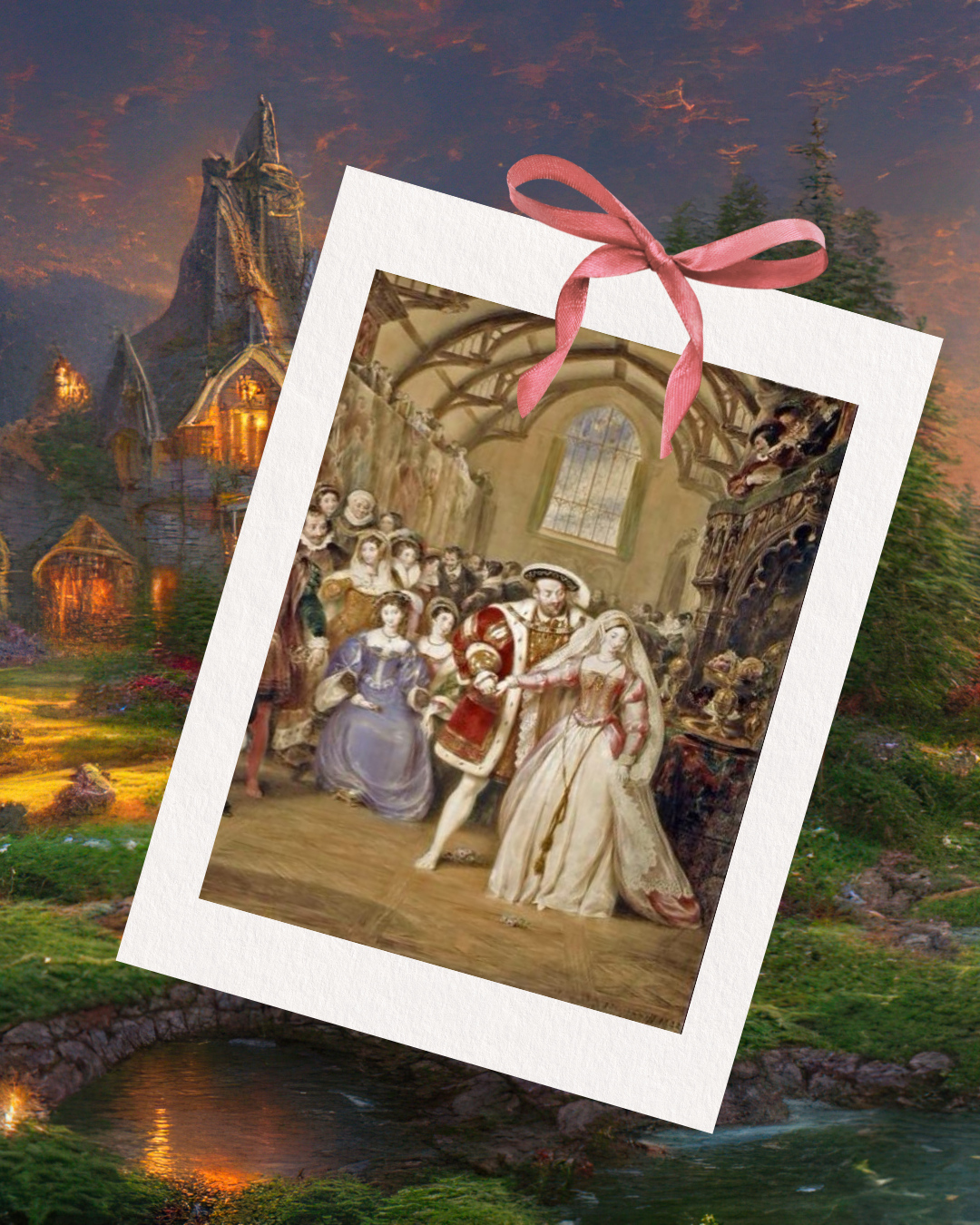
Chroniclers across Europe consistently emphasized her distinction. Chapuys, whose reports were often critical of Henry, admitted:
“I cannot deny that her manner and speech captivate all who speak with her, and her ambition may be as dangerous as her beauty is striking” (Chapuys: The Emperor’s Ambassador).
Even Henry’s own court noticed the difference. A letter from a courtier in 1527 observed:
“She is unlike the others. Her spirit and courage are evident; she will not be dismissed lightly” (Letters and Papers, Foreign and Domestic, Henry VIII).
Anne wasn’t merely a charming young woman—she was a presence that altered the social and political landscape of the court.
Anne wasn’t a mistress. She was destiny.
Her European polish, sharp mind, and refusal to conform distinguished her from every other girl at court. She didn’t just participate in courtly love—she elevated it, combining intellect, sophistication, and emotional allure in a way that left courtiers and kings alike captivated. In the end, Anne Boleyn became the woman who would shape a kingdom, proving that charm paired with ambition is a force no court can ignore.
💡 Fun Historical Tidbit
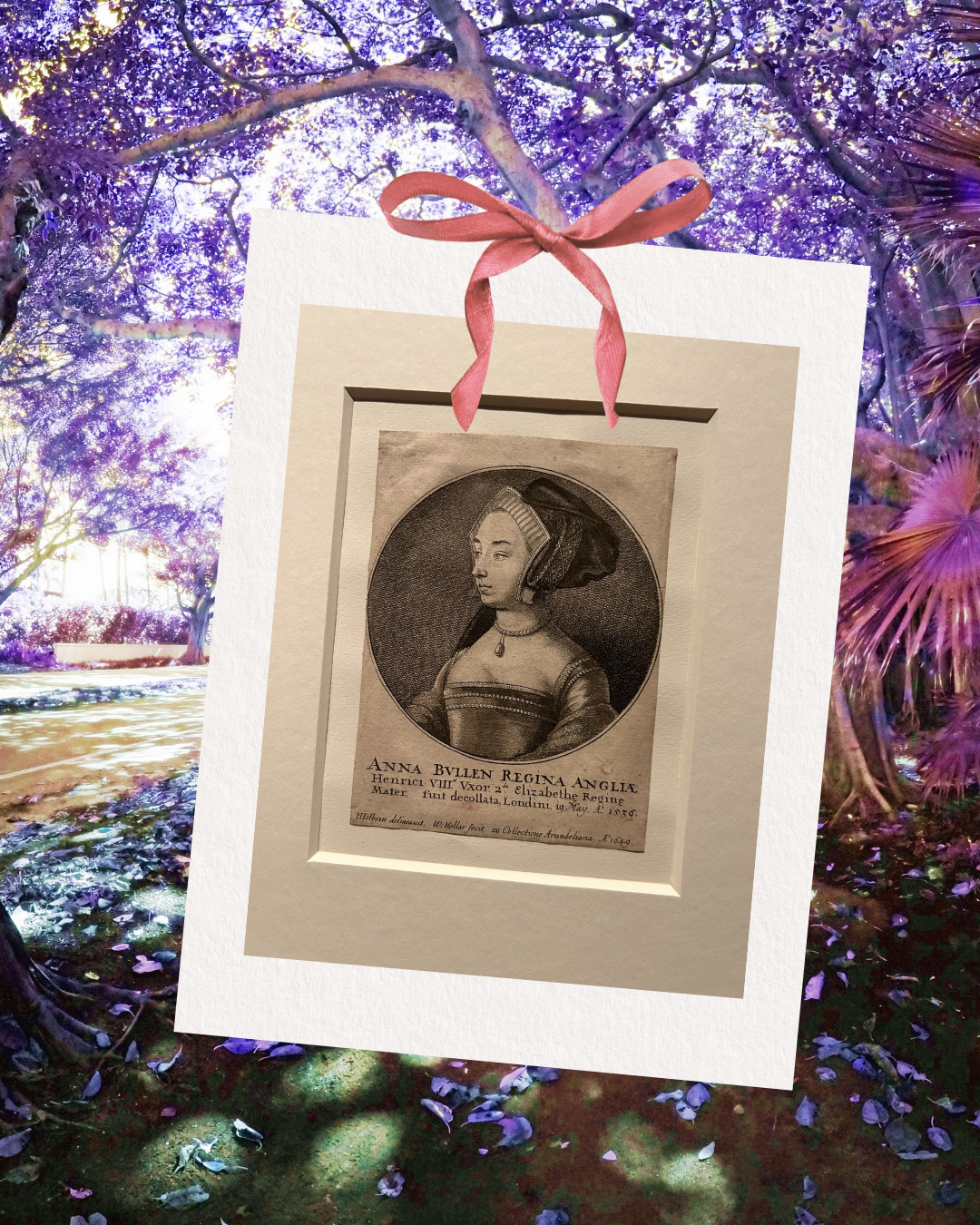
Anne Boleyn is often credited with popularizing the French gable hairstyle at the English court-a small fashion revolution that mirrored her much larger impact on politics and history.
📚 Further Reading / Primary Sources
Chapuys, Eustace. The Emperor’s Ambassador: The Letters of Eustace Chapuys, 1529–1535.
Ives, Eric. The Life and Death of Anne Boleyn. Blackwell, 2004.
Wyatt, Thomas. Letters and Poems.
Letters and Papers, Foreign and Domestic, Henry VIII, various volumes.
Weir, Alison. The Life of Anne Boleyn.